

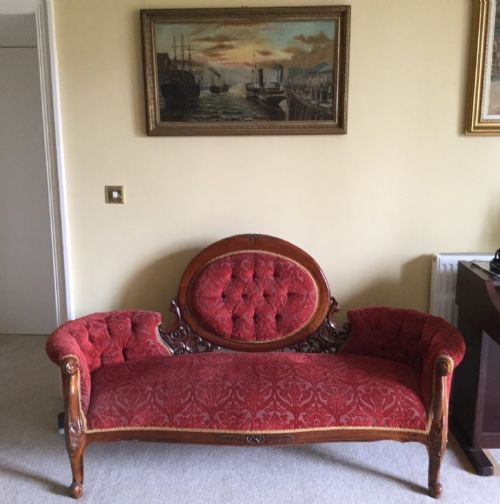


Antique Buttoned Chaise
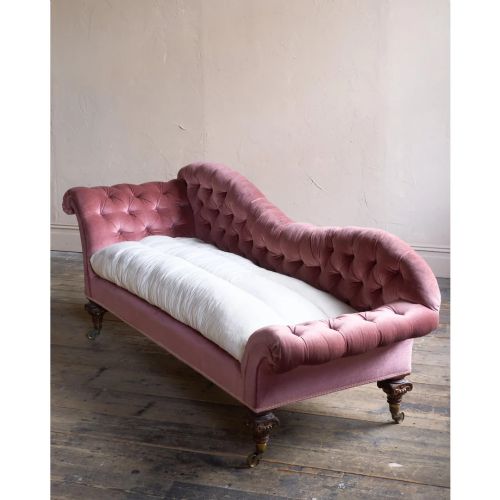
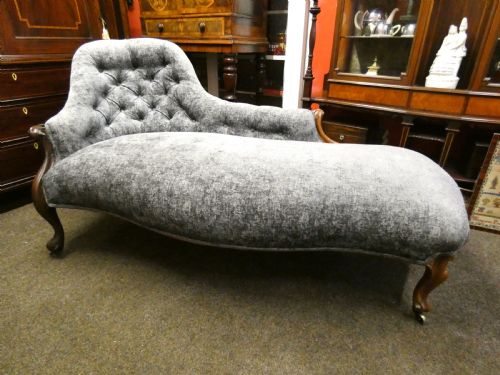
An antique buttoned chaise offers a long, reclining seat designed for upright lounging, bringing nineteenth-century elegance directly to a modern interior.
Antique Buttoned Chaise
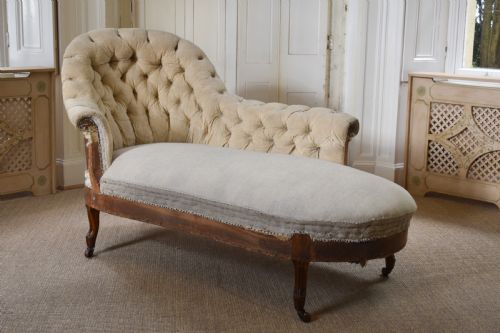
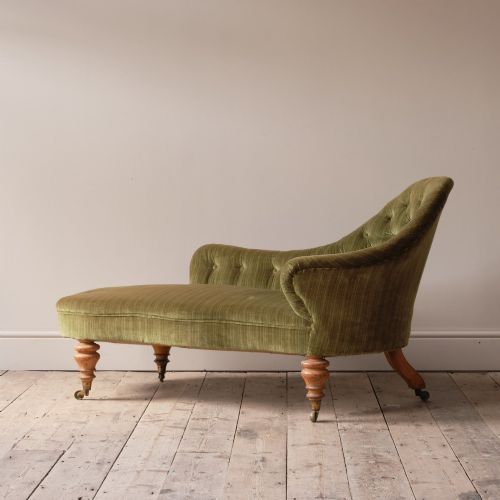
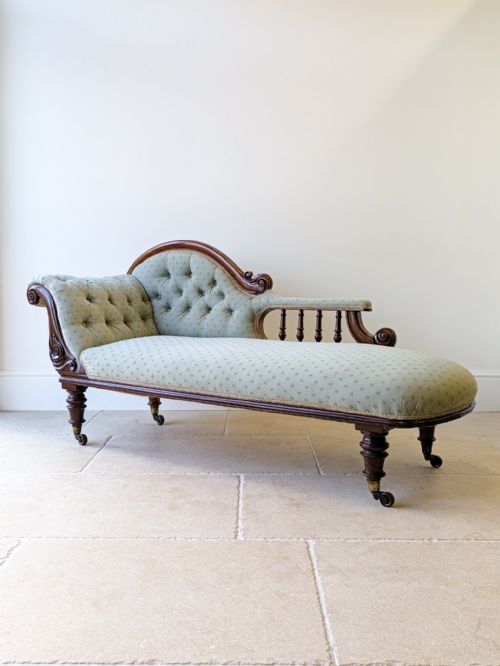
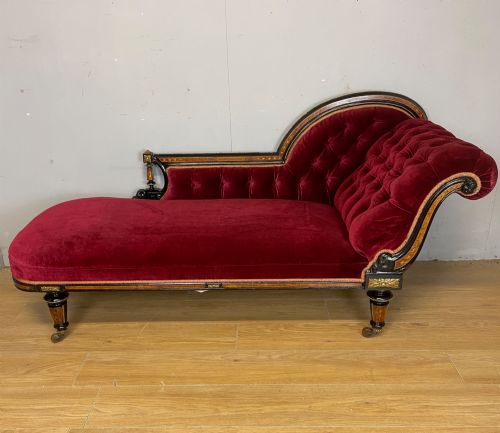
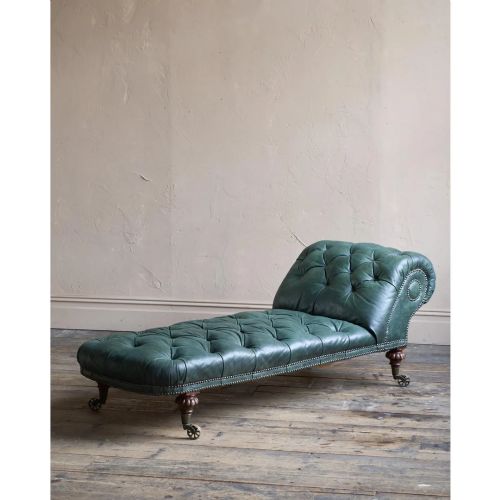
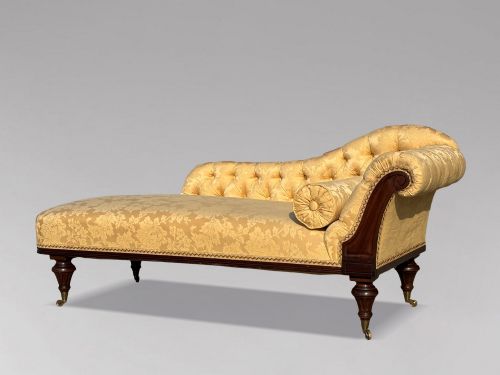
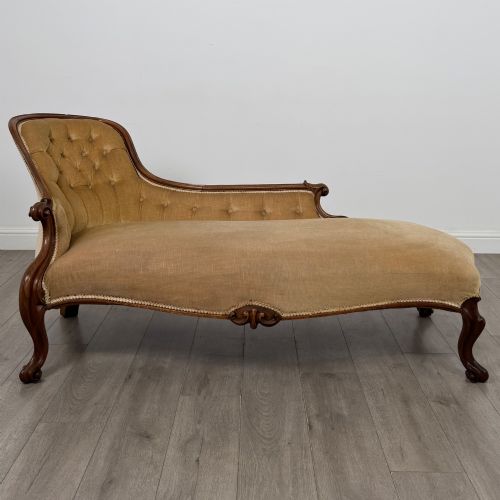
When searching for an antique buttoned chaise, buyers encounter nineteenth-century seating forms that combine wooden frames with deep tufted upholstery. The most common examples on this page date from the Victorian period, alongside earlier Regency and William IV pieces.
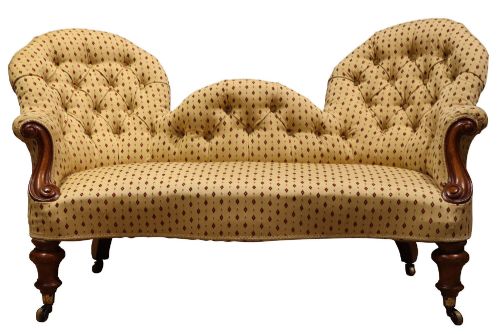
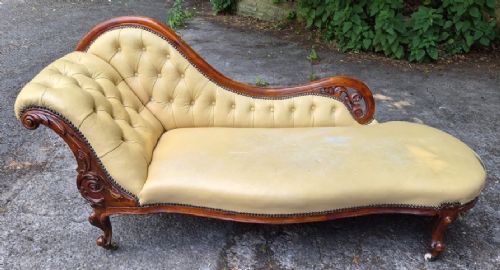
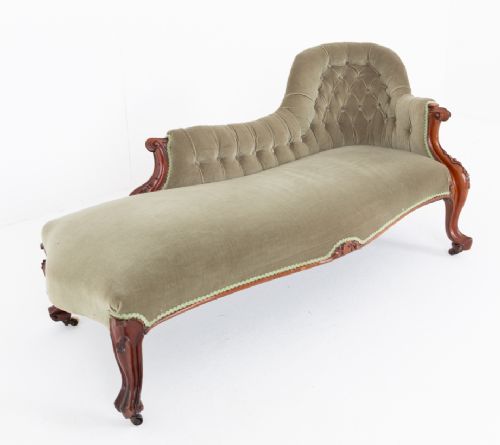
Makers shaped these long seats in various configurations, including double-ended sofas, scroll ends, and double spoonback designs. Timbers such as mahogany, rosewood, and walnut support coverings in velvet, leather, damask, and brocade.
Originating largely from English workshops, these daybeds and couches served as formal salon furniture and comfortable resting places. The combination of carved timber frames and button-tufted backs defines the typical form seen across these listings.
How they were made
Cabinetmakers constructed the structural frames of these daybeds using dense hardwoods like mahogany, walnut, and rosewood, often applying carved details or ebonised finishes. Some pieces incorporate brass mounts, inlaid walnut panels, or ormolu decoration alongside ionic column legs.
Upholsterers built the deep buttoned backs and sprung seats using traditional stuffing techniques and durable fabrics such as velvet, damask, and leather. The buttoning secures the internal padding while creating the distinctive pleated pattern across the backrest.
Antique Buttoned Chaise Retail Price Guide 2026
Typical asking prices for buttoned chaise among the pieces listed under this phrase on Sellingantiques today, from the lower quarter to the upper quarter. They describe what is for sale here now, not the wider market.
Listings feature nineteenth-century seating constructed from rosewood, walnut, and mahogany, upholstered in velvet, damask, and leather.
What varies in quality
The sophistication of the timber carving and the precision of the frame joinery dictate the baseline quality of each piece. Finer examples display crisp hand-carved ornamentation on rosewood or walnut, whereas simpler versions utilise plain mahogany frames.
The execution of the buttoning and the choice of covering material distinguish high-tier workshop output from standard production. Upholstery using heavy silk damask, deep-pile brocade, or quality leather reflects a higher original commissioning cost.
Howard And Sons·H Goodall And Sons·Holland And Sons·Jas Shoolbred·Miles And Edwards
The Antique Buttoned Chaise Glossary
- Chaise longue
- A long reclining chair or daybed designed for lounging in a semi-recumbent posture. These pieces typically feature a single raised headrest and an elongated seat.
- Buttoned
- An upholstery technique where buttons are pulled deep into the padding at regular intervals to form a geometric pattern of tufts and folds. This secures the internal stuffing while adding texture.
- Regency
- A British design style spanning the early nineteenth century, characterised by classical motifs, scroll ends, and scrollwork inspired by Greco-Roman antiquity.
- Ormolu
- Gilded bronze ornamentation applied to furniture frames to add metallic contrast and decorative detail. It appears alongside inlaid panels on select nineteenth-century pieces.
- Double-ended
- A sofa or chaise configuration featuring raised headrests at both ends of the seat rather than a single terminal backrest.
Antique Buttoned Chaise: Frequently Asked Questions
Where did people put a chaise longue?
Nineteenth-century households placed these reclining seats in formal drawing rooms, private boudoirs, and spacious bedrooms where residents rested during the day without retiring to a bed.
Today, they function well in similar domestic settings, often positioned to create a dedicated reading corner or placed at the foot of a large bed.
How do I date a Victorian chaise?
Dating relies on examining the timber species, frame carving styles, and structural proportions. Earlier pieces often show Regency or William IV influence with scroll ends, while later Victorian items feature rosewood or walnut with spoonbacks.
Maker stamps on the wooden frame or webbing can also provide specific attribution and a narrower timeframe within the nineteenth century.
How do I care for antique buttoned upholstery?
Regular gentle dusting with a soft brush helps prevent dirt from settling into the deep folds of the button tufts. Avoiding direct sunlight protects delicate fabrics like silk damask and velvet from fading.
Professional cleaning is recommended for antique textiles to preserve the original tension of the buttoning and the integrity of the internal stuffing.