


Antique Button Upholstery
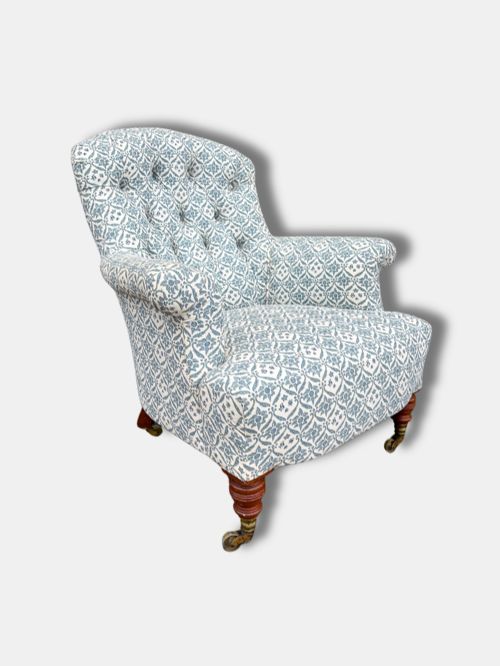
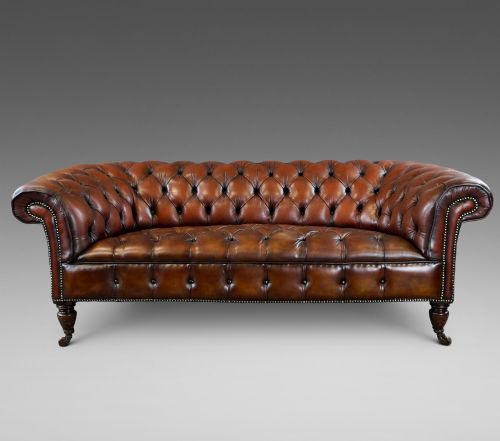
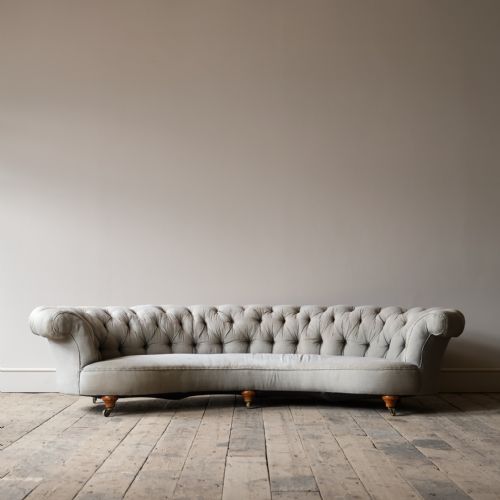
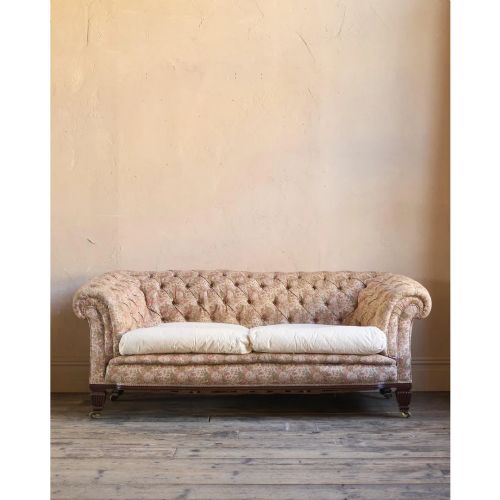
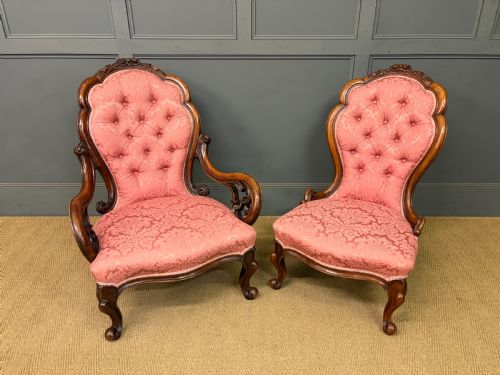
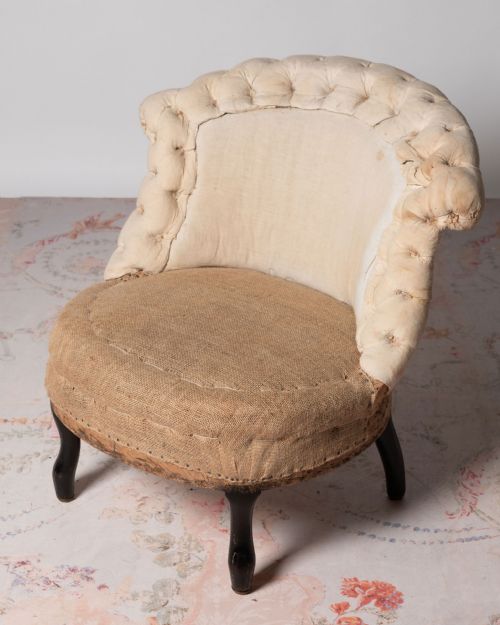
Antique button upholstery brings deep buttoning and traditional sprung comfort to classic seating forms like the Victorian Chesterfield and the low nursing chair.
Antique Button Upholstery
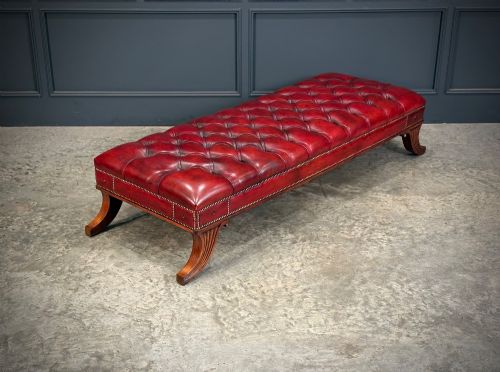
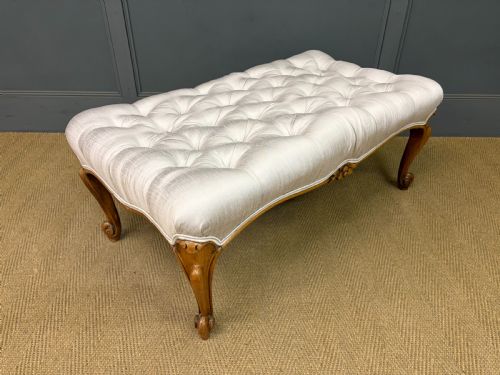
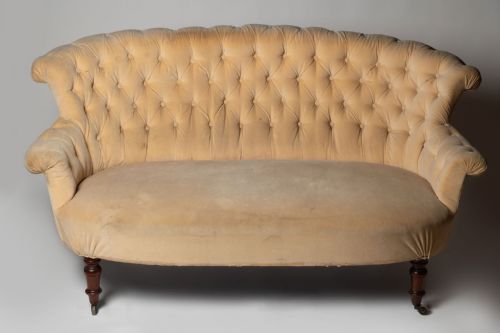
Antique button upholstery defines seating featuring indented tufting secured with fabric or leather buttons, creating a rhythmic pattern across the backrest or seat. When exploring antique button upholstery, buyers frequently encounter deep-sprung armchairs, long footstools, and expansive Chesterfield sofas dating from the nineteenth century onward.
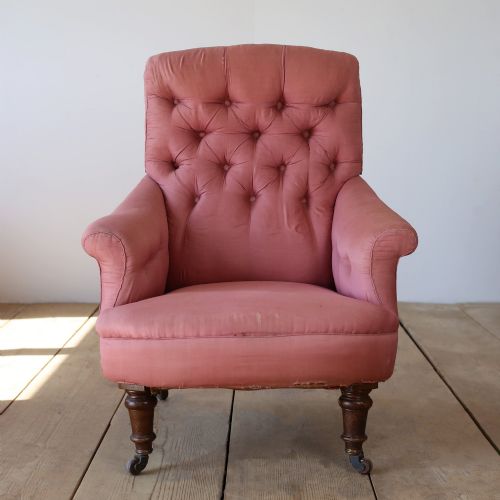
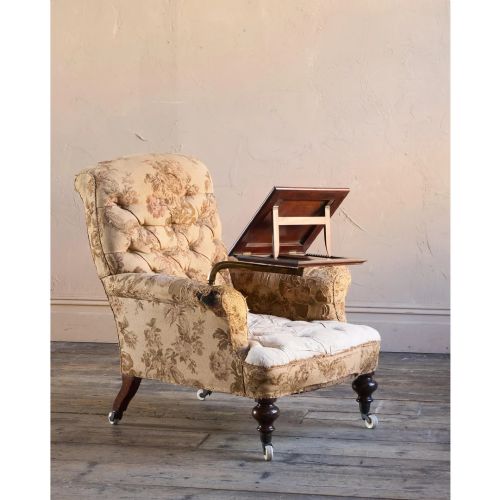
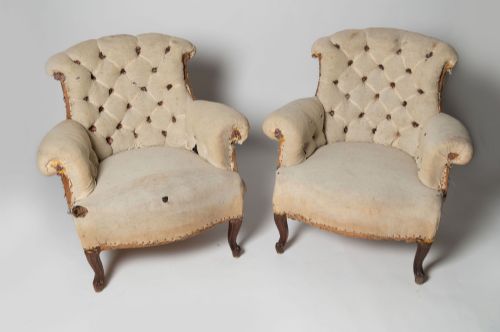
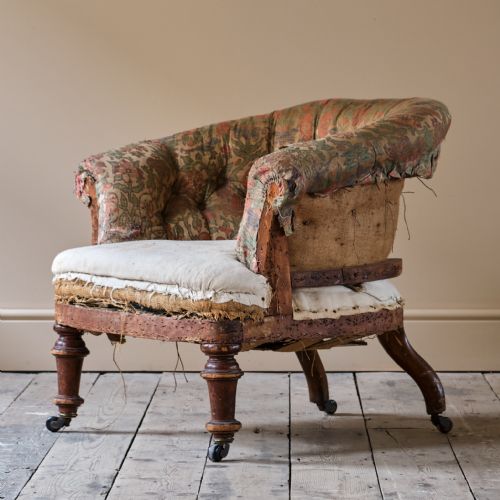
The pieces on this page span several distinct forms, including low Victorian nursing chairs, French Napoleon III chairs, and substantial library armchairs. Walnut, mahogany, and hardwood frames underpin these upholstered seats, often paired with velvet, leather, or printed textile coverings.
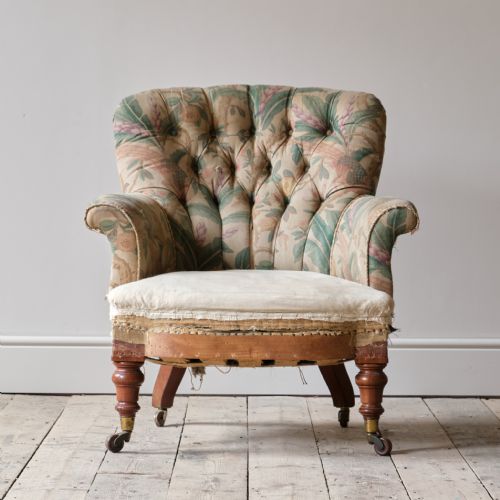
Makers such as Howard and Sons and Gillows produced notable examples featuring this tailored buttoned technique, alongside French workshops and English country house firms. Buyers encounter both thoroughly restored examples ready for daily use and pieces awaiting fresh fabric or traditional recovering.
Materials and construction methods
Frames constructed from solid mahogany, walnut, or hardwoods provide the structural skeleton for these buttoned pieces, occasionally featuring turned or barley twist legs. Artisans shaped these timbers to support heavy internal stuffing and deep coil springs tied securely by hand.
The signature buttoning relies on heavy twine pulled through thick layers of stuffing to anchor the surface material against the wooden frame. Traditional coverings include rich velvet, supple leather, and woven textiles, which are then secured by individual handmade tufts to maintain the characteristic diamond pattern.
Antique Button Upholstery Retail Price Guide 2026
Typical asking prices for button upholstery among the pieces listed under this phrase on Sellingantiques today, from the lower quarter to the upper quarter. They describe what is for sale here now, not the wider market.
The listings here feature buttoned seating from the Regency, Victorian, and Edwardian eras, utilising brass, mahogany, walnut, and various textiles.
Judging the standard of execution
Quality rests in the precision of the tufting grid and the structural integrity of the underlying hardwood frame. Superior pieces maintain an even, resilient tension across every button without sagging or shifting in the internal stuffing.
Finishing details distinguish finer workshops, from cleanly carved walnut and mahogany show-wood to the seamless alignment of patterns in velvet or printed textiles. Maker attribution to firms like Howard and Sons or Gillows elevates a piece through documented excellence in joinery and upholstery technique.
Howard and Sons·Gillows·Hamptons and Sons
The Antique Button Upholstery Glossary
- Deep buttoning
- An upholstery technique where buttons are pulled deep into the padding at regular intervals to form a diamond-patterned surface. This method secures internal stuffing while adding firm support.
- Chesterfield
- A traditional large sofa characterised by low back and armrests of the same height, traditionally finished with deep button upholstery. It remains a staple of nineteenth-century seating.
- Show-wood
- Exposed polished timber on a chair or sofa frame that remains visible around the upholstered sections. Mahogany and walnut are typical timbers found in this role.
- Nursing chair
- A low-seated Victorian armchair designed to allow a person to sit comfortably near a nursery fire. These seats frequently feature buttoned backs and turned wooden legs.
- Chaise longue
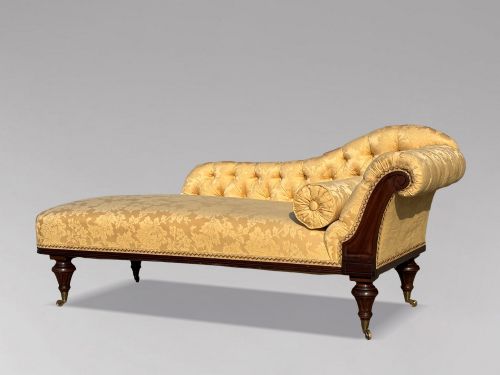
- An elongated upholstered chair designed for reclining, combining the backrest of a sofa with the seat of a long stool. Examples from the Regency and Victorian periods often incorporate buttoned upholstery.
Antique Button Upholstery: Frequently Asked Questions
What is antique button upholstery?
Antique button upholstery refers to nineteenth-century and early twentieth-century seating where padding is pulled tight with buttons to form a distinct tufted pattern.
This traditional method provides both structural firmness and decorative depth across sofas, armchairs, and footstools.
How do I date a buttoned armchair?
Dating relies on examining the timber frame, turning styles, and overall proportions rather than the upholstery alone, which is often renewed.
Nineteenth-century pieces typically exhibit solid mahogany or walnut frames, with Victorian and Edwardian examples showing specific stylistic traits in their legs and back height.
Are these chairs comfortable for daily use?
Most antique buttoned chairs offer firm, supportive seating due to their traditional hand-tied coil springs and dense internal stuffing.
Pieces that retain their original sprung interior or have been professionally restored provide robust support suited to regular sitting.
Should I buy a piece needing upholstery?
Purchasing a frame that requires recovering allows you to select custom fabrics like velvet or leather that suit your interior scheme.
Many listings specifically offer chairs and sofas awaiting new textile work, giving buyers control over the final appearance.