


Antique Burmese Accent Table
An antique burmese accent table brings intricate regional craftsmanship and dense tropical timbers straight into a modern interior.
Antique Burmese Accent Table
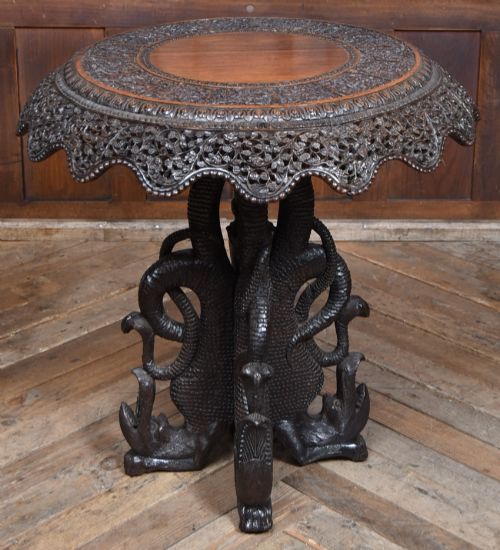
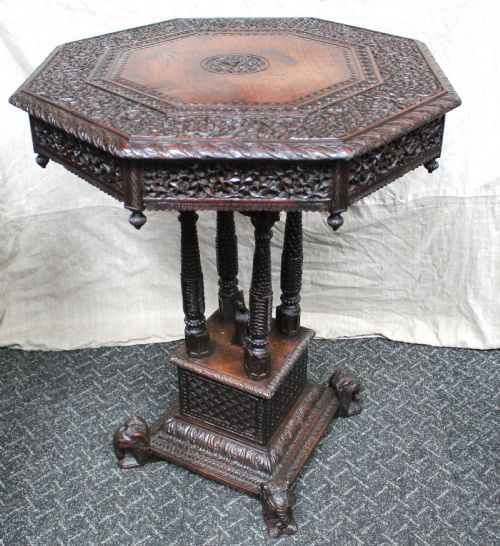
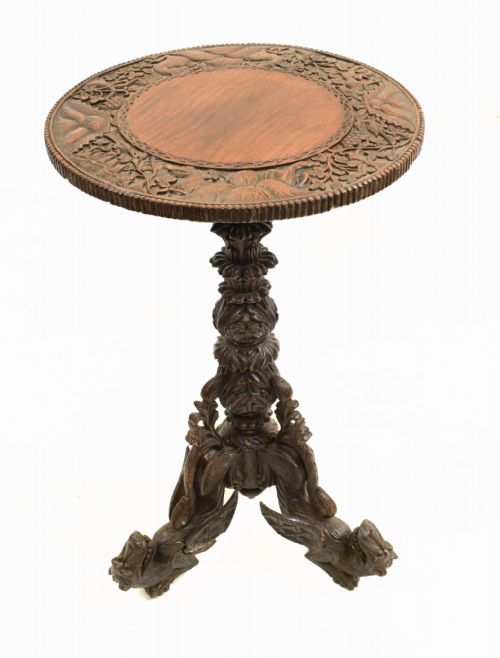
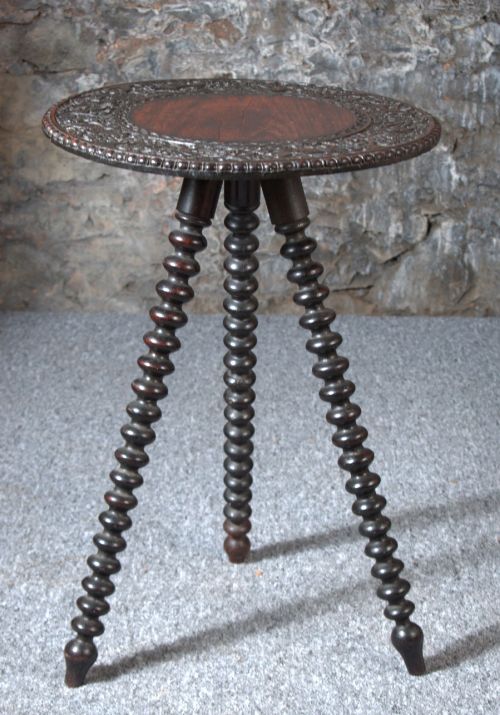
An antique burmese accent table is typically encountered as a side table, occasional table, or two tier table dating from the nineteenth century. These low or compact surfaces served practical roles in colonial homes while displaying distinct regional design traditions.
Makers shaped these side tables and occasional tables from dense timbers, frequently applying deep relief carving to depict figures, foliage, and animals such as elephants. Formats range from standard occasional tables to tip top mechanisms and tiered display stands.
The aesthetic bridges local craftsmanship and British colonial taste, often categorised in styles like Anglo-Burmese or Burmese Colonial. Pieces frequently emerge from decades spanning the late Victorian era up through the early twentieth century.
How they were made
Carpenters utilised dense tropical timbers such as teak, padouk, and general hardwood as the structural foundation for these heavily carved surfaces. These woods provided the necessary weight and durability to withstand deep sculptural relief without compromising structural integrity.
Surfaces frequently showcase intricate hand carving executed with specialised chisels, creating dimensional scenes across the tops and legs. Alternatively, some examples employ lacquer and pigment over a wood base to build smooth, decorated finishes.
Materials recorded across these listings include teak, padouk, general hardwood, lacquer, pigment, and bone.
What varies in quality
Depth and precision in the hand carving separate standard pieces from exceptional examples, as skilled carvers achieved remarkable crispness in foliage and figures. The complexity of the composition, from simple borders to multi-layered narrative scenes, dictates the visual impact.
Selection of timber also plays a role, with choice padouk or teak showing superior grain and colour retention over plain hardwood. Additionally, the stability of specialised mechanisms like tip top actions influences overall utility.
The Antique Burmese Accent Table Glossary
- Padouk
- A heavy, durable tropical hardwood with a reddish hue. It was frequently selected by makers for its strength and rich natural colour.
- Tip top
- A table construction featuring a hinged top that pivots vertically for compact storage. This mechanism allowed surfaces to stand flat against walls when not in use.
- Lacquer
- A durable resin finish applied in multiple layers over wood. It provided a smooth, protective surface often enhanced with pigment.
- Anglo-Burmese
- A design style combining traditional Burmese carving techniques with British colonial furniture forms. These pieces catered to European households abroad and at home.
- Two tier
- A furniture format featuring a primary upper surface supported above a secondary lower shelf. This design provided extra display space within a compact footprint.
Antique Burmese Accent Table: Frequently Asked Questions
How were antique burmese accent tables used?
These tables functioned primarily as movable occasional surfaces for holding tea, books, or decorative objects in colonial sitting rooms.
Their compact scale allowed them to be repositioned easily around domestic spaces as needed.
What woods are typical for these tables?
Carpenters relied heavily on tropical timbers such as teak, padouk, and dense regional hardwoods.
These materials provided the structural density required for deep, intricate hand carving.
What is an Anglo-Burmese style table?
This style combines traditional Burmese craftsmanship with furniture forms familiar to British colonial occupants.
It merges local sculptural motifs with European table shapes like side and occasional tables.
How do I care for a lacquered wood table?
Lacquered surfaces require protection from direct sunlight, extreme heat, and excess moisture to prevent cracking or fading.
Gentle dusting with a soft, dry cloth preserves the pigmented finish without abrasive cleaning.