




Antique Burl Walnut
These pieces of antique burl walnut bring striking figured grain and deep honey tones into a room.
Antique Burl Walnut
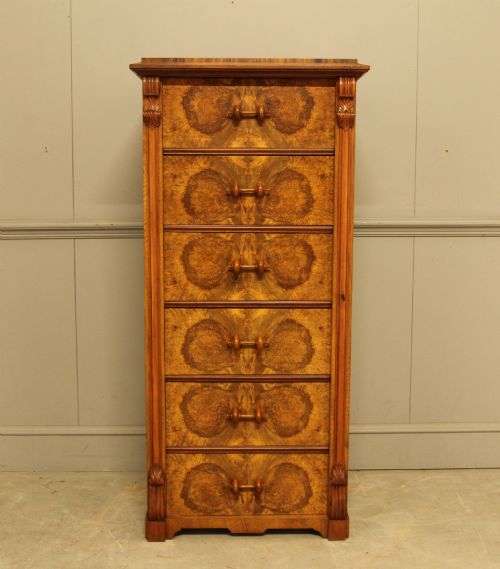
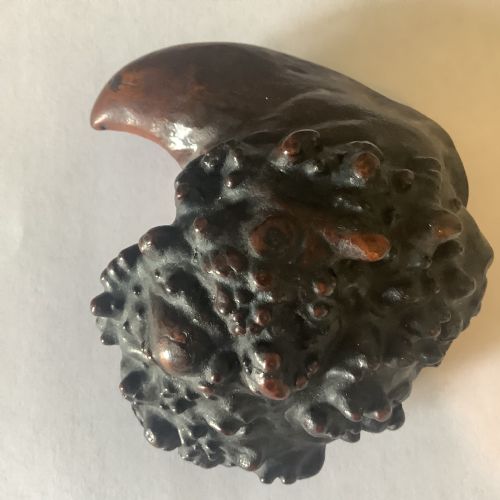
When you search for antique burl walnut, you encounter items shaped from the complex, knotty growths of walnut trees, displaying swirls and eddies in the grain. The selection ranges from Victorian snuff boxes and games boxes with brass and malachite to substantial furniture such as chests of drawers, bureau bookcases, and large bed frames.
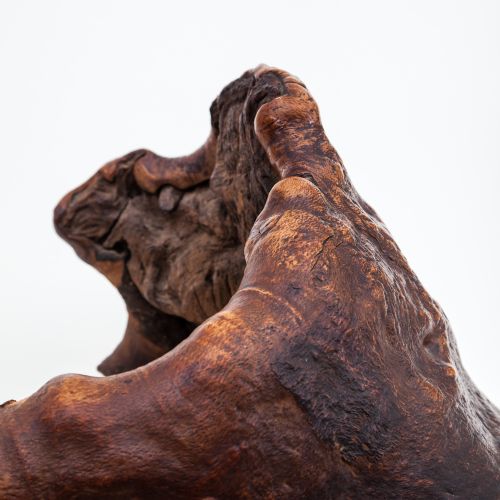
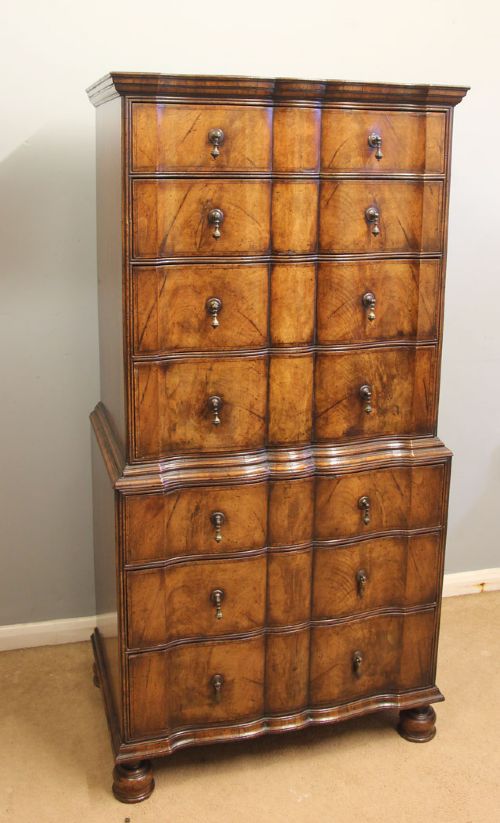
The material appears across several distinct periods, most notably in Victorian pieces, nineteenth-century chests, and items dating back to eighteen hundred. Forms vary widely from small decorative objects carved directly from root sections to architectural case pieces like tallboys and bombé bedsteads.
Georgian and Dutch Rococo influences emerge alongside Art Deco designs from nineteen thirty. You are most likely to meet case furniture and smaller desktop boxes that showcase the dense, patterned timber.
Materials and Construction
Makers utilised burr walnut veneers sliced from highly figured tree growths, laying them carefully over solid wood carcases to create symmetrical patterns across drawer fronts and table tops. This technique demanded great skill from cabinetmakers, who matched the grain across multiple surfaces.
Secondary materials such as brass fittings, marble tops, and intricate wood inlay or marquetry complement the primary walnut timber. Some smaller objects, such as snuff boxes and root sculptures, exploit the organic contours of the natural wood directly.
Antique Burl Walnut Retail Price Guide 2026
Typical asking prices for burl walnut among the pieces listed under this phrase on Sellingantiques today, from the lower quarter to the upper quarter. They describe what is for sale here now, not the wider market.
Listings feature items spanning the nineteenth century, the Victorian era, and nineteen thirty, incorporating materials such as burr walnut veneer, brass, marble, and malachite.
Assessing Quality and Execution
The calibre of an antique burl walnut piece rests upon the intensity of the grain patterning and the precision of the veneer work. Superior examples display balanced, harmonious swirling across every visible surface without disruption.
Construction methods and secondary details elevate certain items, such as crisp carving on solid root sections or the integration of quality mounts in brass and malachite. The integrity of the underlying timber framework dictates the long-term stability of larger case pieces like chests and bureau bookcases.
Gillow & Co·Wiggers
The Antique Burl Walnut Glossary
- Burr walnut
- A veneer or timber taken from a tree growth where the grain has grown in a deformed, swirling manner. It produces complex, eye-catching patterns highly prized by cabinetmakers.
- Bureau bookcase
- A combination piece featuring a sloping desk flap that opens for writing above shelving enclosed by doors. These units often highlight prominent figured veneers on their primary facades.
- Marquetry
- The art of applying pieces of veneer to a structure to form decorative patterns and pictures. Makers use various coloured woods to achieve pictorial designs on table tops and panels.
- Bombé
- A furniture shape featuring outward-curving, bulging fronts and sides. This style is frequently associated with continental pieces from the eighteenth and nineteenth centuries.
Antique Burl Walnut: Frequently Asked Questions
What is burl walnut?
Burl walnut is timber harvested from a tree burl, which is a growth deformity causing the grain to grow in swirling, knotty patterns. Cabinetmakers prize this wood for its decorative qualities.
Because no two burls grow alike, each piece displays a completely unique pattern of eyes and eddies across its surface.
How do I care for antique walnut furniture?
Keep antique walnut pieces away from direct sunlight and heat sources to prevent the wood and delicate veneers from drying out or splitting. Maintain a stable room temperature.
Apply a traditional beeswax polish occasionally and buff gently with a soft cloth to nourish the timber and preserve the natural sheen of the grain.
How can I tell different periods apart?
Dating relies on observing construction techniques, hardware, and stylistic cues such as Art Deco geometry or Victorian carving styles. The underlying secondary woods also offer clues to the origin and era.
Cabinetry details, such as drawer linings and dovetailing methods, help distinguish an eighteenth-century piece from a nineteenth-century or nineteen thirties reproduction.
Where were these pieces used originally?
Larger items like chests of drawers, bombé bedsteads, and bureau bookcases belonged in principal bedchambers, libraries, and drawing rooms of grand houses. They served practical storage needs while displaying wealth.
Smaller objects such as snuff boxes and games boxes sat on parlour tables or desks for daily personal use and polite entertainment.