


Antique Buffet Console
An antique buffet console brings serious historic utility and rich timber warmth to a dining room or hallway.
Antique Buffet Console
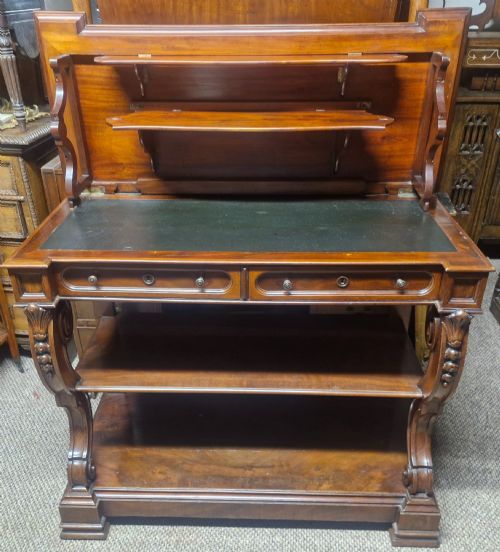
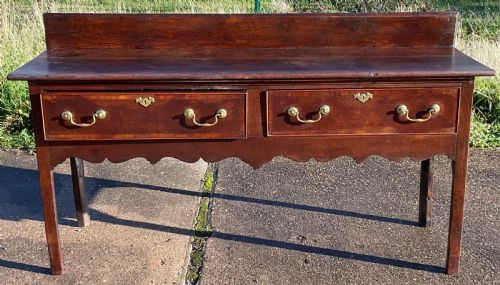
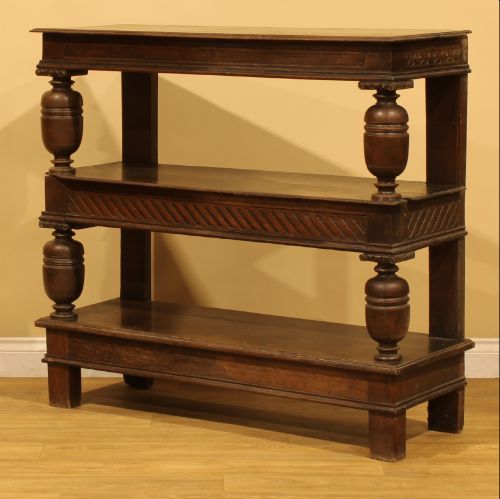
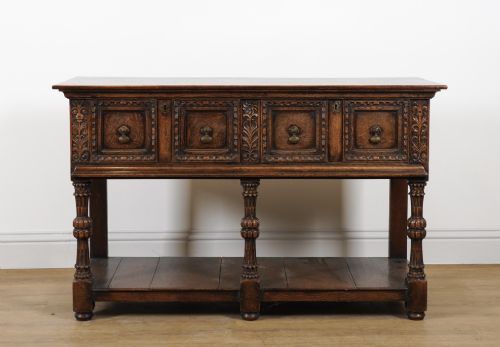
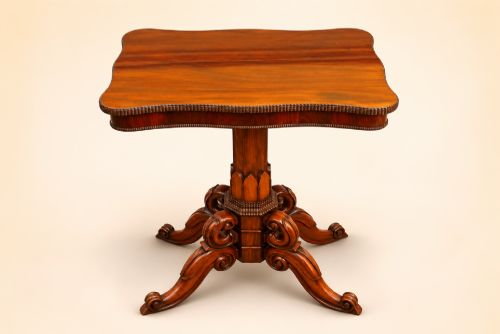
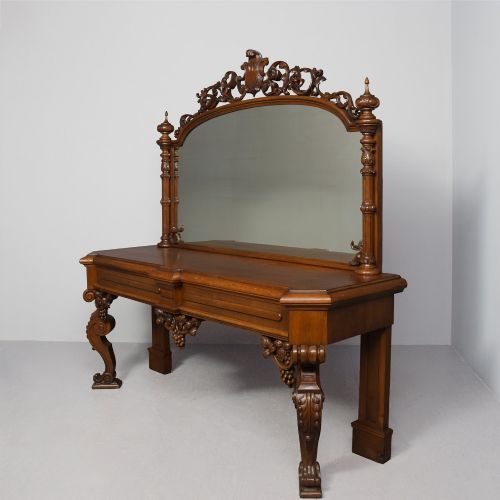
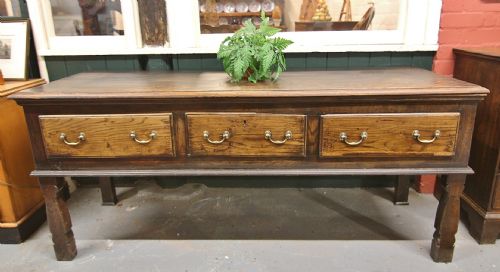
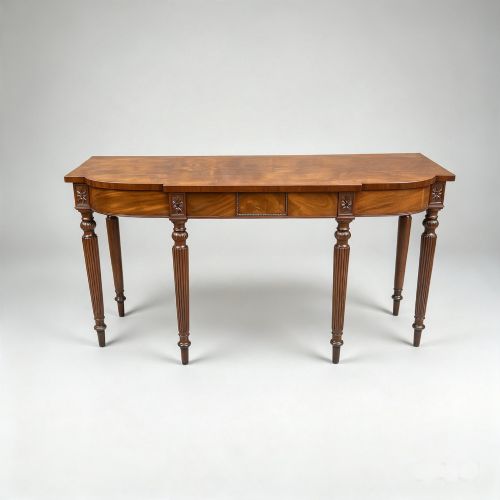
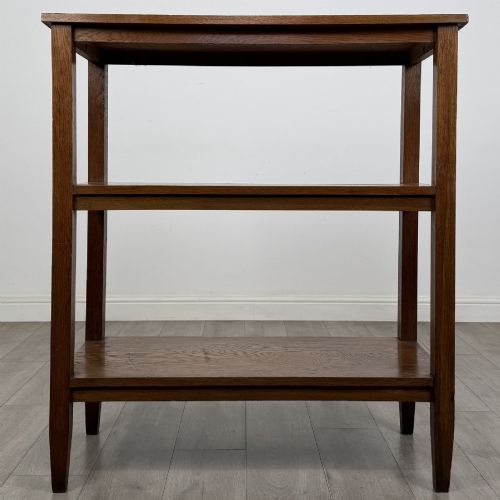
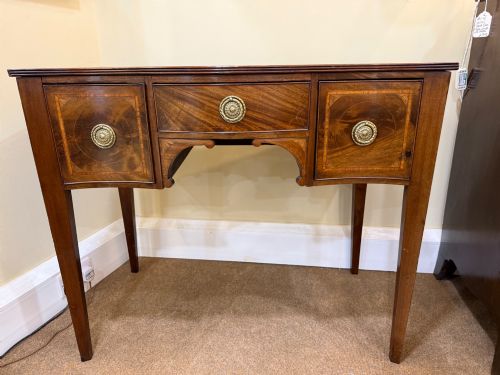
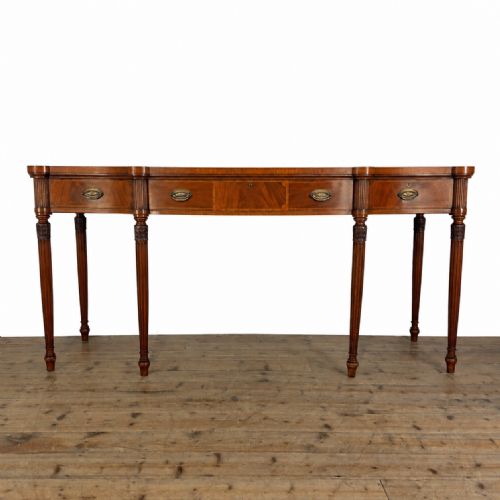
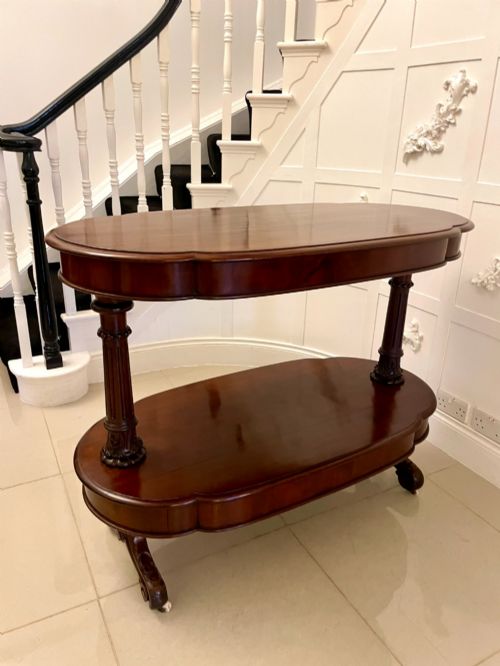
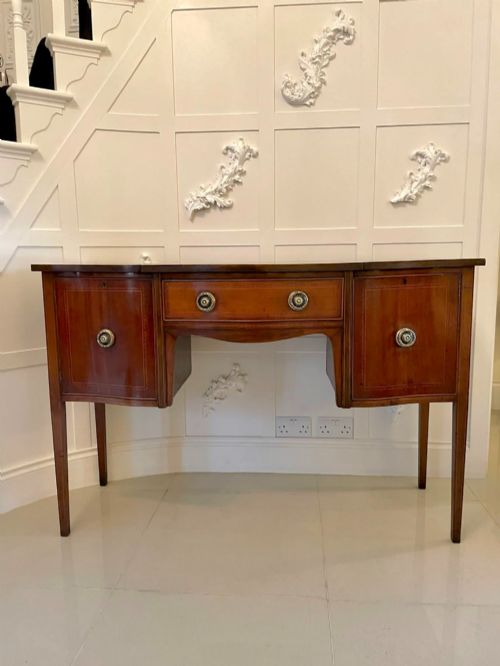
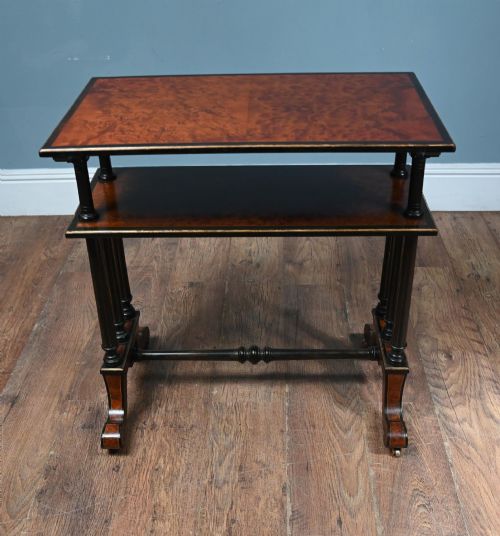
When searching for an antique buffet console, buyers encounter a robust mix of serving tables, sideboards, dresser bases, and console tables spanning from the eighteenth century through the art deco period. These pieces originate primarily from English and French workshops, utilising substantial timber to anchor dining spaces and hallways with functional historic presence.
The most common formats on this page include mahogany serving tables with bow fronts or serpentine shapes, alongside sturdy oak dresser bases fitted with potboards or drawers. Victorian chiffoniers and mirrored console tables also appear frequently, offering varied storage and display surfaces shaped by Georgian, Victorian, and Edwardian design traditions.
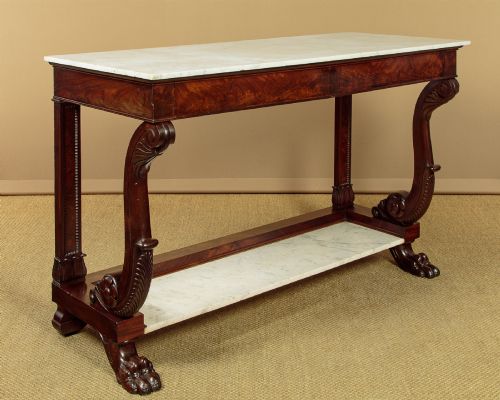
Makers and regional styles introduce further variety, ranging from French oak enfilades with marble tops to Scottish and Welsh country pieces. Whether shaped by gothic revival severity or neoclassical carving, each form serves the fundamental purpose of holding food, silver, or linens while defining the character of a room.
Materials and Construction
Cabinet makers relied heavily on solid mahogany and oak as the structural backbone for these servers and console tables, frequently enhancing surfaces with burr walnut veneer, rosewood, or intricate wood inlay. Pine served as a reliable secondary timber for internal framing and drawer construction, while brass hardware provided functional handles and mounts.
Joinery techniques combined traditional hand-cut framing with carved detailing, such as neoclassical motifs, linenfold panels, or heavy turned legs on potboard bases. Marble tops appeared on specific continental pieces like French enfilades, adding a durable cold surface to warm oak structures.
Antique Buffet Console Retail Price Guide 2026
Typical asking prices for buffet console among the pieces listed under this phrase on Sellingantiques today, from the lower quarter to the upper quarter. They describe what is for sale here now, not the wider market.
Some nineteenth century servers hide metamorphic lifting mechanisms designed to transform standard serving tables into extended dining helpers.
Distinctions in Quality
Quality in these pieces rests primarily on timber selection and the ambition of the carving, where figured mahogany or burr walnut veneers demonstrate superior material cost and cabinet making skill. Exhibition pieces elevate standard designs through deep relief carving, symmetrical grain matching, and integrated mirrors that require advanced structural joinery.
Proportion and integrity dictate the upper tier of the market, distinguishing workshop creations from later reproductions or heavily altered examples. Original brass fittings, well-fitted drawer linings, and crisp hand-carving separate standard utility furniture from exceptional documented cabinet work.
Maurice Adams·Gillows·Epstein
The Antique Buffet Console Glossary
- Dresser base
- A low wooden sideboard or table featuring drawers and sometimes a lower potboard shelf, traditionally used in kitchens or dining rooms for food preparation and storage.
- Enfilade
- A long sideboard or buffet cabinet, often of French origin, designed to stand against a wall and frequently topped with marble.
- Chiffonier
- A compact Victorian sideboard or cabinet featuring enclosed shelving and sometimes a small superstructure on top for display.
- Serpentine
- A furniture front characterised by a gentle undulating curve that bulges outward in the centre and recedes at the ends.
- Potboard
- An open slatted lower shelf fitted between the legs of a dresser base or serving table, historically used for storing heavy pots and pans.
- Bow front
- A convex curved cabinet or table front that projects outward in a smooth arc, popular in Georgian and later mahogany pieces.
Antique Buffet Console: Frequently Asked Questions
How were these tables used originally?
Historically, these items served as auxiliary furniture in dining rooms for holding dishes, silverware, and serving platters before they were brought to the main table.
Some variations, particularly dresser bases with potboards, functioned in kitchens or pantries for storing heavy cookware and everyday domestic provisions.
Where should I place a buffet console?
A buffet console suits dining rooms, large hallways, or living spaces where its long surface and storage capacity can be fully utilised against a blank wall.
Pairing the piece with a mirror or hanging artwork above helps anchor its visual weight and balances the proportions within the room.
How do I identify the period?
Period identification relies on examining the timber grain, construction joints, hardware, and stylistic details such as neoclassical carving or art deco geometry.
Georgian and Victorian pieces often show denser mahogany or oak with hand-cut joinery, whereas Edwardian and later examples introduce lighter inlay work or modernist lines.