



Antique Bronze Pitchers
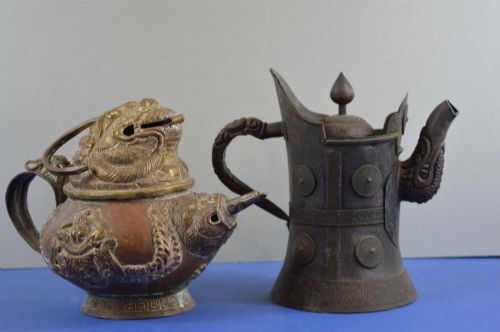
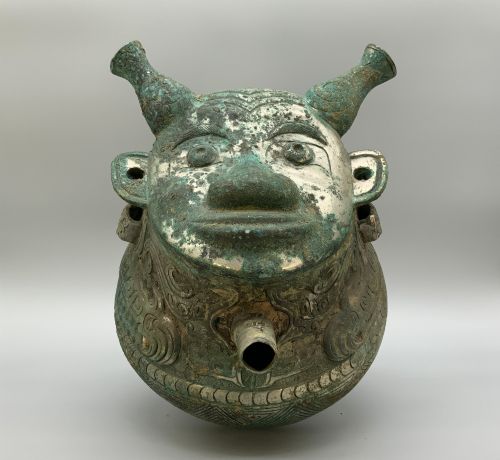
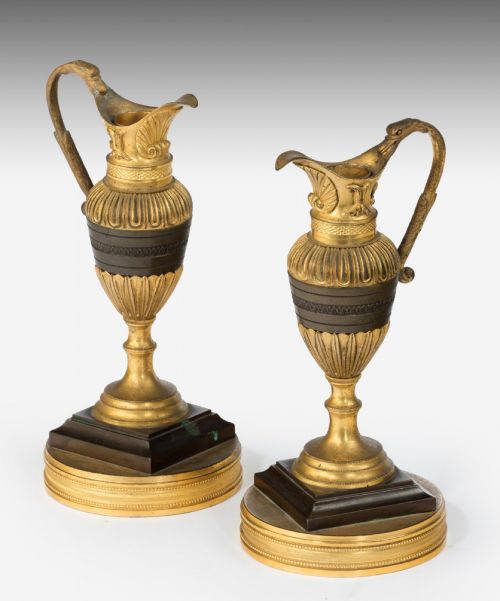
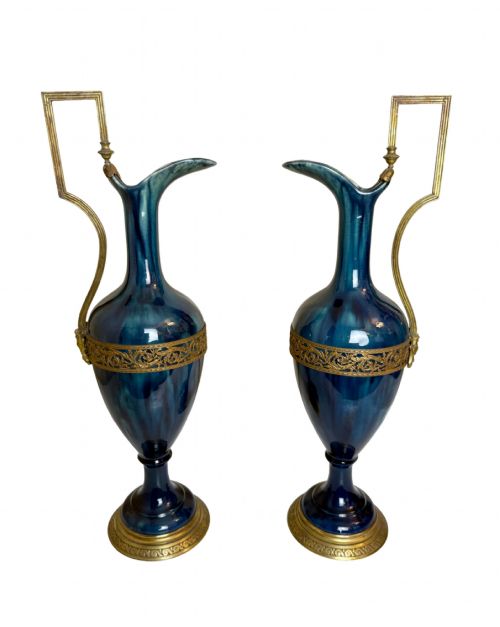
These antique bronze pitchers combine utility and classical ornament, ranging from nineteenth-century European revival styles to ritual vessels.
Antique Bronze Pitchers
When you examine antique bronze pitchers, you find forms that bridge practical vessels and ornamental art objects. The selection includes ewers, ritual vessels, table lamps, and decorative display pieces.
Most examples originate from the nineteenth century, encompassing Victorian, Neoclassical, and Grand Tour aesthetics alongside Tibetan traditional and Ottoman designs.
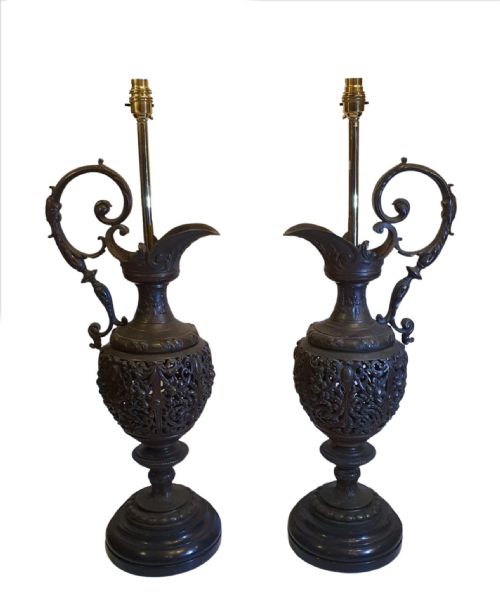
You encounter both standalone decorative ewers and pieces adapted into lamps, reflecting how later owners repurposed these heavy metal containers for domestic illumination.
Materials and Techniques
The pieces rely on cast bronze, patinated bronze, gilt bronze, and ormolu, occasionally incorporating copper inlay, silver, porcelain, or glass bodies.
Casting methods allow for intricate figural handles depicting figures such as Bacchus, dolphins, or mythical makara beasts, often paired with applied surface patinas or verdigris.
Listings feature materials including bronze, gilt bronze, ormolu, copper, porcelain, and glass across the nineteenth and early twentieth centuries.
Assessing Quality
Quality rests in the crispness of the casting and the depth of the chased surface details, particularly around figural handles and relief friezes. Finer examples show careful hand-finishing rather than soft, mass-produced contours.
The sophistication of the patina or the precision of ormolu fire-gilding distinguishes standard decorative items from superior works originating from established European or Asian workshops.
Georges Van De Voorde·Jules Dalou·Susse Freres·Frederic Goldscheider
The Antique Bronze Pitchers Glossary
- Ewer
- A large jug with a wide spout and handle, historically used for pouring water or wine. Many antique examples survive purely as ornamental display pieces.
- Ormolu
- Finely ground high-carat gold applied to a bronze base using a mercury amalgamation process. This technique creates a durable, luminous golden surface seen on nineteenth-century French pieces.
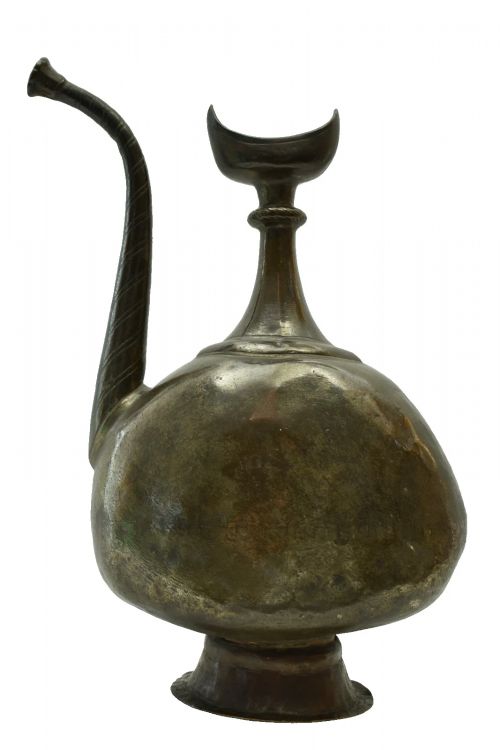
- Aftaba
- A traditional metal ewer or pitcher originating from Islamic regions, often featuring a long spout and crescent moon finial. These vessels served ceremonial or washing functions.
- Patina
- The surface coloration and sheen acquired by bronze over time or through chemical treatment. A controlled patinated bronze finish enhances the visibility of sculptural relief.
- Grand Tour
- A nineteenth-century cultural journey undertaken by wealthy Europeans collecting classical art and decorative objects. Ewers purchased during these travels often emulate ancient Roman or Renaissance designs.
Antique Bronze Pitchers: Frequently Asked Questions
What is an antique ewer?
An ewer is a pitcher designed with a decorative spout and handle. They functioned historically as water or wine containers before evolving into purely ornamental table objects.
Today, collectors appreciate them for their sculptural forms, classical handles, and varied metal finishes.
How do I identify a Grand Tour bronze?
Grand Tour pieces typically date from the nineteenth century and draw inspiration from classical antiquity, Italian Renaissance sculpture, or archaeological discoveries. They were acquired by travellers visiting European cultural centres.
Look for refined patination and classical motifs like dolphins, mythological figures, or architectural handles.
Are these pitchers waterproof?
While many antique bronze pitchers and ewers started as functional vessels, age, internal solder repairs, or conversion into table lamps often makes them unsuitable for holding liquids.
It is best to treat them as decorative sculptures rather than functional tableware.
What is an aftaba?
An aftaba is a traditional Middle Eastern or South Asian metal pitcher characterised by a slender neck, long spout, and often a crescent finial. They were used for ritual ablutions or hand-washing.
These pieces frequently feature hand-engraved surface patterns or inlaid copper and silver.