

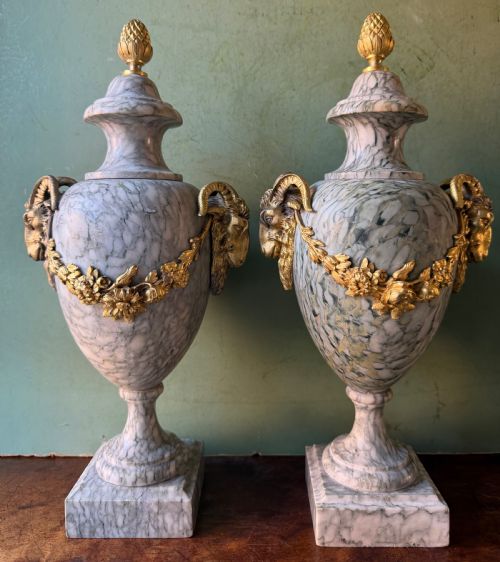


Antique Bronze Ornamental Figure
These antique bronze ornamental figure pieces bring classical sculpture, mantel clocks and candelabra into the room with genuine nineteenth-century weight.
Antique Bronze Ornamental Figure
An antique bronze ornamental figure sits at the intersection of sculpture and functional interior decoration, taking the form of mantel clocks, candlesticks, fire dogs and centrepiece bowls. You are most likely to encounter nineteenth-century French and Viennese works, ranging from Victorian clock cases to Italian Baroque and French Empire revivals.
Makers and foundries utilised varied media within a single piece, pairing cast bronze with marble bases, green onyx, enamel dials and gilt metal mounts. The assortment leans heavily toward domestic display items designed to command attention on a mantelpiece or side table.
How they were made
Foundries cast these pieces in bronze, gilt bronze and ormolu, often mounting the metal figures upon heavy bases of white or coloured marble and green onyx. Many incorporate patinated surfaces alongside contrasting gilt highlights to accentuate the sculptural details.
Clock movements and decorative garnitures required the collaboration of bronziers, clockmakers and marble cutters, uniting mechanical precision with classical sculptural casting techniques.
Antique Bronze Ornamental Figure Retail Price Guide 2026
Typical asking prices for bronze ornamental figure among the pieces listed under this phrase on Sellingantiques today, from the lower quarter to the upper quarter. They describe what is for sale here now, not the wider market.
Listings feature nineteenth-century pieces combining bronze, marble, green onyx and gilt metal across mantel clocks, candlesticks and sculptures.
What varies in quality
The distinction between ordinary and exceptional pieces lies in the crispness of the bronze chasing and the depth of the patination. Finer examples display meticulous hand-finishing on hair, drapery and facial expressions rather than relying solely on the initial cast.
Integration of materials also dictates quality, where the fit between bronze figures, marble plinths and enamel clock dials demonstrates the skill of the original workshop.
Carl Kauba·Ferdinand Preiss·Lemerle Charpentier·F Marti
The Antique Bronze Ornamental Figure Glossary
- Ormolu
- Gilt bronze produced by applying a finely ground high-carat goldmercury amalgam to a bronze object, followed by firing to drive off the mercury. This technique creates a durable, rich golden surface typical of nineteenth-century French decorative arts.
- Patina
- The surface sheen and colour acquired by bronze through age and chemical treatment. A well-maintained bronze develops subtle tonal variations over decades.
- Chryselephantine
- Sculpture combining carved ivory with bronze or other materials. This method gained prominence during the Art Deco period.
- Garniture
- A set of matching decorative objects for a mantelpiece, typically comprising a central clock flanked by candlesticks or urns. These sets coordinate in style, material and sculptural motif.
Antique Bronze Ornamental Figure: Frequently Asked Questions
What periods do these pieces date from?
The available selection spans the nineteenth century, encompassing Victorian productions alongside specific revival styles like French Empire, Louis XVI and Italian Baroque. Dates frequently cluster around the eighteen-eighties and eighteen-nineties.
Later examples extend into the nineteen-twenties with Art Deco forms, showing how classical subjects evolved into modern decorative movements.
How do I care for antique bronze?
Bronze requires minimal intervention to preserve its historic surface and patination. Dust gently with a soft brush and avoid commercial metal polishes that strip away the aged finish.
Keep pieces away from direct heat sources and damp environments to protect underlying marble bases and enamel dials.
How do I distinguish different revival styles?
French Empire and Neoclassical pieces lean toward strict symmetry and Roman motifs, whereas Rococo revival works feature asymmetric scrolls and naturalistic flora. Examining the cast ornamentation reveals these stylistic allegiances.
Signatures, foundry marks and dial inscriptions often help narrow down the specific decades of manufacture.