


Antique British Etching
These antique British etching works on paper offer collectors a tangible connection to nineteenth and twentieth century printmaking traditions.
Antique British Etching
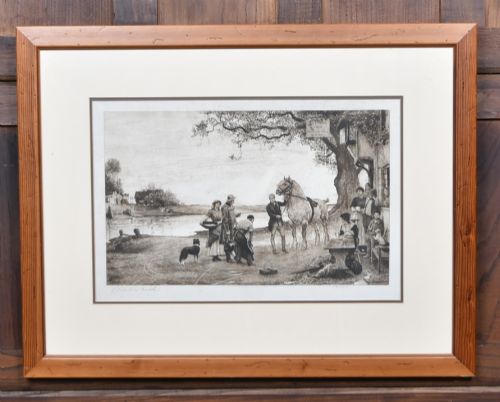
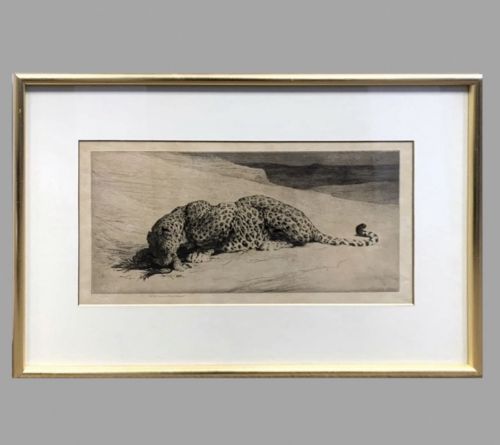
An antique British etching represents a traditional printmaking method where lines are bitten into a metal plate with acid before being inked and pressed onto paper. The examples gathered here span the nineteenth century, the Victorian era, and into the early twentieth century, encompassing periods such as Edwardian and British Modernism. Buyers searching for an antique British etching will encounter framed works depicting rural scenes, architectural views like London and Manchester, and animal studies.
The selection on this page relies heavily on works framed under glass, often within wood, gilt wood, or gold leaf frames. Artists utilised traditional print formats, including drypoint etchings, hand-coloured plates, and aquatints. These pieces function primarily as wall art and fine art prints, originating from various decades between the eighteen-seventies and nineteen-thirty.
Materials and techniques
The core materials recorded across these listings are paper, ink, and metal printing plates, augmented by watercolour in hand-coloured examples. Makers employed processes ranging from standard acid etching to drypoint, where the artist scratches directly into the metal plate with a sharp needle to create a burr that holds ink. Aquatint was also utilised alongside etching to introduce tonal areas of grey and shadow to the printed image.
Finished works are typically presented behind glass and housed within wooden frames, occasionally embellished with gilt wood or gold leaf. Brass fittings appear on associated items like lamps, but the framing of the prints themselves prioritises traditional timber mouldings to protect the delicate paper surface.
Listings feature paper, ink, and watercolour supported by wood, gilt wood, and gold leaf framing.
Quality variations
Quality in these prints rests upon the crispness of the plate impression and the skill of the artist's line work. Drypoint examples depend on the preservation of the delicate burr on the metal plate, which yields rich, velvety lines in early impressions before wearing down over successive printings.
The method of presentation also influences the standard of a piece, specifically the preservation of the paper beneath glass and the quality of the surrounding wood or gilt wood frames. Signed proofs and pencil signatures by the artist elevate the standing of a print compared to unsigned or later impressions.
Robert W. Macbeth·Herbert Dicksee·T.A Prior·Augustus Edwin John·Francis Dodd·Edgar J. Maybery·Norman Janes·Frank Greenwood·David Wilkie·Edward Burrows
The Antique British Etching Glossary
- Etching
- A intaglio printmaking process where an artist draws through a protective ground on a metal plate with a needle, exposing the metal to acid which etches the lines. This forms the recessed grooves that hold the ink during the printing process.
- Drypoint
- A printmaking technique related to etching where the design is scratched directly into the metal plate using a hard steel point. This action raises a rough ridge of metal called a burr, which catches the ink to produce soft, velvety lines.
- Aquatint
- A variant of etching used to create tonal effects rather than lines by applying powdered resin to the plate before biting with acid. It produces areas of varied grey tones resembling watercolour washes.
- Gilt Wood
- Wood that has been coated with a thin layer of gold leaf or metallic gilt paint. It is frequently seen on traditional picture frames housing fine art prints.
- Proof
- An impression taken during the printing process to allow the artist to examine the work. Signed artist proofs carry particular significance in print collections.
Antique British Etching: Frequently Asked Questions
How are antique etchings made?
An etching is created by coating a metal plate with an acid-resistant ground and drawing through it with a needle. Acid then bites the exposed lines into the metal.
The plate is inked, wiped clean, and pressed onto paper under heavy pressure to transfer the image.
What is a drypoint etching?
Drypoint is a technique where the artist scratches the image directly into the metal plate without using acid. This process raises a burr of metal that holds extra ink.
Prints made this way feature rich, soft lines that distinguish them from standard acid-bitten etchings.
How should I frame an etching?
Etchings on paper require protection behind glass to prevent atmospheric damage and fading from light exposure. Acid-free mounts keep the paper from touching the glass directly.
Traditional wood, gilt wood, or gold leaf frames complement the historical nature of these works.
What periods do these prints cover?
The pieces span the nineteenth century through the Victorian and Edwardian eras into the early twentieth century. Listings include works from the eighteen-seventies up to nineteen-thirty.
Styles range from traditional Victorian subjects to British Modernism and early twentieth-century printmaking.