


Antique Bridge Box
An antique bridge box is a specialised receptacle for cards and markers, crafted to keep tables tidy during evening games.
Antique Bridge Box
An antique bridge box is a purpose-built container designed to house playing cards and scoring equipment for card games. When searching for an antique bridge box, buyers encounter specimens primarily originating from the Victorian and Edwardian eras, as well as the 1930s.
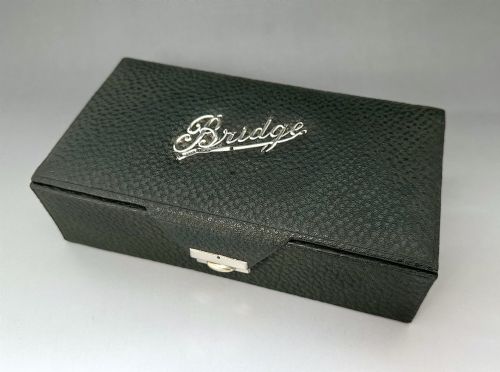
The forms vary from simple wooden caskets to elaborate leather or sterling silver boxes. Many feature rising card trays or fitted interiors specifically arranged to hold multiple decks of cards and small counters.
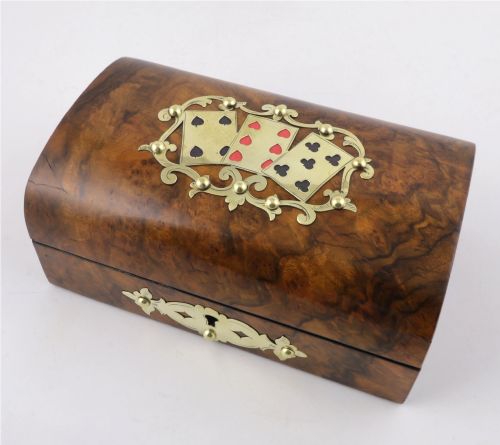
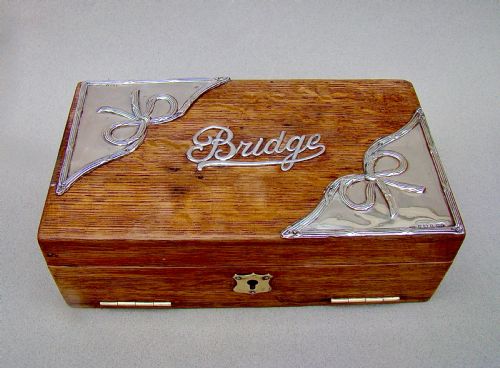
Tunbridge Ware examples appear frequently in archives, showcasing intricate geometric parquetry and tumbling block motifs. Other pieces rely on the rich grain of burr walnut, rosewood, and oak to provide visual interest on a games table.
How they were made
Maker's workshops utilised traditional woodworking techniques, constructing carcass boxes in woods such as walnut, rosewood, and yew before applying decorative veneers. Tunbridge Ware pieces demanded exceptional patience, assembling thousands of tiny coloured wood blocks into pictorial or geometric mosaics before slicing them for surface application.
Metalworkers fabricated mounts, hinges, and vacant shields from sterling silver and brass, often hallmarking the components to record the assay office and year of production. Leather cases relied on stiffened hide over a rigid core, finished with interior linings of silk or velvet to protect the polished cards within.
Listings demonstrate that bridge boxes span the Victorian, Edwardian, and 1930s periods, utilising sterling silver, brass, leather, and burr walnut.
What varies in quality
The standard of an antique bridge box rests upon the precision of its internal fittings and the complexity of its exterior decoration. Tunbridge Ware items with complete, undamaged mosaic tesserae and original interior contents command greater regard than those with losses to the delicate wooden veneer.
Silver-mounted boxes depend on the crispness of the maker's stamp and the weight of the metal casing relative to the wooden core. Internal mechanics, such as a smoothly rising card tray or a securely operating lock with a functioning key, elevate the piece from a simple container to a superior example of period craftsmanship.
Levi & Salaman·Wise Manufactory·Nelson and Drake
The Antique Bridge Box Glossary
- Tunbridge Ware
- A form of decorative woodwork originating from Kent, characterised by minute mosaic veneers depicting landscapes or geometric patterns. These items often incorporate numerous British timbers to achieve natural colour variations.
- Parquetry
- A geometric mosaic of wood pieces used for surface decoration on boxes and trays. It differs from marquetry by forming regular repeating shapes rather than pictorial scenes.
- Treen
- Small handmade wooden household objects and utility wares. The term encompasses turned boxes, pin poppets, and small containers found alongside larger games caskets.
- Sterling Silver
- An alloy of silver containing 92.5 percent by mass of silver and 7.5 percent of other metals, usually copper. This standard is frequently found on Edwardian and Victorian card box mounts.
- Tumbling Block
- An optical illusion design formed of three-dimensional diamond-shaped tiles in contrasting woods. This motif appears regularly on the lids of nineteenth-century Tunbridge Ware boxes.
Antique Bridge Box: Frequently Asked Questions
What is an antique bridge box?
An antique bridge box is a small container specifically designed to store playing cards, score pads, and counters for card games. These pieces date predominantly from the Victorian and Edwardian periods when card games formed a central part of evening entertainment.
Most examples feature fitted wooden interiors, leather exteriors, or sterling silver mounts. They ensure that paraphernalia remains organised between games on the drawing-room table.
How were antique bridge boxes used?
Players used these boxes to store the multiple packs of cards required for bridge and other parlour games. Rising trays within the boxes allowed participants to lift cards easily from the housing during a session.
Beyond storage, the boxes served as decorative objects on side tables when not in active use. Wealthy households often matched the material of the box to other desk accessories in the room.
How do I care for a wooden box?
Keep wooden and Tunbridge Ware boxes away from direct sunlight and steady heat sources to prevent the veneers from drying and cracking. Maintain a stable room temperature to protect the delicate mosaic tesserae and glue joints.
Dust the exterior gently with a dry, soft cloth rather than applying liquid polishes that might seep into porous wood or damaged veneer. Leather-covered examples benefit from similar dry maintenance to preserve the hide.
How do I tell Victorian from Edwardian boxes?
Victorian boxes often display heavier proportions, darker woods like rosewood and burr walnut, and intricate Tunbridge Ware parquetry. Silver mounts from this era bear traditional monarch profile assay marks.
Edwardian pieces frequently show lighter styling, sometimes incorporating cleaner lines alongside sterling silver mounts stamped with later nineteenth and early twentieth-century date letters. Makers such as Levi & Salaman mark silver components clearly during this later window.