


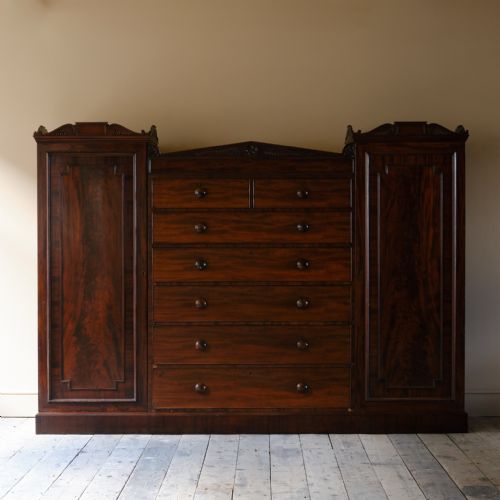


Antique Breakfront Linen Press
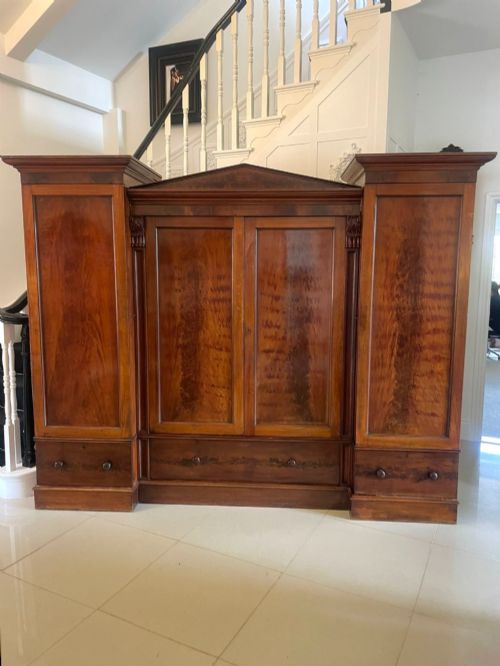
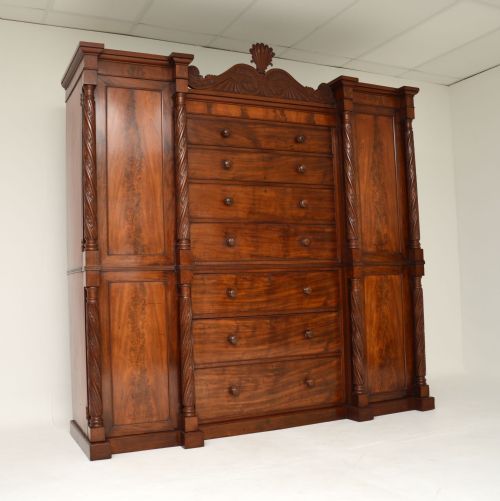
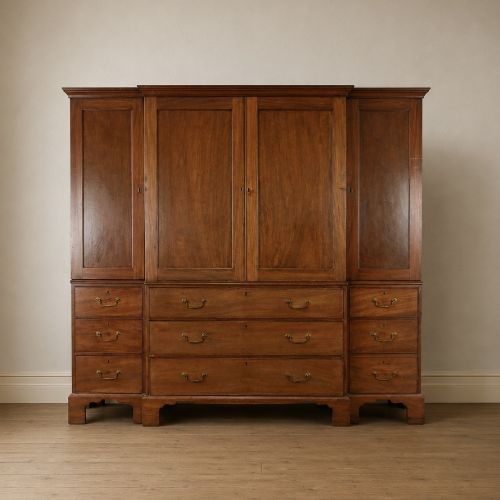
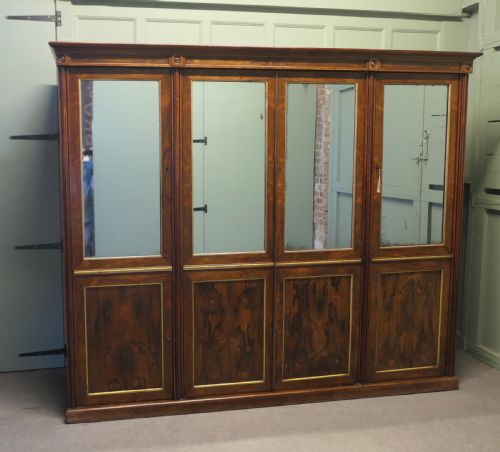
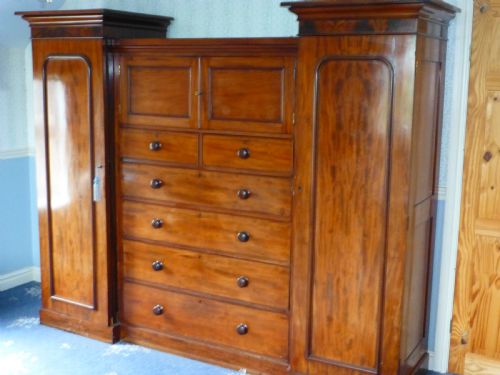
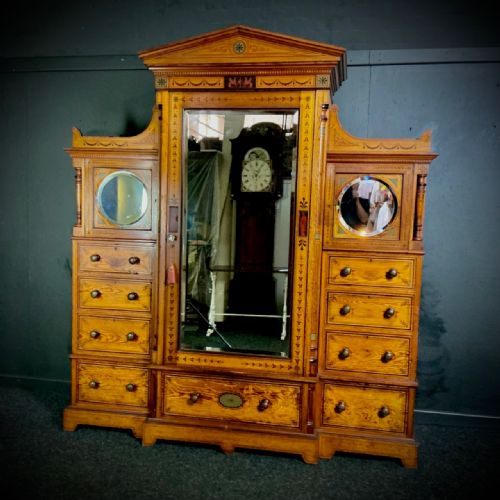
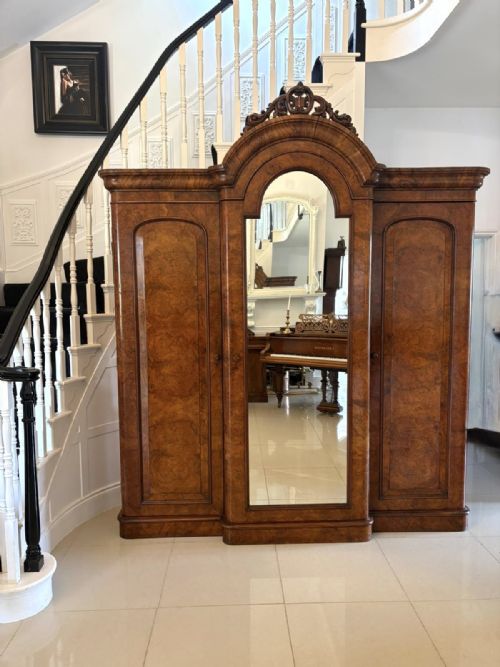
An antique breakfront linen press offers architectural presence and generous storage, combining deep central sections with flanking wings.
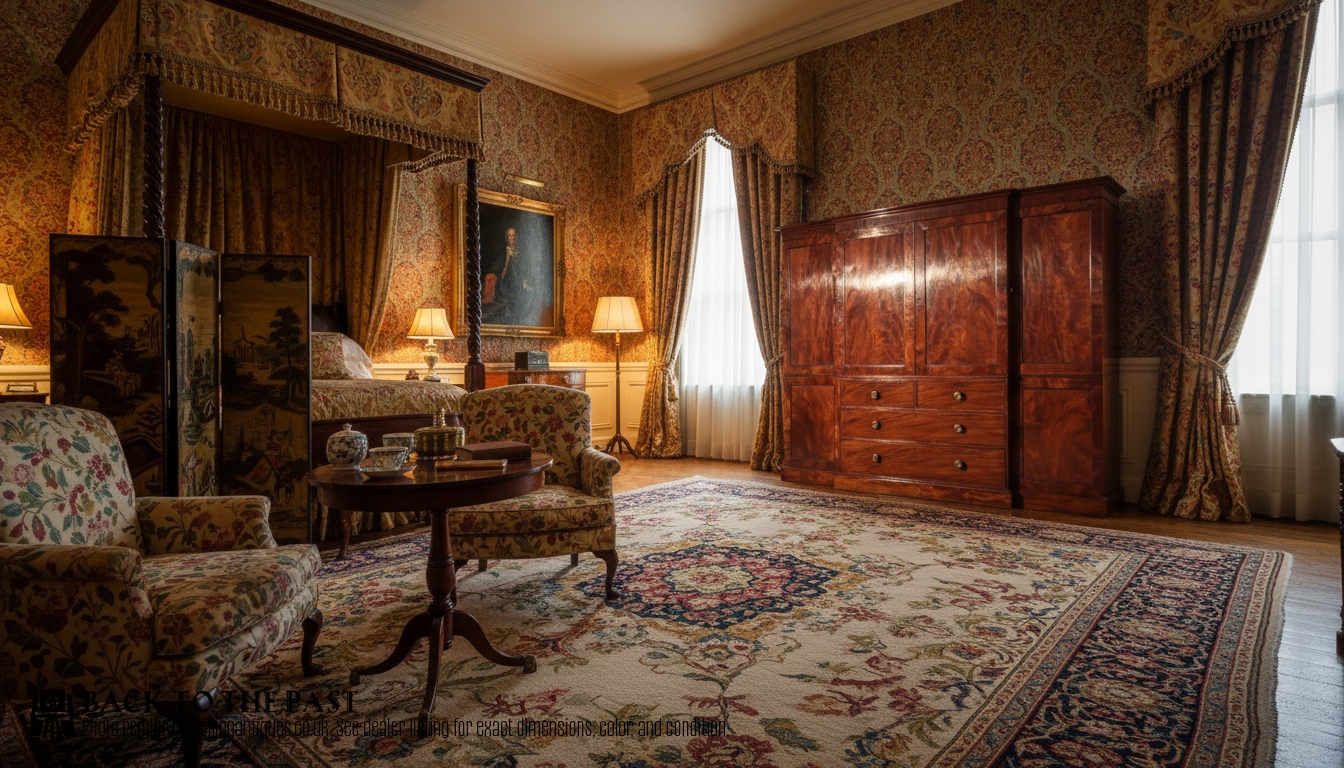
Antique Breakfront Linen Press
An antique breakfront linen press provides substantial storage capacity while breaking up a long wall line through its stepped facade. These pieces combine upper linen storage or hanging space with lower drawers, spanning periods from the Georgian era through to the Victorian period.
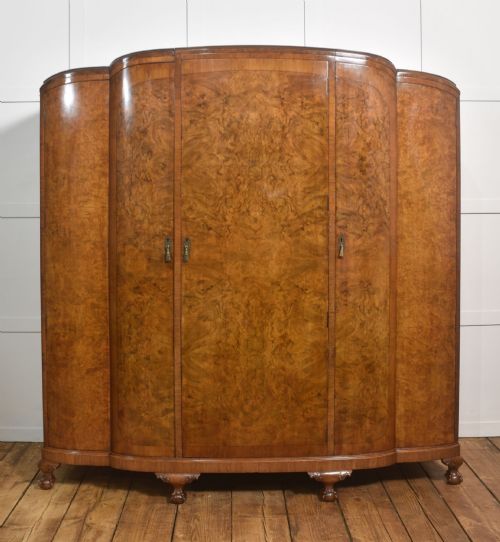
The versions met most frequently on this page feature rich mahogany timbers, flame mahogany veneers, or oak, often constructed with multiple doors. Formats range from traditional George III presses to large Victorian combination wardrobes and compactums incorporating mirrored glass and brass hardware.
How they were made
Cabinet makers utilised solid timbers such as mahogany, oak, and pine for structural carcases, applying figured veneers like flame mahogany, burr walnut, and pollard oak to the primary display surfaces. Satinwood stringing, marquetry inlays, and carved details were frequently added to elevate the facade.
Construction techniques allowed large items to be dismantled for transport, using internal pegging, robust paneling, and brass fittings. Glass panels, mirror glass inserts, and polished brass handles completed the assembly of these substantial bedroom pieces.
Listings feature periods spanning from the eighteenth century George III era through to Art Deco pieces from the 1930s.
What varies in quality
The calibre of timber selection and veneer matching defines the upper tier of these pieces, particularly where continuous grain flows across multiple doors and breakfront sections. Finer examples display meticulous hand-carving, subtle inlay work, and superior secondary woods within the interior drawer linings.
Structural integrity and the retention of original hardware, glass, and internal sliding trays or hanging configurations significantly influence the standing of an individual piece. Proportion and the crispness of the architectural mouldings likewise separate standard production items from master cabinet maker output.
Gillows·Robert Strahan of Dublin·Edwards & Roberts·Harry and Lou Epstein
The Antique Breakfront Linen Press Glossary
- Breakfront
- A cabinet design where the central section projects forward from the flanking side wings. This architectural arrangement creates depth and shadow across the facade.
- Compactum
- A fitted wardrobe designed to maximise internal storage by combining hanging spaces, sliding trays, and multiple drawers in one unit. These items often feature dedicated compartments for specific garments.
- Linen press
- A piece of furniture traditionally used for storing folded household linen on internal sliding trays, typically positioned above a chest of base drawers. Later iterations frequently integrate hanging sections.
- Flame mahogany
- A veneer cut from the fork of the mahogany tree where the branches meet the trunk, producing a distinctive flickering flame pattern. Cabinet makers used this timber for prominent door panels.
- Pollard oak
- Timber taken from trees that have been pollarded, resulting in dense, clustered knot formations and highly decorative figuring. This material appears on select Victorian pieces.
Antique Breakfront Linen Press: Frequently Asked Questions
What is a breakfront linen press?
A breakfront linen press is a large storage cabinet featuring a central section that projects forward from the flanking panels. They traditionally combine internal sliding linen trays or hanging space with lower drawer units.
Cabinet makers produced these pieces in mahogany, oak, and walnut across the Georgian and Victorian eras. Their stepped profile gives them a distinct architectural presence in a bedroom or hallway.
How do I dismantle a large wardrobe?
Many large period wardrobes and presses were built to be taken apart for ease of transport and installation. They typically use internal wooden pegs, bolts, or slot-together tongue and groove joints rather than fixed glue.
Careful examination of the internal corners and cornice reveals the assembly system. Marking each component during disassembly ensures correct re-erection in a new room.
What is the difference between a press and a wardrobe?
A traditional linen press specifically refers to a piece containing internal sliding shelves or trays designed for storing folded textiles flat. Wardrobes are primarily engineered for hanging garments vertically on rails or hooks.
Over the nineteenth century, combination pieces emerged that integrated both functions alongside drawers and boot cupboards. These versatile units are frequently termed compactums or combination wardrobes.
How do I care for antique veneer?
Antique mahogany and walnut veneers require stable room humidity and protection from direct sunlight to prevent lifting and fading. Regular dusting with a dry, soft cloth maintains the polished surface without moisture damage.
Applying a traditional beeswax polish occasionally nourishes the timber and preserves the depth of the grain figure. Avoid synthetic sprays and silicone products which can degrade historic finishes.