





Antique Brass Strap Chest
An antique brass strap chest brings utilitarian strength into a room, fashioned from dense timbers and secured with heavy metalwork.
Antique Brass Strap Chest
An antique brass strap chest encompasses sturdy travelling trunks, campaign furniture, and domestic storage boxes reinforced with metal bands. These pieces originate from periods ranging from the seventeenth century through the Victorian era, reflecting a history of travel and secure storage.
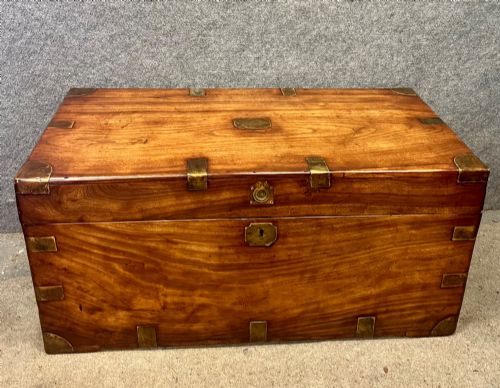
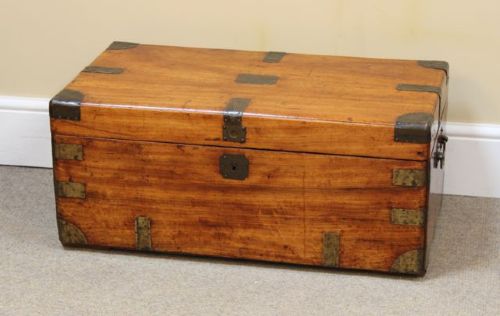
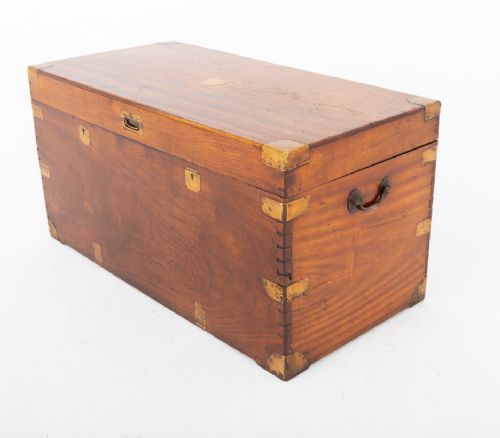
The most common examples encountered on this page are nineteenth-century teak and camphor wood trunks. Such items were built to withstand long journeys, often displaying the distinctive corner reinforcement and strapwork characteristic of military campaign pieces.
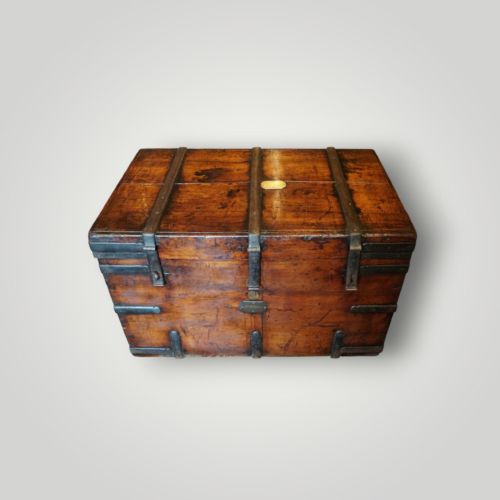
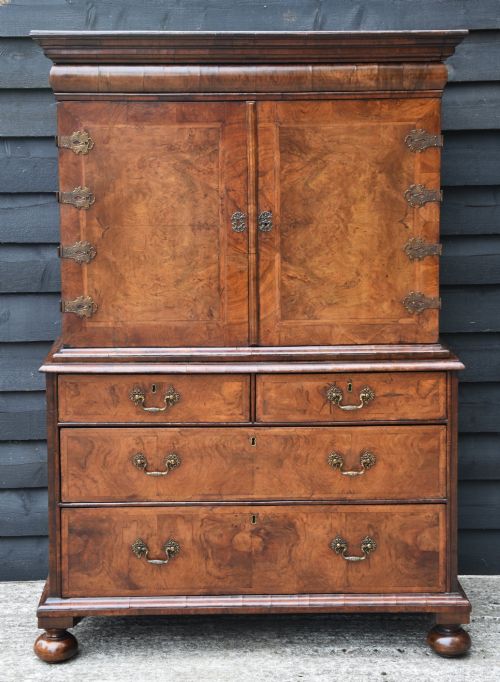
Beyond standard trunks, the selection includes specialised forms such as cellarettes, silver chests, and cabinets on chests. These variations utilise similar metal strapping techniques applied to mahogany, oak, and walnut bodies for domestic utility.
Materials and construction methods
Construction relies on durable hardwoods such as teak, mahogany, oak, and camphor wood, chosen for their resilience against warping and pests. These timbers are assembled with robust joinery to support heavy contents during transit.
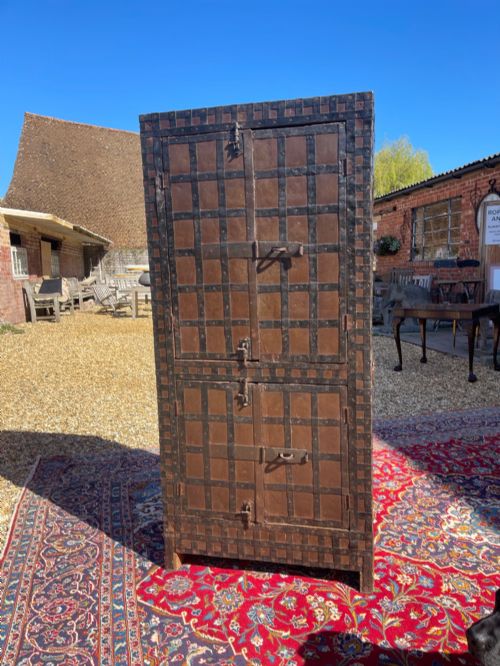
Brass or iron straps and corner mounts are affixed using screws or rivets to protect vulnerable edges from impact. This metalwork provides structural rigidity while creating the characteristic grid pattern across the timber surfaces.
Listings feature pieces spanning from the 17th century to the early 20th century, constructed from teak, oak, mahogany, walnut, and camphor wood.
Assessing quality in metal-strapped chests
Quality rests in the precision of the metalwork integration and the selection of timber. Superior pieces feature hand-cut dovetail joints, neatly inset brass strapping flush with the wood, and original locking mechanisms with functional keys.
Lesser examples show crude iron or brass banding surface-mounted without recessing, alongside plain secondary woods. The presence of original inscriptions, provenance, and intact internal compartments elevates the standing of a trunk.
The Antique Brass Strap Chest Glossary
- Campaign chest
- A modular chest of drawers designed to break apart into sections for transport by military officers. These pieces feature recessed brass handles and corner brackets to prevent snagging.
- Cellarette
- A lockable container used for storing bottles of wine or spirits. They often appear as brass-bound wooden buckets, octagonal boxes, or cellaret tables.
- Camphor wood
- An aromatic hardwood native to Asia, frequently utilised for campaign trunks because its scent naturally deters insects. It shows a distinctive pale grain.
- Coffre fort
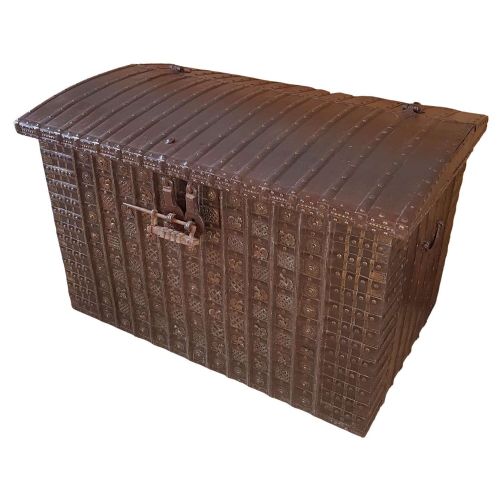
- A heavy strongbox or coffer reinforced with iron or brass straps, built for secure storage of valuables and documents. These date back to earlier European craftsmanship.
- Dovetail
- A joint formed by interlocking wedge-shaped fingers, crucial for holding the corners of a wooden chest securely together without relying solely on glue.
Antique Brass Strap Chest: Frequently Asked Questions
What is an antique brass strap chest?
An antique brass strap chest is a heavy storage trunk or box reinforced with metal bands and corner brackets. They were originally utilised for travel, commerce, or secure domestic storage.
Today, these chests function as coffee tables, blanket boxes, or statement storage pieces in residential interiors.
How were these chests used originally?
Officers, merchants, and travellers used them to transport clothing, documents, and personal possessions across long distances. Some variants served specialised roles, such as holding wine bottles or silver plate.
The robust construction ensured contents survived rough handling on ships, trains, and carriages.
How do I care for camphor wood and teak?
Maintain these dense hardwoods by keeping them away from direct heat sources and sudden humidity changes. Occasional treatment with natural wax preserves the lustre of the timber.
Avoid harsh chemical cleaners on the brass straps to allow natural patina development.
How can I tell the period of a chest?
Examine the construction details, wood species, and style of the brass hardware. Georgian and Regency pieces often employ mahogany and refined bracket feet, while Victorian examples frequently utilise pine, camphor, or teak with heavier iron or brass mounts.
Inscriptions, stamps, and lock types also provide clues to the manufacturing date.