


Antique Brass Pulls
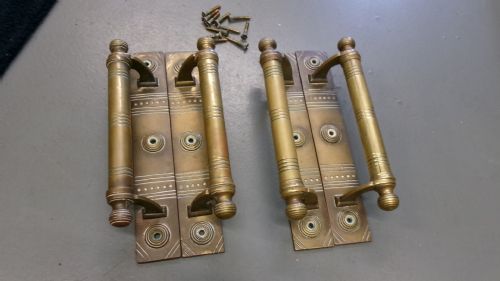
Antique brass pulls bring heavy metalwork and turned detail to doors, drawers and architectural hardware.
Antique Brass Pulls
You are most likely to meet Victorian and Georgian pieces, from simple bee hive centre door knobs to elaborate door bell pulls and letter box combinations. Many items originate from domestic doors, shop entrances and country house furniture.
What varies in quality
The weight and crispness of the casting separate standard hardware from finer examples. Heavy bronze and cast brass retain sharp decorative details, deep moulding and clean geometric turning, whereas inferior pieces appear soft and worn in their relief.
The retention of original mounts, backplates and fixings dictates the integrity of a pull. Superior items display harmonious pairings of metal and glass or wood, maintaining their original working mechanism and surface patina.
Listings feature brass, bronze, crystal and glass across Victorian, Georgian and Edwardian periods.
Thomas Butler of London·Richard Gibbs London
The Antique Brass Pulls Glossary
- Centre door knob
- A large stationary handle mounted in the middle of an exterior door for pulling the door closed rather than operating a latch.
- Bell pull
- A lever or handle connected to a wire mechanism used in houses to summon servants from another room.
- Drop handle
- A swinging handle attached by two vertical posts to a backplate, commonly found on drawers and cabinet doors.
- Bee hive
- A traditional circular turning pattern featuring concentric stepped ridges found on Victorian brass door knobs.
- Cast brass
- Molten brass poured into a mould to create solid, shaped architectural hardware and furniture fittings.
Antique Brass Pulls: Frequently Asked Questions
How do I clean antique brass pulls?
Use a soft cloth and mild soapy water to remove surface dirt without disturbing the aged patina. Avoid harsh chemical polishes that strip historical character from the metal.
Dry the pieces thoroughly after cleaning to prevent moisture damage to both the brass and any attached wood or glass.
Are these door pulls suitable for modern doors?
Many Victorian and Georgian brass pulls fit standard contemporary doors with minor adjustments to spindles and fixings. Check the dimensions and backplate size before installation.
Some period bell pulls and heavy centre knobs require specific mounting considerations due to their original mechanical functions.
How do I date a brass door knob?
Georgian and Regency brass knobs often feature simpler ovular or plain geometric turnings, while Victorian examples introduce patterned designs like the bee hive or octagonal forms. Edwardian and later pieces align with Arts and Crafts or Art Deco styling.
Examine the casting quality, screw threads and overall weight to help determine the period of manufacture.
What is the difference between a pull and a knob?
A knob is typically a rounded or multi-sided handle designed to be turned or grasped to operate a latch mechanism. A pull remains stationary and is gripped solely to draw a door or drawer open.
Both forms appear frequently across domestic and commercial antique hardware.