



Antique Brass Measuring Weights
Antique brass measuring weights are precise instruments of trade and governance, prized for their heavy metal mass and historic verification stamps.
Antique Brass Measuring Weights
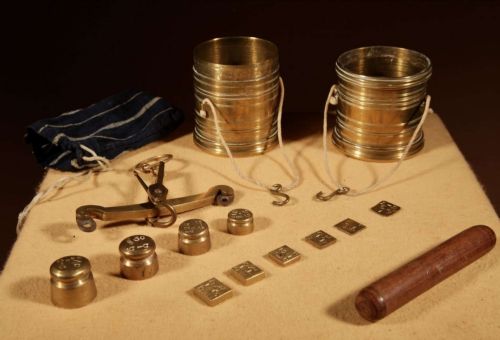
Antique brass measuring weights comprise calibrated mass standards, imperial measures, and scale sets produced for counties, boroughs, and official inspectors.
The buyer encounters items ranging from complete Dutch bushel balance sets and Troy ounce collections to standard weights stamped for cities such as Liverpool and Lancaster.
These instruments represent official metrology, featuring government verification marks and specific geographical allocations that record local trade regulation.
How they were made
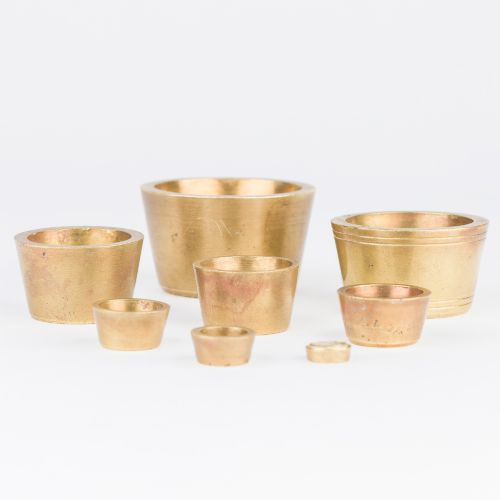
Maker workshops utilised solid brass for the primary weights and measuring vessels, ensuring durability and precise mass under regular handling by inspectors.
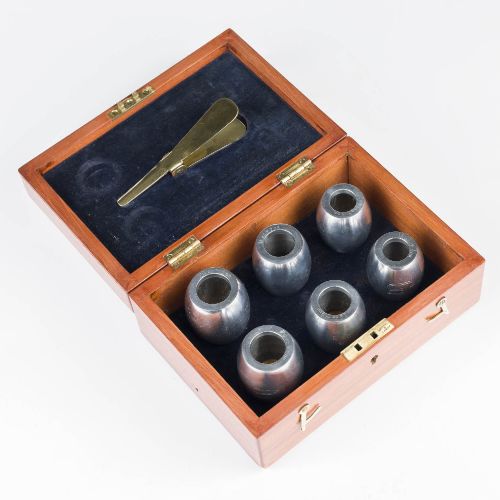
Casing and storage relied on timber such as mahogany, frequently fitted with velvet or textile linings to protect delicate scientific instruments and balance sets.
Engraving and stamping applied official inscriptions, dates, and geographic locations directly into the metal surfaces to record calibration standards.
Antique Brass Measuring Weights Retail Price Guide 2026
Typical asking prices for brass measuring weights among the pieces listed under this phrase on Sellingantiques today, from the lower quarter to the upper quarter. They describe what is for sale here now, not the wider market.
Some sets record official standards for the Isle of Man, proving that strict measurement reached even across the Irish Sea.
What varies in quality
Distinctions in quality arise from the completeness of sets and the historical significance of the original governing body or municipality named on the piece.
Makers such as De Grave Short and Co. demonstrate superior mechanical precision and clear engraving compared to unmarked or standard utility pieces.
The presence of original fitted mahogany boxes and textile linings preserves the integrity of the scientific instruments and enhances their documentary value.
De Grave Short and Co·W and T Avery
The Antique Brass Measuring Weights Glossary
- Avoir Standard
- A system of standard weights used for commercial trade regulation. These sets ensured uniform measurement across specific cities and counties.
- Troy ounce
- A traditional unit of mass applied specifically to precious metals and apothecary goods. These small weights are typically found in dedicated sets.
- Chondrometer
- A specialised scientific instrument used to measure the weight of a specific volume of grain. This determined quality and value in agricultural trade.
- Verification balance
- A high-precision scale utilised by inspectors to test local commercial weights. These balanced instruments ensured public market accuracy.
Antique Brass Measuring Weights: Frequently Asked Questions
What were antique brass measuring weights used for?
These pieces served local government inspectors, counties, and boroughs to verify commercial scales and ensure accurate trade measurements in markets and shops. They maintained public standards for mass and volume.
Official bodies relied on these calibrated sets for regular inspections of trade equipment. Their precise manufacturing met strict legal requirements of the period.
How do I identify the age of these weights?
Age is typically determined by engraved dates, maker signatures, and official stamps naming specific counties, cities, or reigning monarchs. Stylistic details of the brass and fitted cases also offer clues.
Many pieces bear specific year markers alongside geographic locations like Liverpool or Essex. Maker names like De Grave help narrow down the production era.
Are complete sets common?
Complete sets of weights in their original fitted mahogany boxes are less common due to the dispersal of individual pieces over time. Surviving complete sets often retain institutional provenance.
Original velvet or textile linings inside the cases help indicate an intact collection. Inspectors maintained these sets carefully in official service.
How should I display or store them?
These items require stable indoor conditions away from excessive moisture to preserve the natural brass finish and any historic wooden casing. Gentle dusting maintains the metal surfaces without removing patina.
Displaying them in secure cabinets highlights their solid metal construction and historic engraving. Original fitted boxes provide safe storage for loose components.