

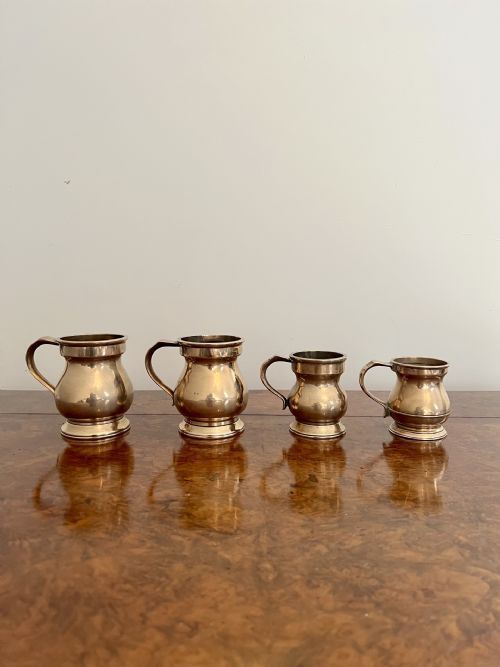


Antique Brass Measure Set
These antique brass measure set pieces bring precision and utility to any room, offering tangible links to historical trade and scientific standardisation.
Antique Brass Measure Set
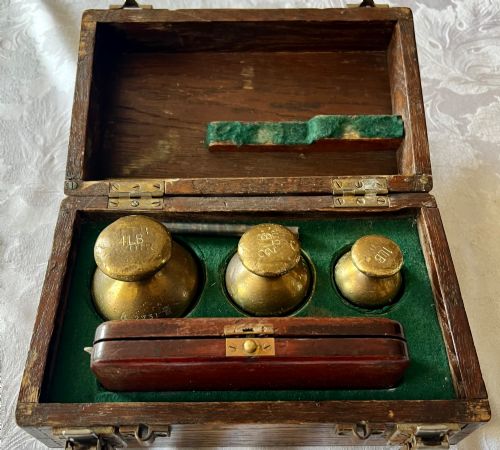
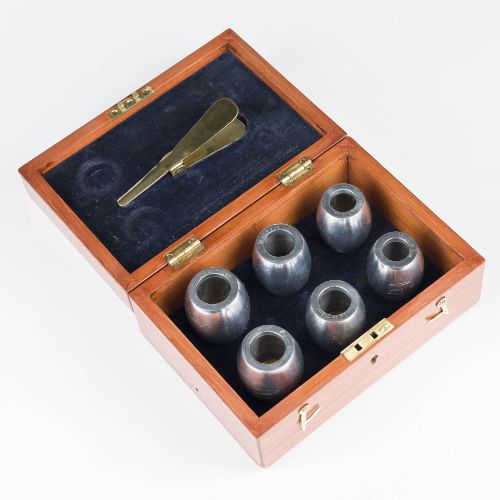
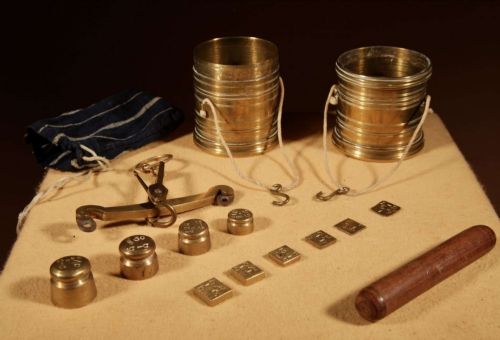
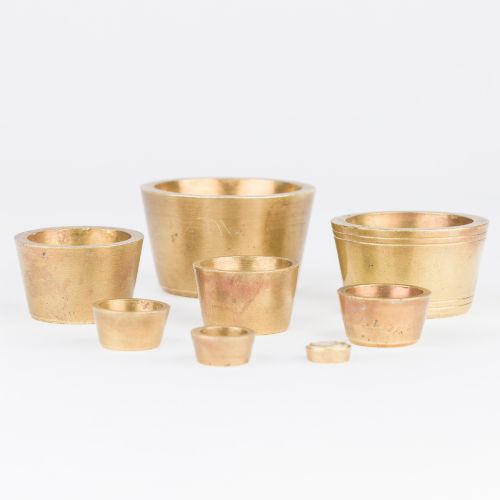
An antique brass measure set brings together calibrated instruments, standard weights, and liquid measures used across commerce and science. These groupings include matched sets of bell-shaped tankards, nested standards, and specialised balance weight collections.
The options appearing on this page span from Victorian domestic or civic contexts to early twentieth-century official metrology. Buyers encounter everything from local authority standard sets to colonial trade vessels and tavern measures.
Origin styles range from domestic Victorian industrial production to 19th-century Dutch work and Anglo-Indian output. Each set reflects the stringent demands of its original governing body or trade.
Materials and construction
Brass dominates these objects, providing the necessary density and durability for frequent handling and measurement. Copper often appears alongside brass in measure sets, while supplementary elements utilise wood, bone, velvet, and mahogany for fitted storage.
Casting and turning form the primary methods of creation for both bell-shaped tankards and solid standard weights. Many pieces display crisp punch marks, engraved civic inscriptions, and maker stamps that denote their official calibration history.
Antique Brass Measure Set Retail Price Guide 2026
Typical asking prices for brass measure set among the pieces listed under this phrase on Sellingantiques today, from the lower quarter to the upper quarter. They describe what is for sale here now, not the wider market.
Object forms include scientific instruments, balance scales, bell-shaped tankards, and standard weight collections for municipal boroughs.
Quality variations
Quality rests in the crispness of the original cast details and the legibility of the governmental or maker engravings. Sets that retain their full complement of matching components command greater interest than assembled groups.
The presence of original fitted boxes lined in velvet or mahogany elevates a set's character. Surface wear tells a working history, but deep distortion to the metal or defaced calibration marks alters the integrity of the piece.
De Grave Short And Co·W And T Avery·De Grave And Co
The Antique Brass Measure Set Glossary
- Avoir Standard
- A recognised weight standard used for general commerce rather than precious metals. These sets governed everyday buying and selling in markets and boroughs.
- Troy Ounce
- A system of units of mass originating in medieval Europe, used primarily for weighing precious metals and gems. Weight sets in this standard are scaled accordingly.
- Sikes Hydrometer
- An instrument utilised to determine the strength of spirits by measuring specific gravity. Complete sets include specialised graduated brass weights and ivory or bone indicators.
- Seer Measure
- A traditional unit of mass and capacity used in South Asia. Sets combining copper and brass construction reflect colonial trade and administrative measurement.
- Imperial Measures
- Official systems of weights and measures established across the British Empire. These vessels standardise liquid or dry quantities for civic bodies.
Antique Brass Measure Set: Frequently Asked Questions
What did an antique brass measure set do?
These sets served trade, science, and civic governance by providing verified standards for mass, volume, or spirit strength. Local authorities and merchants relied on them to ensure fair transactions.
They bridge domestic history and metrology, recording how communities regulated everything from tavern ale to precious metals.
How do I identify the date of a set?
Look for engraved civic inscriptions, borough stamps, and maker marks that often include specific years or reign indicators. Style markers like Victorian bell shapes also offer clear chronological clues.
Associated wooden storage boxes and lining materials can further help narrow down the period of manufacture.
Are these measures still accurate today?
While many retain their precise physical mass or volume, they are treated today as historical and decorative objects rather than legal standards. Centuries of use and calibration adjustments mean they belong in collections.
Displaying them allows one to appreciate the rigorous oversight of historical trade and industry.
How should I care for brass measure sets?
Keep the metal in a stable environment away from excess moisture to preserve the surface finish and any historic patination. Avoid aggressive chemical polishes that remove stamps and engraving details.
If fitted wooden boxes or velvet linings are present, gentle dusting with a soft brush helps maintain their integrity.