



Antique Brass Font
These antique brass font pieces are oil lamps and clock elements holding fluid, crafted to illuminate or serve domestic spaces.
Antique Brass Font
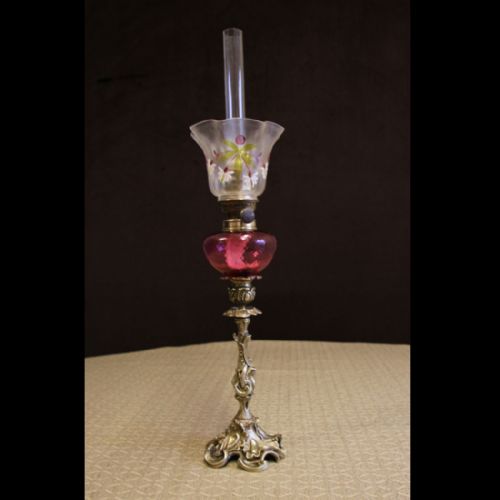
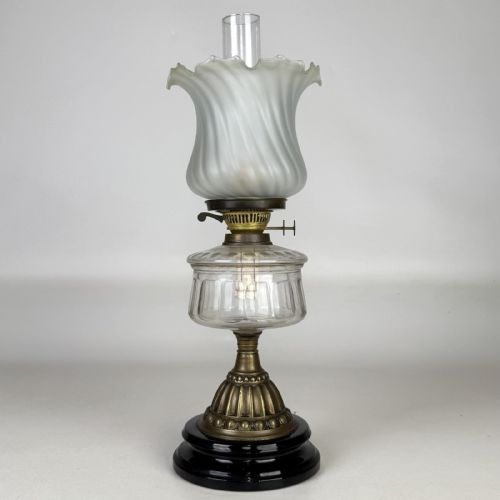
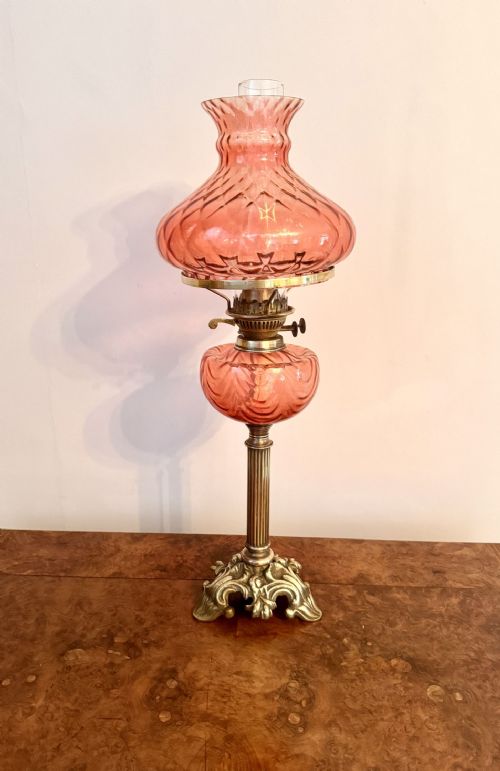
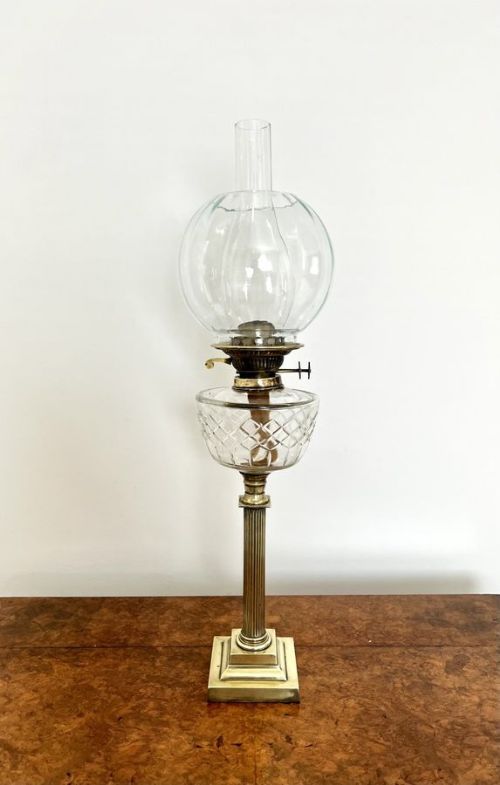
An antique brass font typically forms the fuel reservoir of a Victorian or Edwardian table oil lamp, sitting atop a column or base. These pieces frequently incorporate glass or ceramic vessels paired with brass mountings and cast bases.
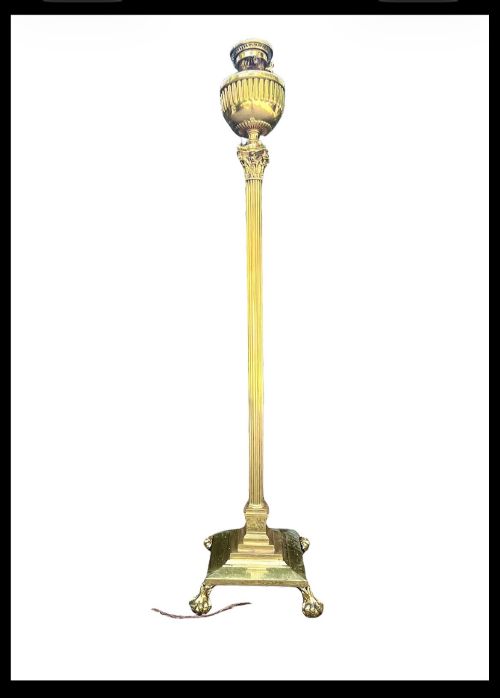
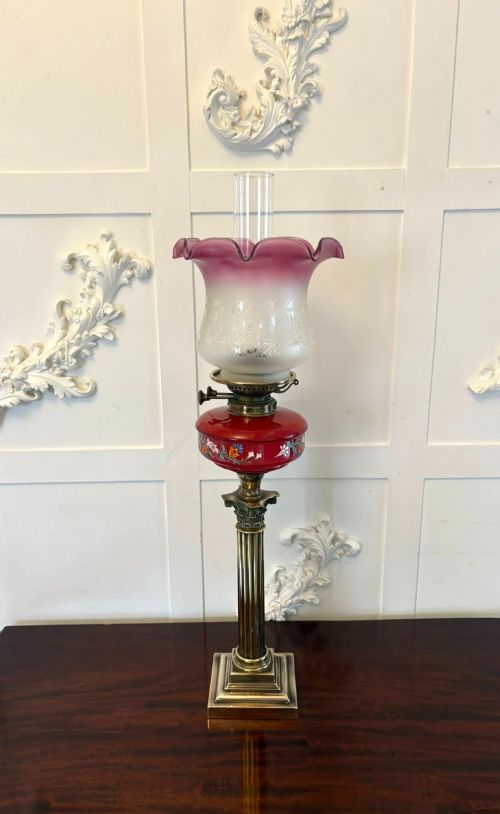
The selection ranges from Corinthian column standards to telescopic designs and simple cottage table lamps. Alongside lighting, the category includes figural clock compositions featuring basins modelled as holy water vessels.
Victorian examples dominate the listings, spanning the mid nineteenth century through to the Edwardian period and the early twentieth century. Most survive with their original reservoirs, while others are paired with contrasting decorative shades.
Materials and construction
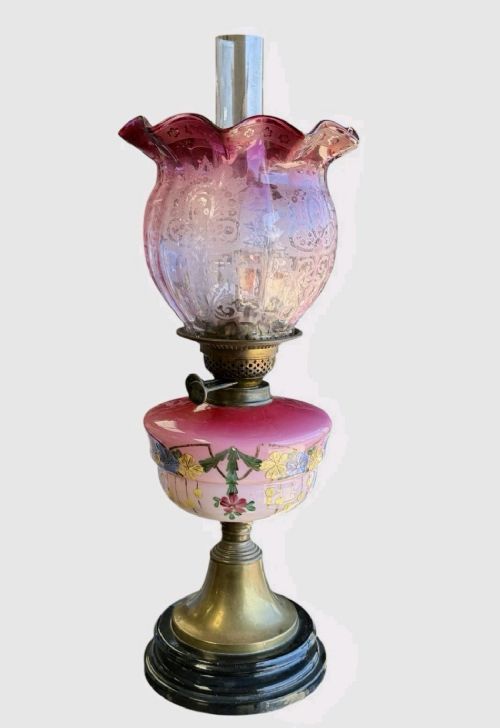
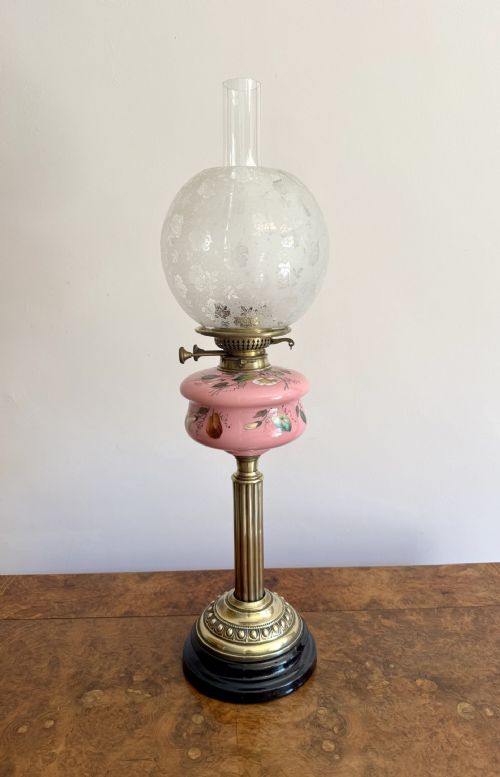
Brass provides the structural weight and column supports for these lamps, often combined with cast metal feet and collar fittings. The metalwork is paired with glass reservoirs blown in shades of cranberry, blue, pink, green, and milk glass.
Certain vessels feature hand-painted decoration on the glass bowl or include cut glass facets that catch the light. Additional materials appearing in the construction include enamel, ceramic bodies, and slate bases.
Antique Brass Font Retail Price Guide 2026
Typical asking prices for brass font among the pieces listed under this phrase on Sellingantiques today, from the lower quarter to the upper quarter. They describe what is for sale here now, not the wider market.
Distinguishing quality
Quality rests in the precision of the brass casting and the finish of the column work, such as detailed Corinthian capitals or telescopic mechanisms. Heavy proportions and robust gauge brass elevate the standing of a piece.
The reservoir glass introduces further distinction, where layered cranberry glass, cased colours, and hand-painted motifs demand greater skill than plain pressed glass. The integration of matching shades and intact burner assemblies completes the hierarchy.
Young s
The Antique Brass Font Glossary
- Font
- The oil reservoir of a lamp, sitting below the burner and above the stem. It holds the paraffin or fuel supply during use.
- Cranberry glass
- A rich red transparent glass created by adding gold chloride to the molten batch. It is characteristic of Victorian lightingware.
- Corinthian column
- A classical architectural order featuring ornate acanthus leaves on the capital, frequently utilised for Victorian lamp stems.
- Telescopic lamp
- An adjustable-height brass standard allowing the burner to be raised or lowered on a sliding central shaft.
- Ormolu
- Gilt bronze mounted or cast as decorative elements on nineteenth-century clocks and decorative objects.
Antique Brass Font: Frequently Asked Questions
What is an antique brass font?
An antique brass font is the fuel-holding vessel of a nineteenth or early twentieth-century oil lamp, anchored by a brass structure.
These pieces combine metal reservoirs and stands with glass or ceramic bowls designed to supply paraffin to the burner.
How do I date a brass oil lamp?
Dating relies on stylistic clues such as Corinthian column orders, telescopic stems, and the colour of the glass vessel.
Victorian pieces often display heavy brass casting and cranberry or hand-painted glass, whereas Edwardian and later examples shift toward simpler cottage forms.
Can these lamps still burn oil?
Most antique lamps are treated as decorative objects or converted for modern electrical use by collectors and interior designers.
If retained for oil, the burner mechanism, collar, and wick carrier must be checked for soundness and secure fitting.
What glass types appear on fonts?
The reservoirs utilise cranberry glass, milk glass, cased glass, and cut glass alongside hand-painted enamel decoration.
Coloured glass bowls were blown in various hues including pink, green, and blue to complement the polished brass stands.