




Antique Brass Easel
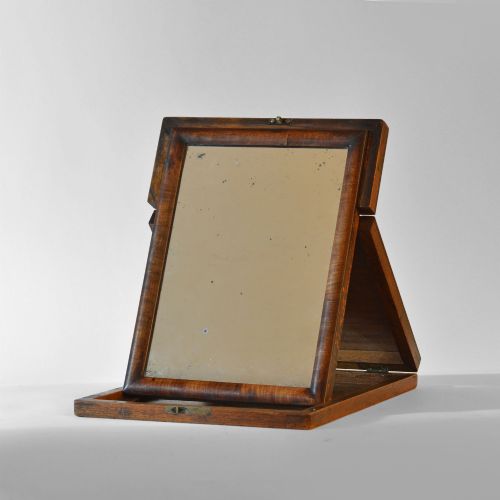
An antique brass easel holds your display with a hinged rear leg, bringing small mirrors, clocks, and frames upright on a desk or dressing table.
Antique Brass Easel
When searching for an antique brass easel, you are looking at small adjustable supports, table mirrors, strut clocks, and picture frames designed to display precious objects. These pieces originate from the nineteenth century into the early twentieth century, spanning Victorian, Edwardian, and French Rococo Revival styles.
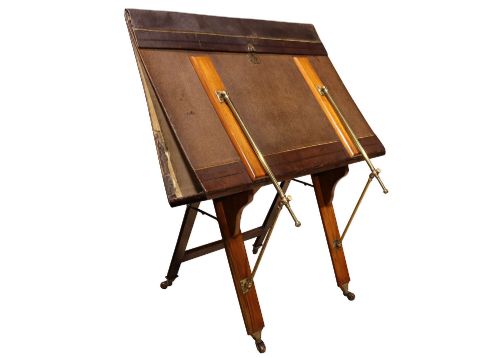
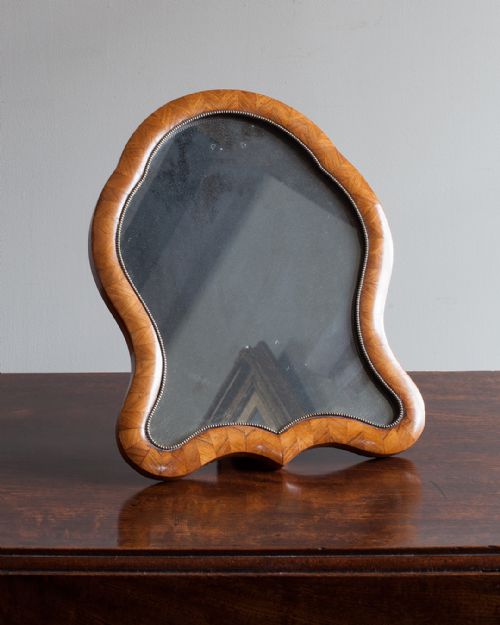
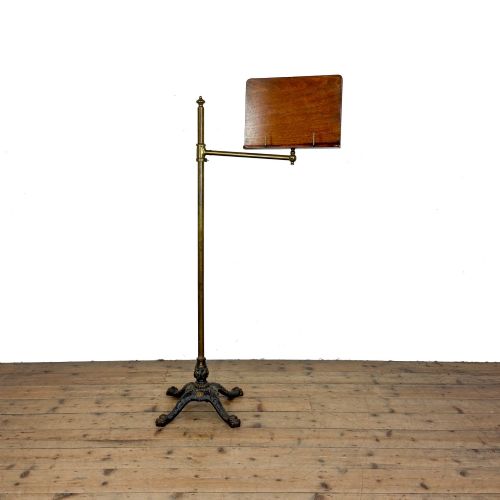
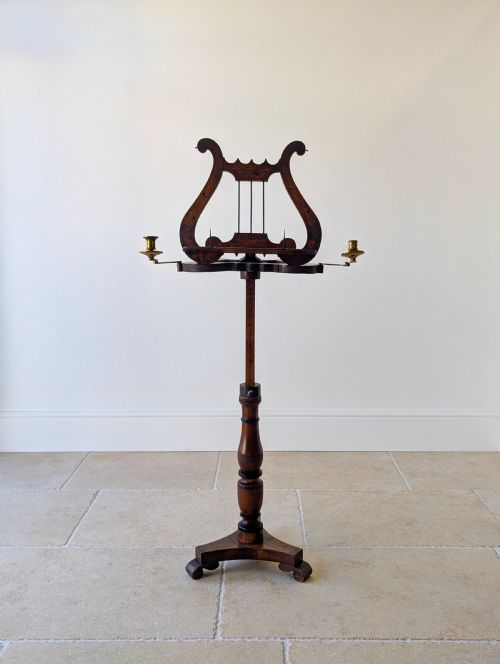
The version you are most likely to meet on this page is a table mirror or a photograph frame framed in brass, gilt metal, or ormolu, featuring an integral folding rear leg for desk placement. Alongside these, the selection includes adjustable reading stands, music stands, and occasional desks made from mahogany, rosewood, and kingwood.
Makers such as Howell & James of London produced sophisticated timepieces with champlevé enamel on strut stands during the mid-nineteenth century. Smaller vanity items and portrait stands from French and English workshops dominate the current selection.
Materials and construction methods
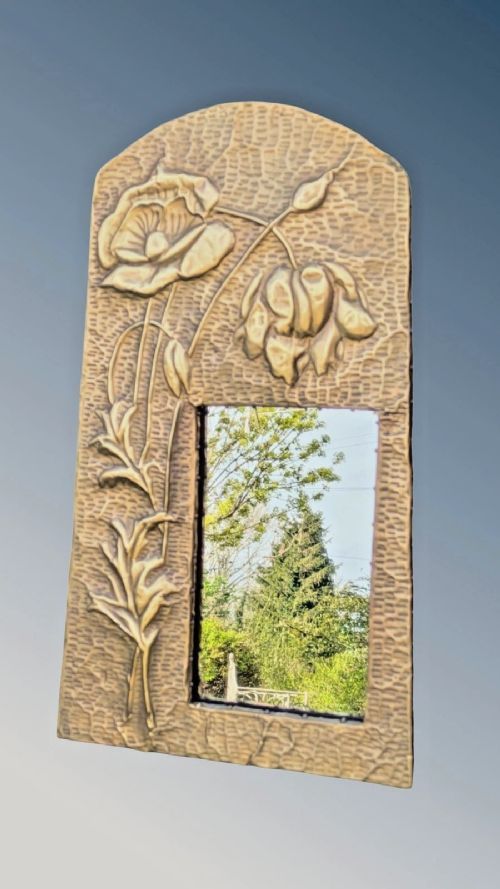
Cast and repoussé brass form the structural framework for these mirrors and frames, often finished with gilding, ormolu, or champlevé enamel detailing. Metalworkers shaped the stands using traditional casting techniques before applying surface chasing and intricate pierced patterns by hand.
Secondary materials like mahogany, rosewood, walnut, and kingwood provide the foundation for larger reading stands and music lecterns. Glass panels protect delicate miniature portraits and photographs, while paste stones and agate embellish the borders of ornate ormolu frames.
Antique Brass Easel Retail Price Guide 2026
Typical asking prices for brass easel among the pieces listed under this phrase on Sellingantiques today, from the lower quarter to the upper quarter. They describe what is for sale here now, not the wider market.
Listings feature brass, gilt bronze, ormolu, and champlevé enamel alongside timber forms in mahogany, rosewood, and walnut.
Distinctions in manufacture and preservation
The standard of workmanship shows clearly in the weight of the cast metal and the crispness of the chased decoration on the brass and ormolu. Finer examples display deeply articulated floral or rococo scrolls rather than shallow, uniform stamping.
Integrity of the folding strut mechanism and the original gilding or polish determines the upper tier of the range. Pieces retaining their original glass, enamel panels, and working clock movements command greater appreciation than those with replaced components.
Howell & James
The Antique Brass Easel Glossary
- Strut
- A hinged rear leg attached to the back of a frame, clock, or mirror to support it in an upright position on a flat surface.
- Champlevé
- An enamelling technique where troughs are dug into the metal surface and filled with vitreous enamel before firing.
- Ormolu
- Gilded bronze used widely for decorative mounts and frames during the eighteenth and nineteenth centuries.
- Repoussé
- Metalwork shaped by hammering from the reverse side to create a raised design on the front.
- Lyre-Form
- A structural shape resembling an ancient Greek lyre, commonly utilised in the design of nineteenth-century music stands.
Antique Brass Easel: Frequently Asked Questions
What is an antique brass easel used for?
These pieces serve primarily as tabletop display devices for small portraits, photographs, vanity mirrors, and timepieces. They hold items securely at an inclined viewing angle using a folding rear support.
Larger variations accommodate books, music sheets, or writing materials on an adjustable stand for use at a desk or table.
How do I identify a Victorian brass easel?
Victorian examples typically exhibit heavier cast brass construction with decorative motifs ranging from ornate rococo scrolls to floral repoussé work. They often date from the mid to late nineteenth century and accompany mirrors or photograph frames.
Examine the construction of the hinge on the rear strut, as nineteenth-century fixings utilise integrated pins rather than modern screws.
Are these easels adjustable?
Many of the reading stands, music lecterns, and mirror frames feature adjustable mechanisms to alter the viewing height or angle. Brass frames with rear struts generally open to a fixed pitch determined by a chain or stop.
Reading stands employ wooden ratchets or screw mechanisms to raise and tilt the bookrest according to preference.
How should I care for brass and ormolu surfaces?
Dust the brass and ormolu gently with a soft, dry cloth to prevent the accumulation of dirt in recessed chased areas. Avoid commercial metal polishes, which can strip historic gilding or damage delicate enamel and paste stone inlays.
Keep the items away from direct sunlight and damp environments to preserve the original finish of both the metalwork and the wood.