

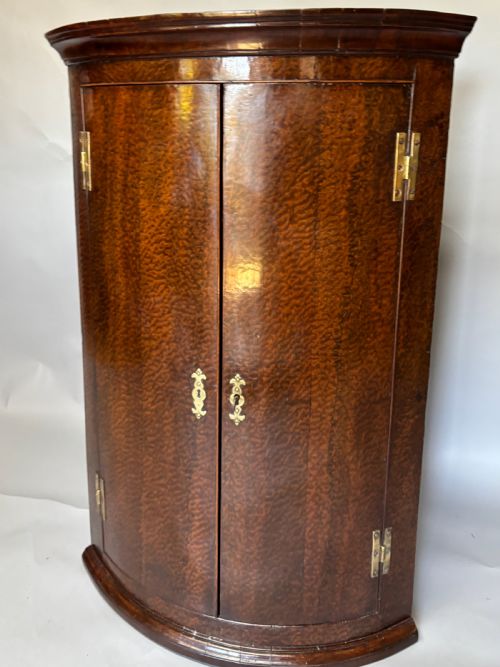


Antique Brass Corner Hinges
Antique brass corner hinges secure the doors and lids of Georgian and Victorian cabinets, trunks, and chests, providing both structural strength and a warm metallic finish.
Antique Brass Corner Hinges
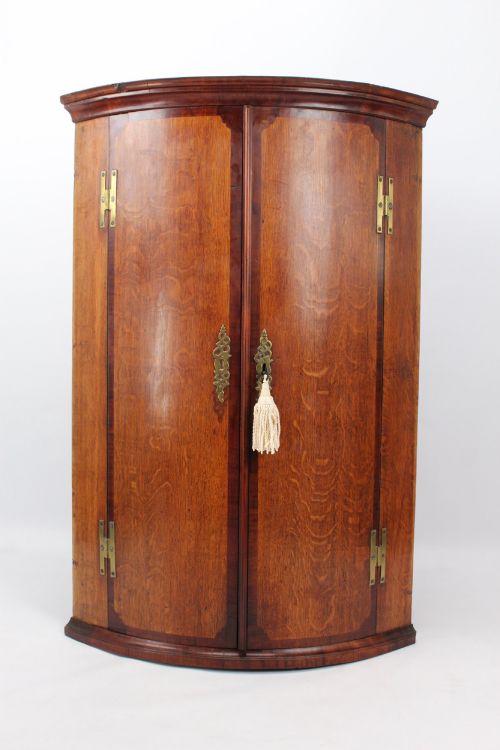
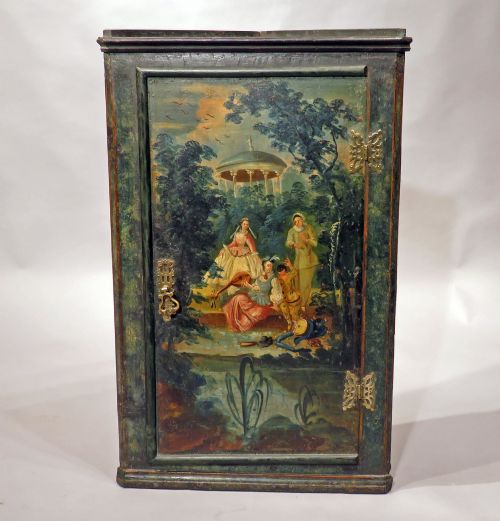
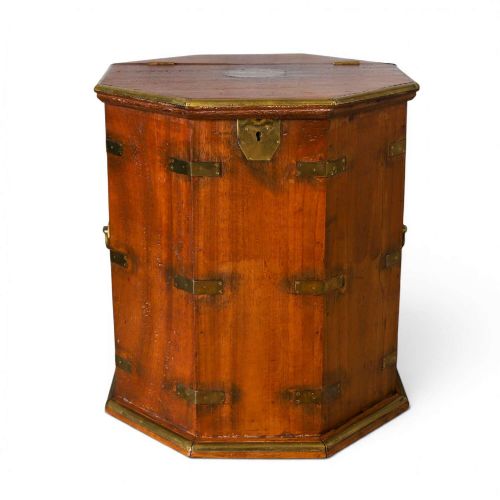
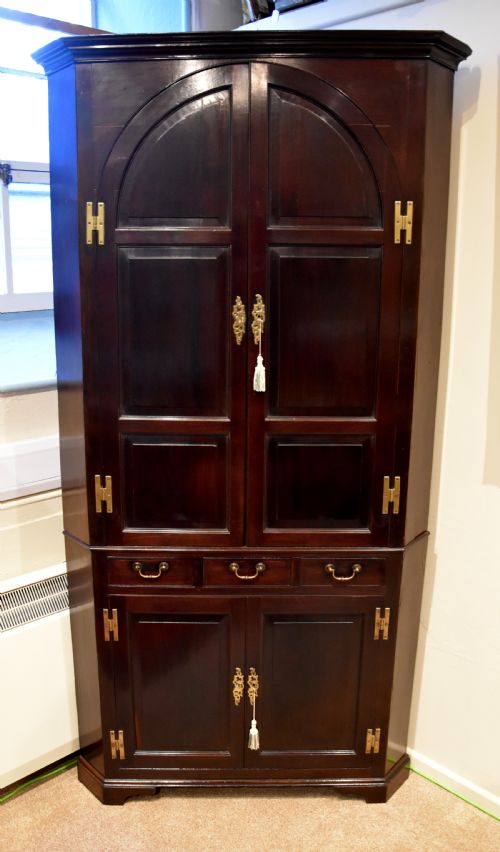
When you search for antique brass corner hinges, you find functional hardware salvaged from corner cupboards, hanging cabinets, and military campaign chests spanning the Georgian and Victorian eras. These items appear mounted on oak, mahogany, pine, and teak furniture forms that date from the eighteenth and nineteenth centuries.
The version you are most likely to encounter on this page is brass hardware associated with Georgian bow front corner cupboards and Victorian campaign chests. These fittings protect vulnerable wood joints while adding a polished metallic contrast to dark timbers like Cuban mahogany and golden oak.
How they were made
Makers shaped these hinges from cast or beaten brass, often integrating countersunk screw holes to sit flush with wooden surfaces on corner cabinets and trunks. Metalworkers utilised traditional foundry methods to produce durable components that matched the heavy use expected of campaign furniture and wall cupboards.
Craftsmen fitted the brass work directly onto solid timbers such as oak, painted wood, and plum pudding mahogany, securing them with matching slotted screws. The combination of dense woods and resilient copper alloy ensured the hardware remained secure through decades of opening and closing.
Some cabinet doors open so smoothly on their original brass pivots that they still swing shut on their own after all these centuries.
What varies in quality
The distinction between standard hardware and finer examples lies in the weight of the metal casting and the crispness of the finishing details. Superior pieces display clean edges, substantial thickness, and careful filing that shows deliberate hand-finishing rather than mass production.
Proportion and material integration also separate standard utility hardware from higher-grade items found on pieces like fine George III mahogany cabinets. Well-made hinges sit perfectly flush within the surrounding timber, showing precise placement and thoughtful design relative to the scale of the cupboard door.
The Antique Brass Corner Hinges Glossary
- Brass
- A copper and zinc alloy prized for its durability, resistance to corrosion, and warm golden colour. It serves as the primary material for period corner hinges and structural mounts.
- Campaign chest
- A modular wooden trunk designed for military transport, typically reinforced with brass corners and strapwork. These pieces utilise robust hardware to withstand frequent travel.
- Bow front
- A convex, curved furniture front popular during the Georgian period. Corner cupboards and cabinets featuring this shape often require specialised hinges to accommodate the curved door geometry.
- George III
- The stylistic period spanning the mid to late eighteenth century, known for refined cabinetmaking in mahogany and oak. Hardware from this era displays disciplined proportions and clean geometric lines.
Antique Brass Corner Hinges: Frequently Asked Questions
What furniture uses these hinges?
These brass fittings secure the doors of hanging corner cupboards, wall cabinets, and the lids of campaign chests. They appear primarily on Georgian and Victorian pieces made from oak or mahogany.
Such hardware protected vulnerable wood edges from impact while rooms were rearranged or military supplies were transported across regions.
How old are these pieces?
The listings on this page span the eighteenth and nineteenth centuries, encompassing Georgian, George III, and Victorian periods. Most examples date from the seventeen-hundreds up to the late eighteen-hundreds.
Construction methods and timber choices help indicate the specific decade in which the hardware and its parent furniture were produced.
Which woods appear most often?
Oak and mahogany dominate the timber selections, alongside pine, teak, and painted wood surfaces. Cuban mahogany and plum pudding mahogany frequently appear on higher-status Georgian cabinets.
These dense hardwoods provided a stable foundation for heavy brass hinges and corner plates to anchor securely over centuries.
How do styles differ?
Styles range from utilitarian Georgian hanging cupboards to robust Victorian campaign chests and Gothic Revival architectural pieces. Each movement influenced how brass hardware integrated with the timber.
Earlier designs favoured understated strength, whereas later Victorian examples sometimes incorporated decorative Arts and Crafts detailing into the metalwork.