


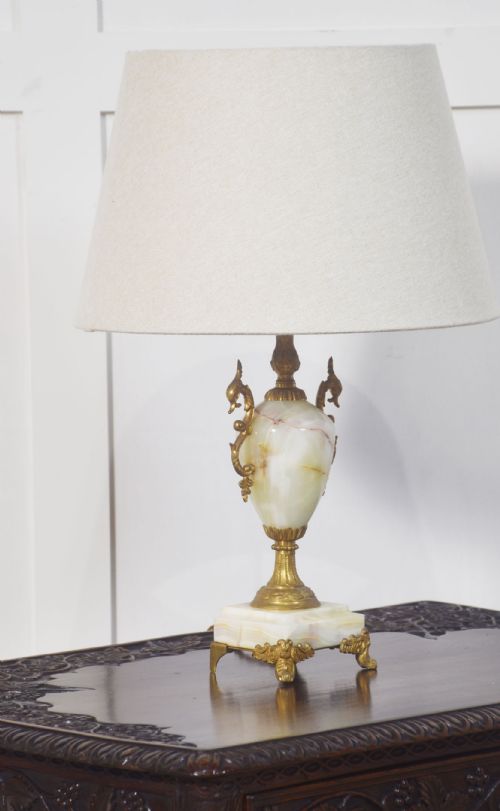


Antique Brass and Stone Light
These antique brass and stone light pieces combine cast metalwork with carved mineral bodies to illuminate interiors with genuine period weight.
Antique Brass and Stone Light
An antique brass and stone light brings together metal mountings and carved mineral bases, taking the form of table lamps and hanging dish lights. Buyers examining this category encounter items produced across the late nineteenth and early twentieth centuries, including works styled after Victorian and Art Deco movements.
The selections on this page lean heavily towards table lamps utilising carved white onyx, green or white marble, and translucent alabaster. These mineral bodies support brass, gilt metal, or gilt bronze mountings, creating domestic illumination that ranges from column forms to classical amphora shapes.
How they were made
Maker workshops turned and carved natural stones like onyx, alabaster, and marble to form the structural bodies of these lamps. These mineral columns and urns were then fitted with cast brass, ormolu, or gilt metal mounts, utilising threaded rods and pinned joints to secure the components together.
Surface decoration relies on the natural grain of the stone paired with chased or cast metal details such as paw feet and Corinthian capitals. Fabric shades often complete the upper portion of table lamps, while suspension chains support alabaster hanging dish lights.
Antique Brass and Stone Light Retail Price Guide 2026
Typical asking prices for brass and stone light among the pieces listed under this phrase on Sellingantiques today, from the lower quarter to the upper quarter. They describe what is for sale here now, not the wider market.
The listings span from eighteen-eighty to nineteen-thirty, uniting Victorian classical revival forms with Art Deco alabaster hanging lights and onyx table lamps.
What varies in quality
Quality in these luminaires depends on the crispness of the metal casting and the depth of the stone carving rather than simple ornamentation. Heavier gauge brass and finely chased gilt bronze mounts demonstrate superior workshop standards compared to lighter stamped alternatives.
The selection of the stone body also separates standard production from finer pieces, with uniform mineral grain and absence of heavy repair marking better material choices. Integrated design where the metal mounts complement the specific dimensions of the stone indicates thoughtful creation.
The Antique Brass and Stone Light Glossary
- Alabaster
- A fine-grained translucent stone often used for carved hanging dish lights and lamp bodies. It diffuses light softly through its natural grain.
- Ormolu
- Cast bronze that has been coated with a gold-mercury amalgam or high-grade gilt finish. This technique provides a durable metallic lustre on lamp mounts.
- Corinthian column
- A classical architectural column style featuring ornate acanthus leaves on the capital. Victorian makers adapted this form directly for tall table lamps.
Antique Brass and Stone Light: Frequently Asked Questions
What periods do these lights come from?
These items originate primarily from the late nineteenth century through to the Art Deco period of the nineteen-thirties. Victorian pieces often favour classical revival motifs, while later examples embrace cleaner geometric lines.
Production spans several decades of manufacturing, meaning construction methods and decorative styles shift from ornate nineteenth-century revivals to streamlined twentieth-century forms.
How were these lamps used originally?
Table lamps provided task and ambient illumination in principal rooms of country houses and urban residences. Hanging dish lights illuminated entrance halls and dining spaces.
Their heavy stone and metal construction ensured stability on timber furniture while adding a decorative focal point to the interior scheme.
How do I clean an alabaster shade?
Alabaster is porous and sensitive to moisture, so cleaning requires dry methods such as a soft brush or a microfiber cloth. Water and chemical solvents can stain or dissolve the surface.
Gentle maintenance preserves the translucent quality of the stone without risking damage to the carved details.
Are these lamps wired for modern use?
Most antique lamps encountered on the market have been rewired at various points in their history to meet contemporary electrical standards. Buyers should inspect the internal wiring and consult a qualified electrician before plugging them in.
Original brass components and sockets are frequently retained during rewiring to preserve the historical appearance of the piece.