



Antique Bowfront Vitrine
An antique bowfront vitrine is a curved glass display cabinet designed to showcase fine objects, combining elegance with practical interior storage.
Antique Bowfront Vitrine
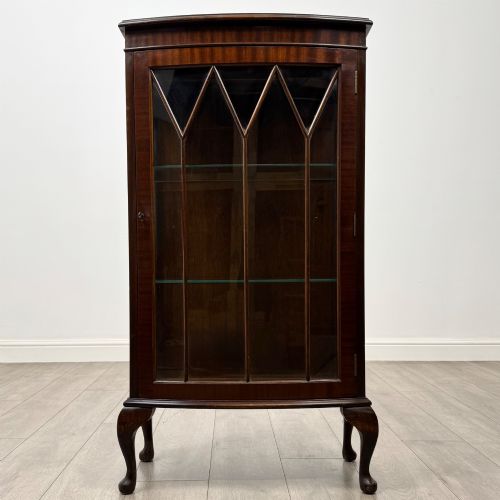
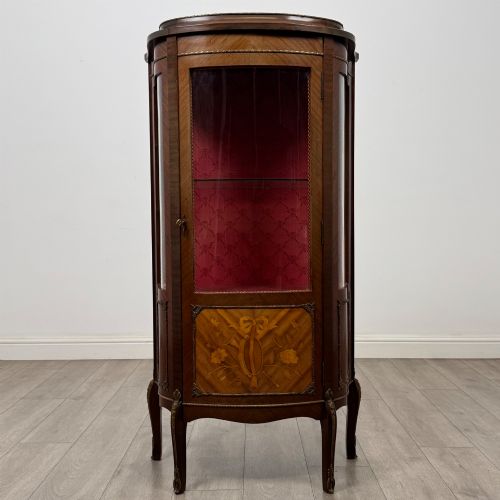
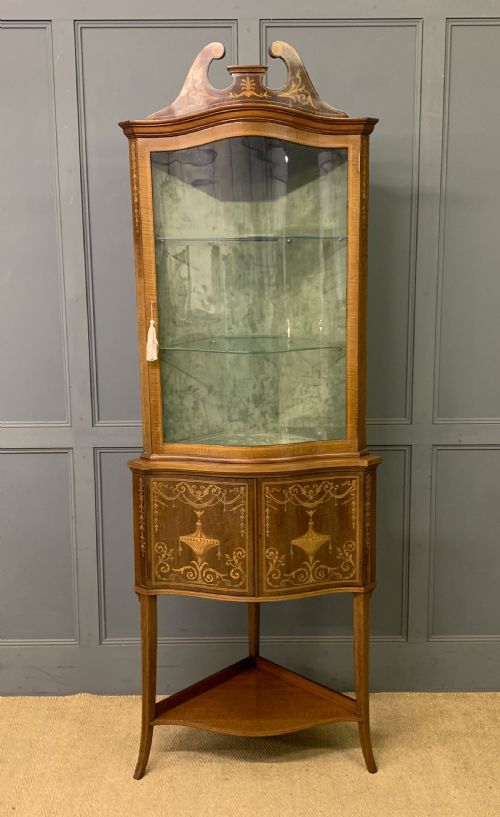
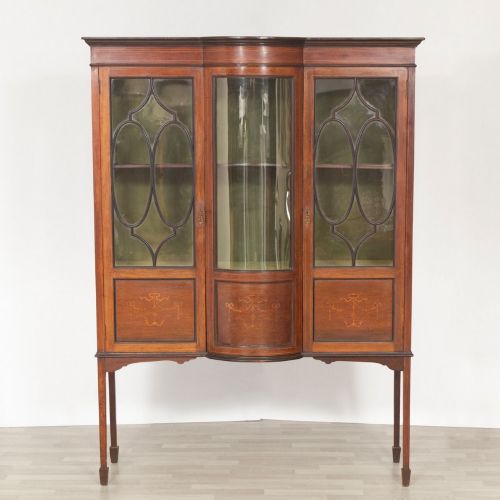
An antique bowfront vitrine offers a curved glass profile that catches light from multiple angles while protecting delicate ornaments inside. These glazed display cabinets serve primarily to exhibit porcelain, silver, and small curiosities within a formal room.
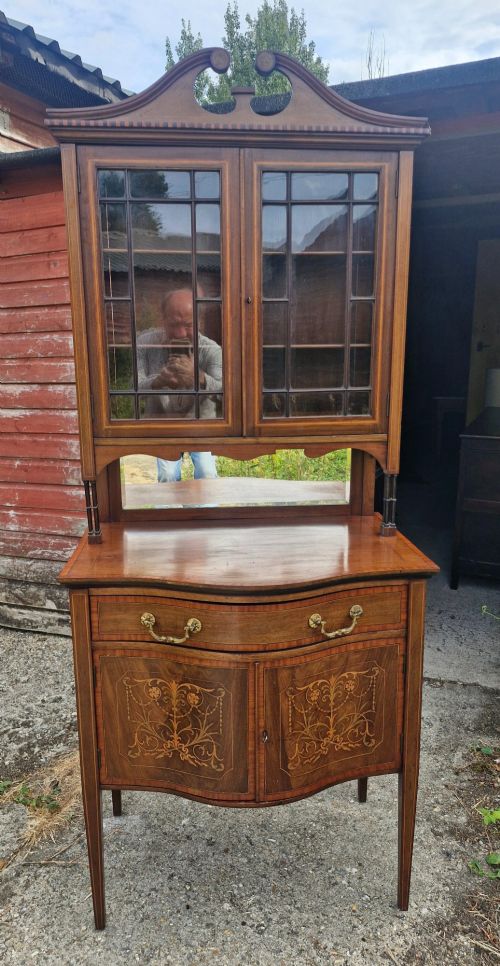
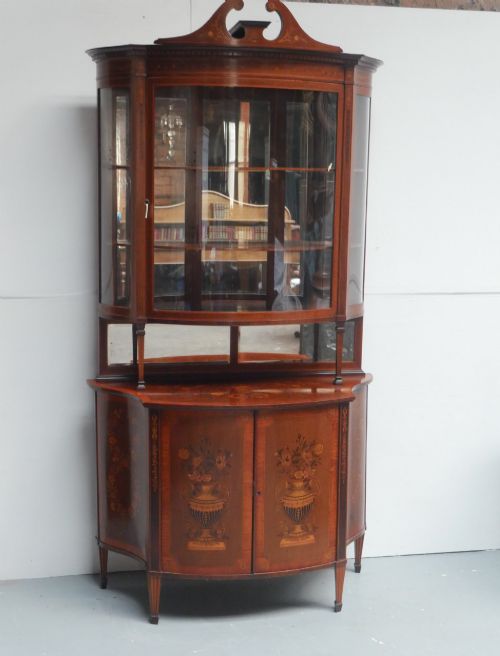
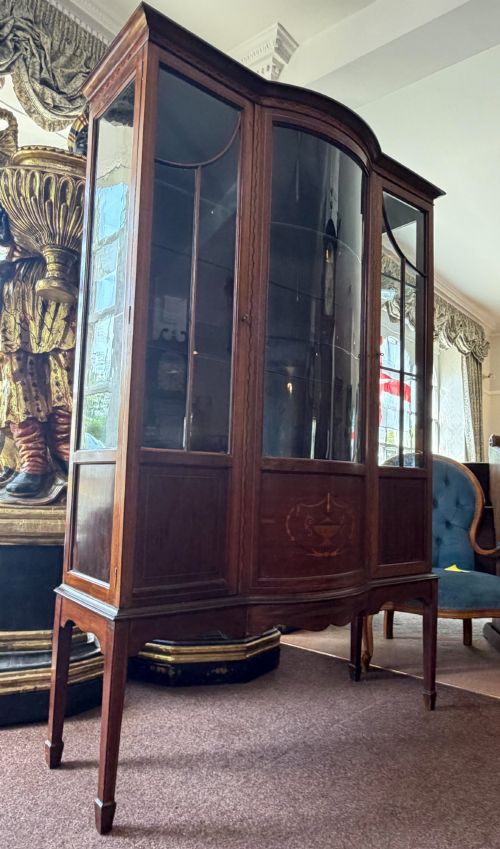
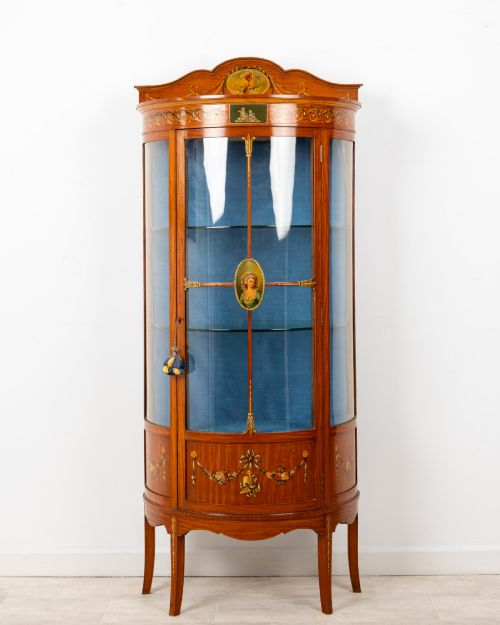
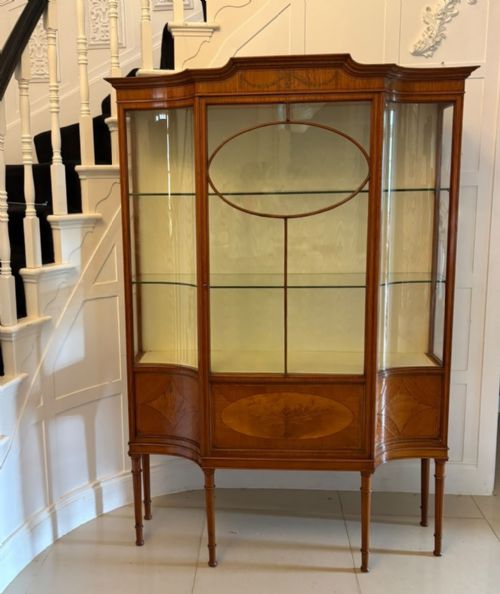
The pieces appearing here span the Victorian, Edwardian, and later periods, with Edwardian and late nineteenth-century examples dominating the selection. Makers from these eras utilised mahogany, satinwood, and burr walnut, often incorporating delicate stringing or painted decoration.
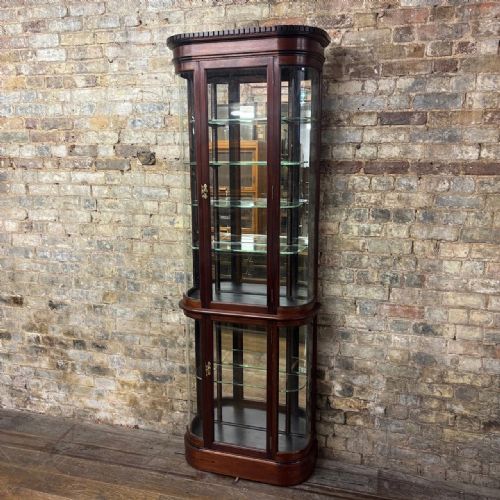
Most examples function as freestanding display cabinets, though corner cupboards and two-part bookcase hybrids also emerge within the selection. Styles range from restrained Georgian Revival interpretations to more ornate French Belle Epoque and Sheraton Revival designs.
Materials and construction
Cabinetmakers constructed the main carcase using timbers such as mahogany and burr walnut, applying contrasting veneers of satinwood for decorative effect. Brass fittings, mirrors, and fabric-lined interiors completed the framework, supporting the curved glass panels.
The characteristic curved door requires specialised glass-bending techniques alongside precision woodwork to achieve a seamless fit within the frame. Marquetry inlay, hand-painting, and delicate stringing add surface detail without compromising structural integrity.
Curved glass doors require specialist joinery, meaning past owners often kept their tiniest treasures right at the point of the bow.
Assessing quality and execution
Superior examples distinguish themselves through the precision of their marquetry inlay and the depth of their timber figuring, particularly in burr walnut or figured mahogany. The smoothness of the curved glass and the crispness of any painted floral motifs further separate standard production from exhibition pieces.
Construction methods dictate longevity, seen in the tight joinery of the bowfront frame and the quality of the original brass hardware. Pieces associated with notable makers demonstrate a higher level of refinement in proportion and decorative restraint.
Edwards & Roberts·Maurice Adams
The Antique Bowfront Vitrine Glossary
- Vitrine
- A glass-fronted cabinet designed specifically for displaying fine objects or collections. This French term became widely adopted in British interior decoration during the nineteenth century.
- Bowfront
- A convex, outwardly curving front facade that softens the rigid corners of a room. This shape enhances interior visibility while adding visual movement to the furniture.
- Marquetry
- The art of applying decorative pieces of veneer to a structure to form intricate patterns or pictures. Craftsmen used contrasting woods such as satinwood and mahogany to create these detailed motifs.
- Demi-lune
- A half-moon or semicircular shape applied to the footprint of corner or wall cabinets. This profile allows the furniture to fit snugly against flat walls or corners while maintaining a curved presentation.
Antique Bowfront Vitrine: Frequently Asked Questions
Where should I place a vitrine?
These cabinets suit reception rooms, drawing rooms, or hallways where natural light can strike the curved glass and illuminate the contents within. Freestanding versions need enough floor clearance to allow doors to swing open fully.
Corner variations fit neatly into unused angles of a room, making efficient use of space while providing the same glazed display function.
How do I date an antique vitrine?
Dating relies on identifying the prevailing timber choices, inlay styles, and overall aesthetic movements associated with the construction. Edwardian and late Victorian pieces often display Sheraton Revival or satinwood inlaid motifs.
Examining the backboards, interior fabric, and structural fastenings provides further clues regarding whether a piece originates from the nineteenth or early twentieth century.
How do I care for the glass and wood?
Dust the mahogany or walnut surfaces regularly with a soft, dry cloth to protect the polished finish and delicate satinwood inlay. Avoid placing the cabinet in direct sunlight to prevent the timber veneers and interior fabric from fading.
Clean the curved glass carefully using a mild glass cleaner applied to a cloth rather than sprayed directly onto the surface near the wooden frame.