


Antique Inlaid Bowfront Cabinet
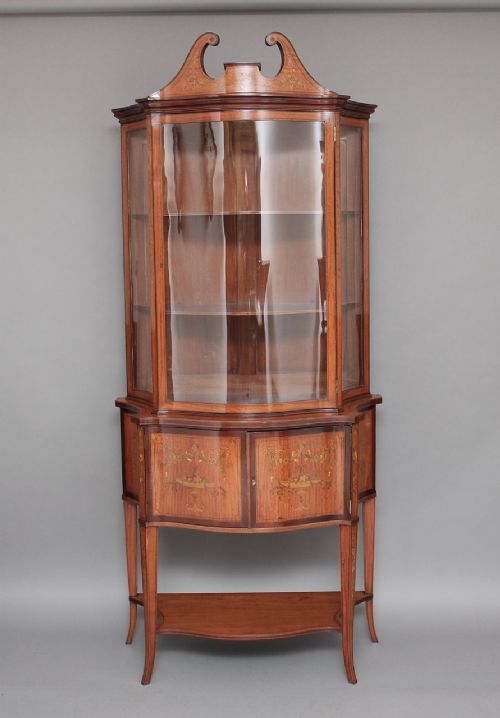
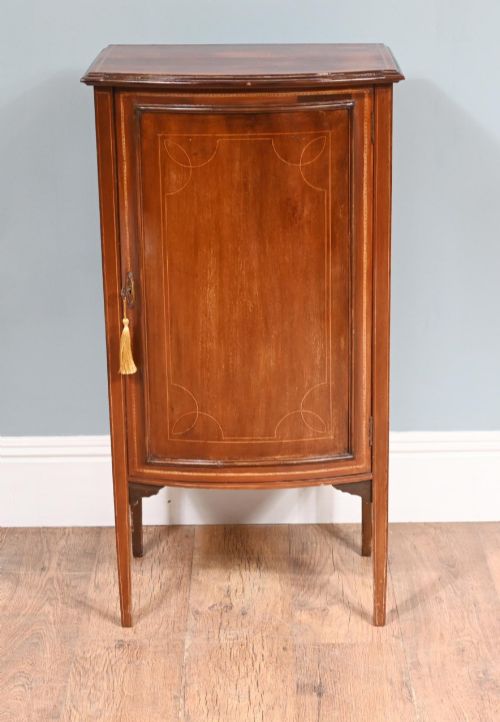
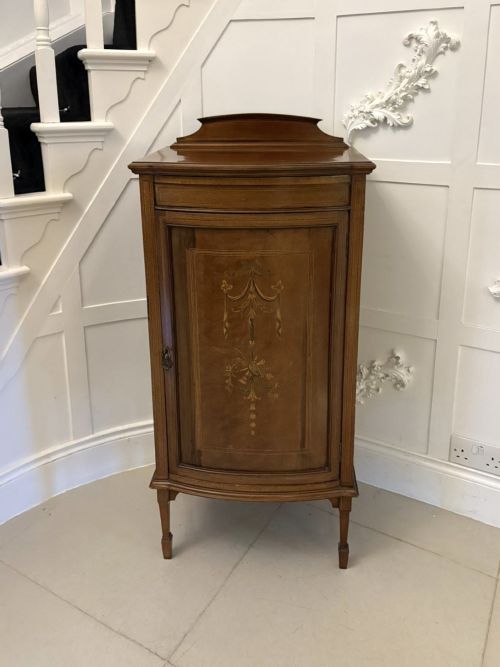
An antique inlaid bowfront cabinet brings curved elegance and rich timber tones into a room, offering both practical storage and a fine display surface.
Antique Inlaid Bowfront Cabinet
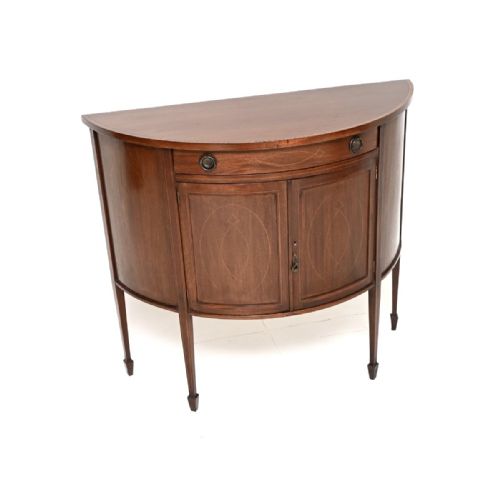
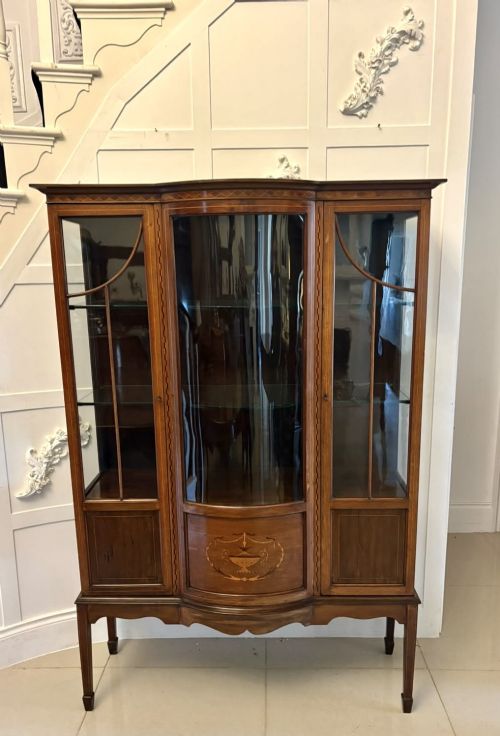
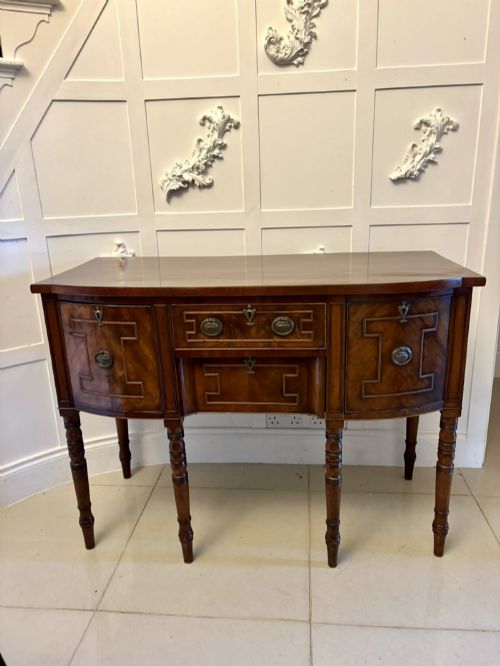
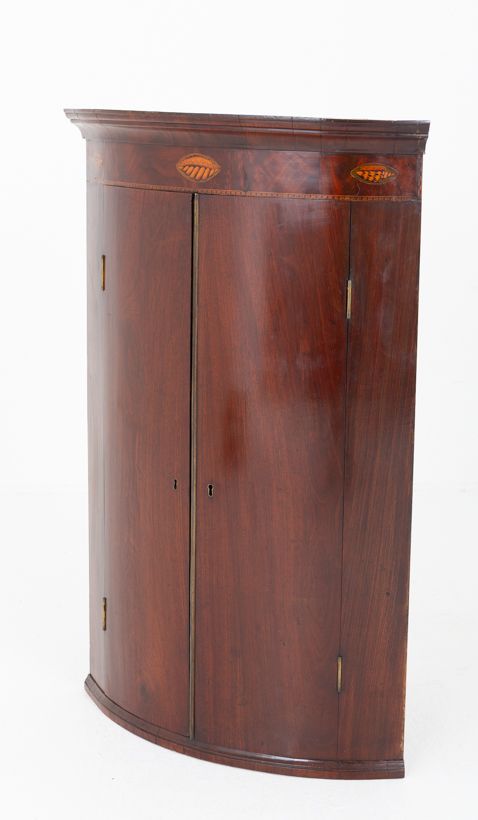
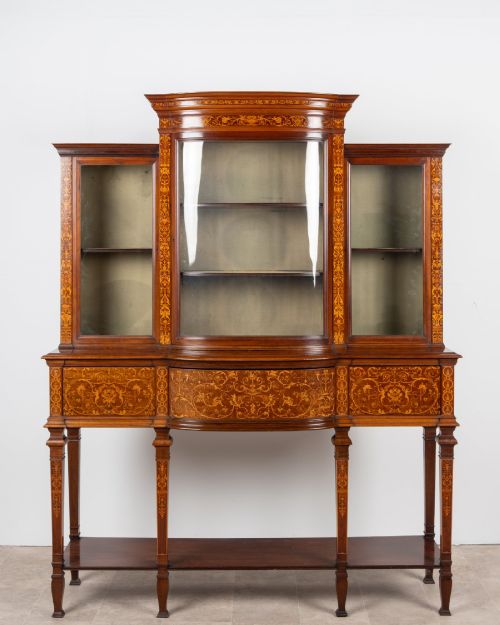
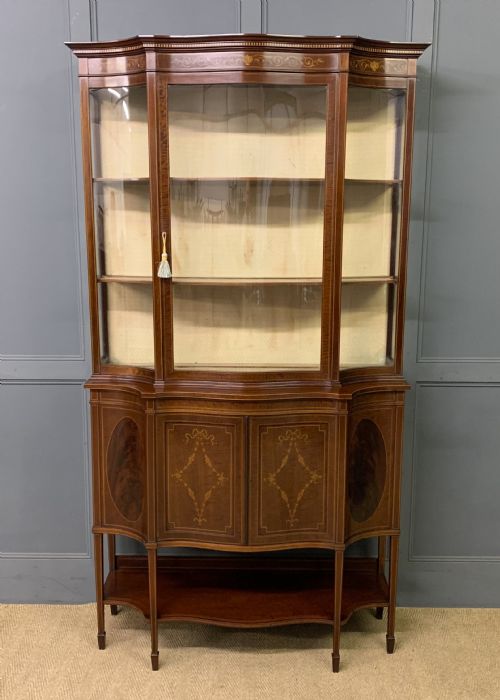
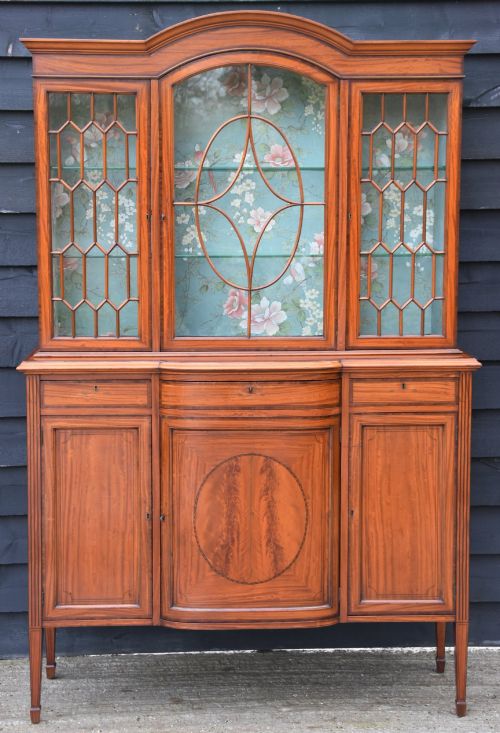
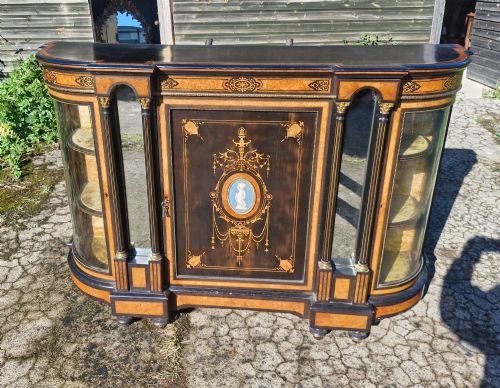
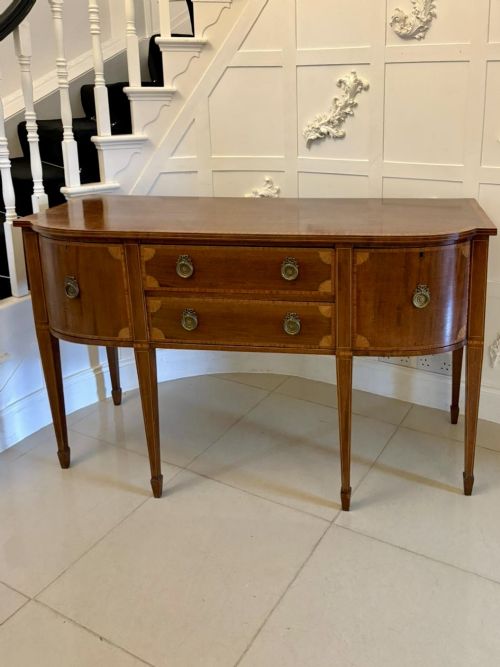
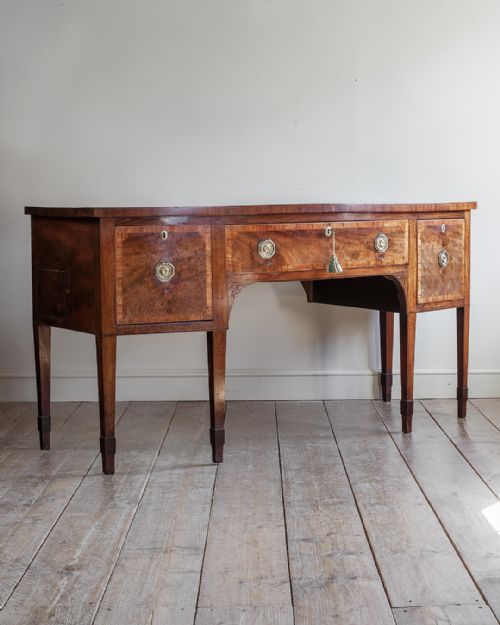
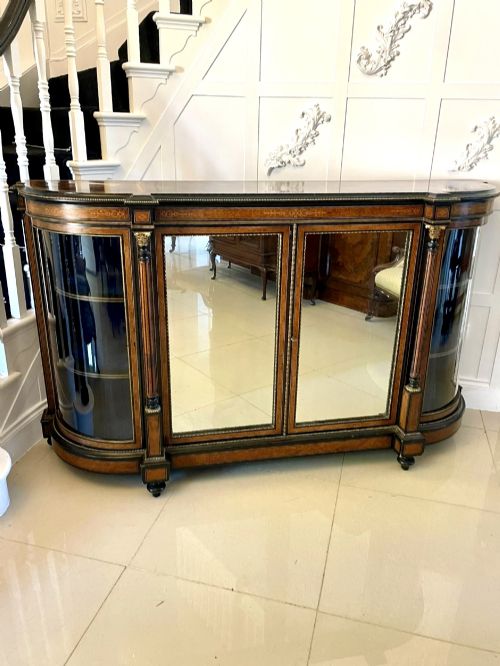
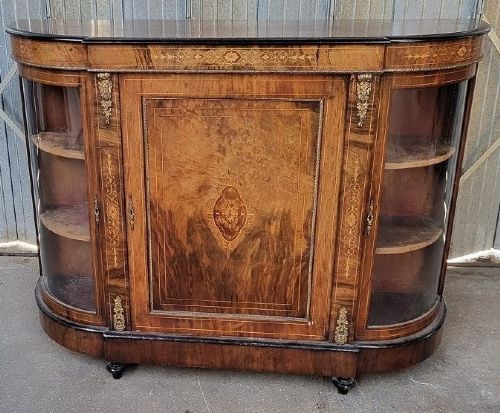
You are most likely to meet mahogany pieces featuring gentle curved fronts and contrasting wood details. These items range from Georgian wall-hanging corners to larger Edwardian and Victorian floor-standing sideboards.
The periods represented stretch from the eighteenth century through the Edwardian era, showing how cabinet makers adapted the convex curve for dining rooms, bedrooms and parlours alike.
Materials and construction
Makers relied primarily on solid mahogany and flame mahogany veneers, prized for their deep grain patterns and resilience. Timber selection dictated how well the curved front could be shaped and polished.
Inlay work utilised contrasting materials such as satinwood, boxwood and ebony, cut finely to trace borders and create delicate decorative motifs. Ormolu mounts and brass hardware frequently finished the pieces, adding functional metal accents to the wooden structure.
Antique Inlaid Bowfront Cabinet Retail Price Guide 2026
Typical asking prices for inlaid bowfront cabinet among the pieces listed under this phrase on Sellingantiques today, from the lower quarter to the upper quarter. They describe what is for sale here now, not the wider market.
Current listings feature pieces spanning the Georgian period, the Victorian era and the Edwardian Sheraton Revival.
Assessing craftsmanship
Quality rests upon the precision of the curved joinery and the sharpness of the inlaid details. Superior examples display seamless integration of contrasting woods that remain flush with the primary timber over decades of environmental shifts.
The refinement of the secondary woods inside drawers and backboards also indicates the maker's dedication. Better pieces maintain original brassware, well-fitted doors and stable carcases without relying on heavy structural repairs.
Edwards and Roberts
The Antique Inlaid Bowfront Cabinet Glossary
- Bowfront
- A convex, outward-curving front profile typical of certain chests, sideboards and cabinets. This curved design softens room angles and maximises interior depth.
- Inlay
- A decorative technique where small pieces of contrasting wood or other materials are set into recesses flush with the surface. It defines borders and creates pictorial motifs.
- Crossbanding
- A border strip of veneer applied to the edges of a surface where the grain runs at right angles to the central panel. This frames the primary wood figure.
- Linen Press
- A tall two-part storage piece featuring upper sliding trays or shelves enclosed by doors, traditionally used for household textiles. The lower section typically incorporates chest drawers.
- Ormolu
- Gilded bronze furniture mounts cast into decorative shapes. These metallic ornaments embellished nineteenth-century cabinet work.
Antique Inlaid Bowfront Cabinet: Frequently Asked Questions
What rooms suit a bowfront cabinet?
These curved pieces fit particularly well in dining rooms, living spaces and hallways where a straight edge might block natural movement. Their rounded fronts soften the geometry of a room while providing useful surface area.
Smaller corner versions make efficient use of dead space in compact studies or bedrooms. Larger sideboard and display variations anchor a principal wall and command visual attention.
How do I care for mahogany timber?
Keep antique mahogany away from direct heat sources and strong sunlight to prevent the polish from fading and the timber from splitting. Regular dusting with a soft, dry cloth maintains the natural lustre.
Apply a quality beeswax polish sparingly once or twice a year to nourish the wood grain. Avoid silicone-based sprays, which build up a residue over time.
What is the difference between Georgian and Edwardian pieces?
Georgian examples date from the eighteenth and early nineteenth centuries, characterised by restrained proportions and rich, honest timber patination. Their construction focuses on structural integrity and classic architectural lines.
Edwardian revivals from the early twentieth century often display lighter satinwood contrasts, delicate marquetry and a brighter finish reflecting later tastes. These revival pieces frequently emulate earlier Sheraton styles with great technical skill.
Are corner cupboards secure on walls?
Hanging corner cabinets require sturdy wall fixings to support the considerable weight of solid mahogany and glass doors. Proper installation into masonry or reliable wall studs is essential for safety.
Floor-standing corner cupboards offer an alternative that requires no wall anchoring while still utilising awkward room angles effectively.