





Antique Bowfront Bureau
An antique bowfront bureau or chest of drawers brings practical storage and a curved silhouette to a room.
Antique Bowfront Bureau
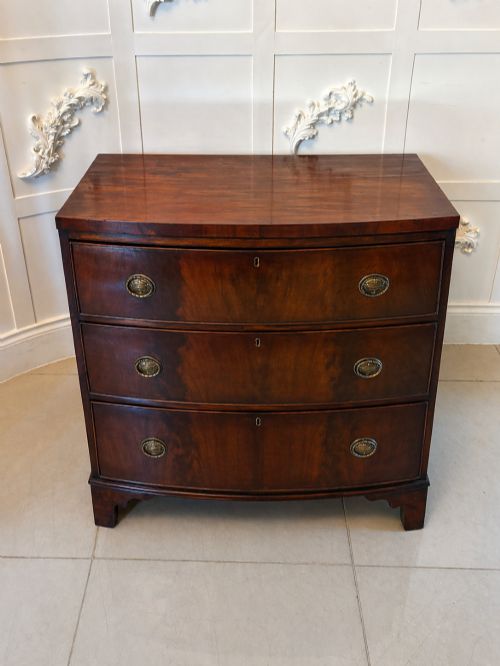
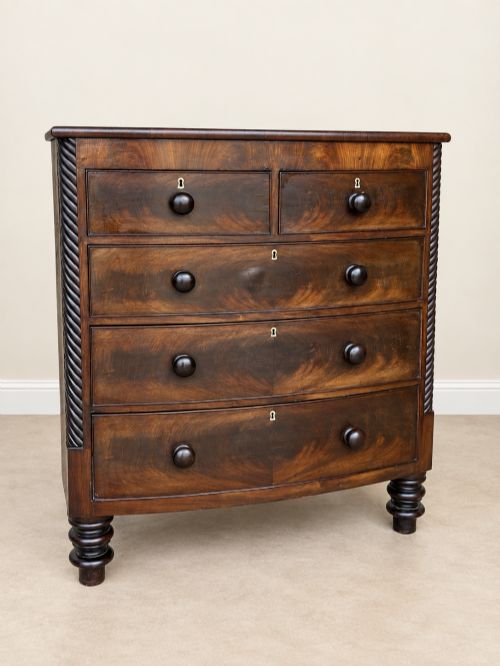
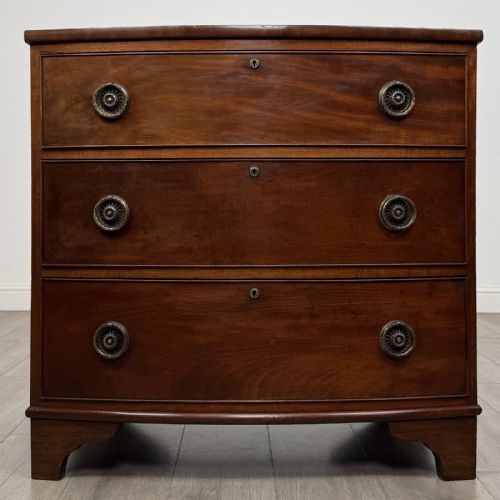
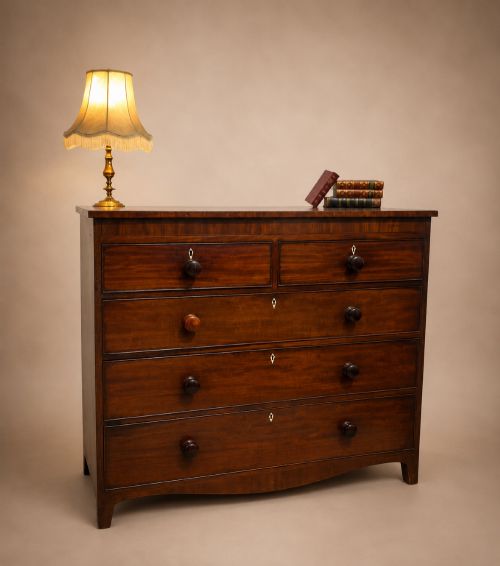
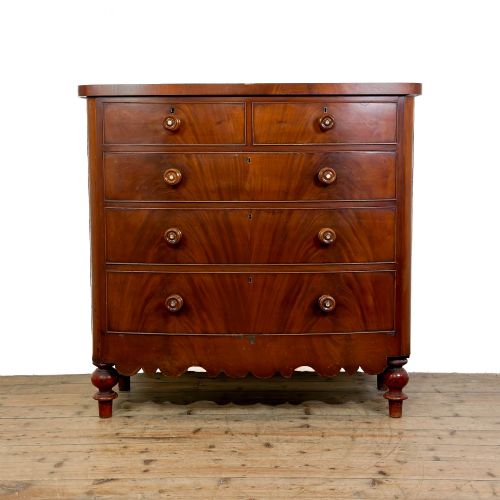
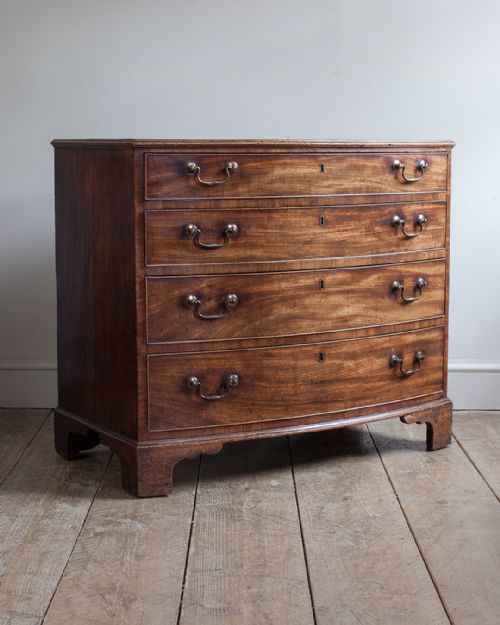
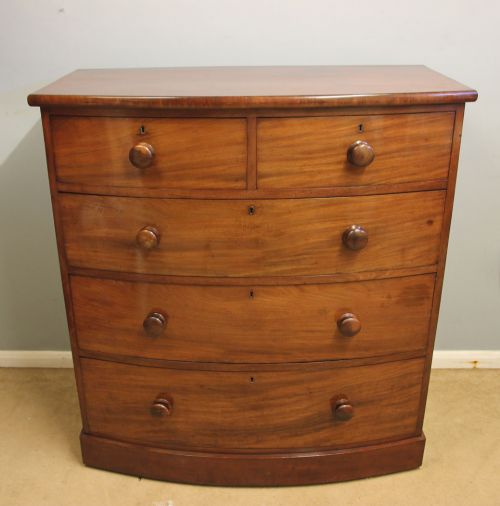
An antique bowfront bureau typically presents as a chest of drawers with a convex curved front, often incorporating a writing slide or fitted interior. These pieces date across the Georgian, Regency, Victorian, and William IV periods, spanning the eighteenth and nineteenth centuries.
Mahogany forms the primary timber for these items, frequently accented with flame mahogany veneer or burr oak. The standard configuration uses graduating drawer tiers supported on bracket feet or short turned legs.
How they were made
Cabinet makers built these carcasses using solid mahogany or pine framing, applying carefully selected veneers to curved drawer fronts to display the grain. Brass handles and escutcheons secured to the drawer faces provided functional hardware.
Secondary timbers such as oak or pine appear in drawer linings and internal dividers, showing traditional hand-cut dovetail joints.
Antique Bowfront Bureau Retail Price Guide 2026
Typical asking prices for bowfront bureau among the pieces listed under this phrase on Sellingantiques today, from the lower quarter to the upper quarter. They describe what is for sale here now, not the wider market.
The listings span the Georgian, Regency, Victorian, and William IV periods, executed predominantly in mahogany with brass hardware.
What varies in quality
The selection of timber grain, particularly figured or flame mahogany on the curved drawer fronts, separates finer examples from plain ones. Crispness in the execution of bracket feet and the retention of original brass handles elevate a piece.
Internal construction, including the neatness of dovetailing on drawer boxes and the smoothness of drawer operation, marks the standard of the original workshop.
The Antique Bowfront Bureau Glossary
- Bowfront
- A curved front facade that swells outwards in the centre, characteristic of these chests of drawers.
- Flame mahogany
- A veneer cut from timber where the grain creates a flamelike pattern across the surface.
- Dovetail
- An interlocking joint used in drawer construction, formed by interlocking wedge-shaped fingers.
- Escutcheon
- A protective plate surrounding a keyhole, usually made of brass.
- Writing slide
- A pull-out board integrated above the top drawer designed to provide a surface for correspondence.
Antique Bowfront Bureau: Frequently Asked Questions
How do I date a bowfront chest?
Dating relies on observing the secondary timbers, handle styles, and foot construction. Georgian and Regency pieces generally display finer hand-cut dovetails and bracket feet.
Victorian and later nineteenth-century examples often incorporate machine-sawn elements and slightly heavier proportions.
Did these pieces always have writing slides?
Not every piece includes a writing slide, as many function strictly as chests of drawers. Those identified as commodes or bureaus are more likely to house an internal sliding board.
Reviewing the specific description helps confirm whether a pull-out shelf is present beneath the top surface.
What woods were used in construction?
Mahogany serves as the dominant wood across the selection, often enhanced by flame mahogany veneer for visual depth. Secondary timbers like oak and pine appear inside the drawers and carcass frames.
Selected examples also feature burr oak or satinwood details.
How do I care for mahogany surfaces?
Maintenance requires keeping the timber away from direct sunlight and sudden temperature changes to protect the veneer. Regular dusting with a soft, dry cloth preserves the polished finish.
Harsh chemical cleaners should be avoided in favour of traditional beeswax applied sparingly.