
Antique Bow Front
These antique bow front pieces are curved front furnishings spanning Georgian to Art Deco periods, desired for their graceful profile and practical storage.
Antique Bow Front
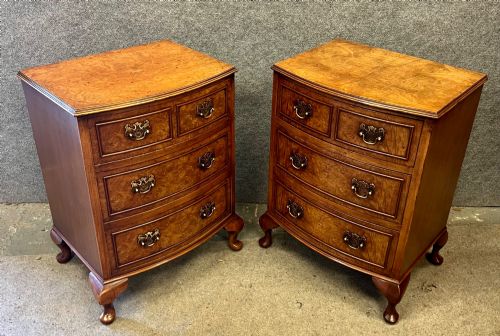
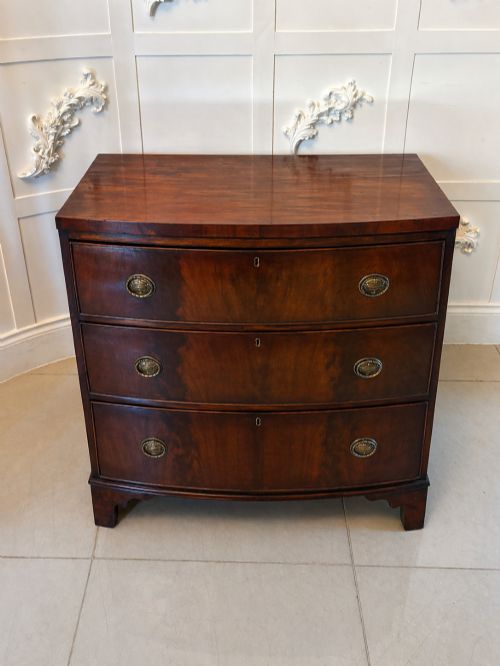
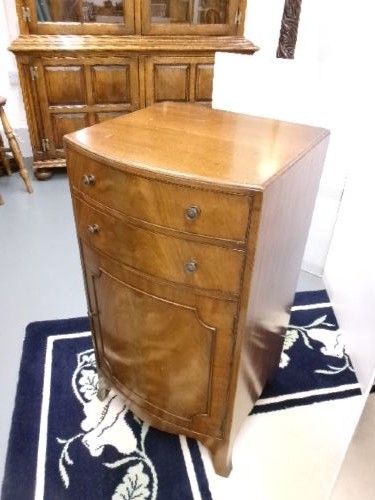
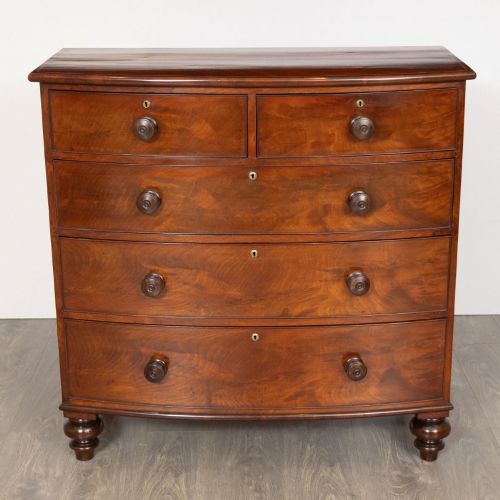
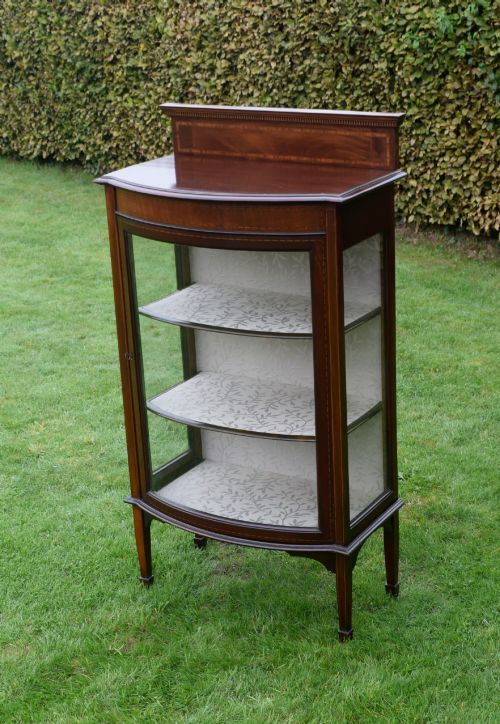
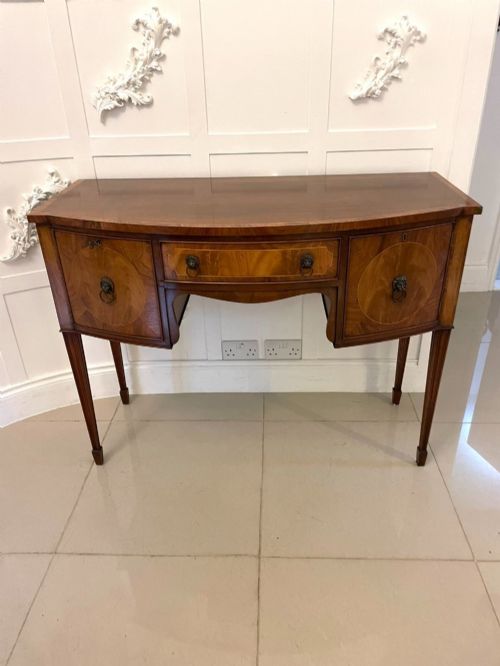
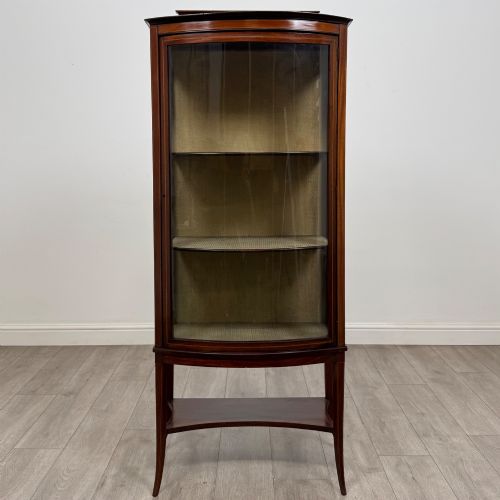
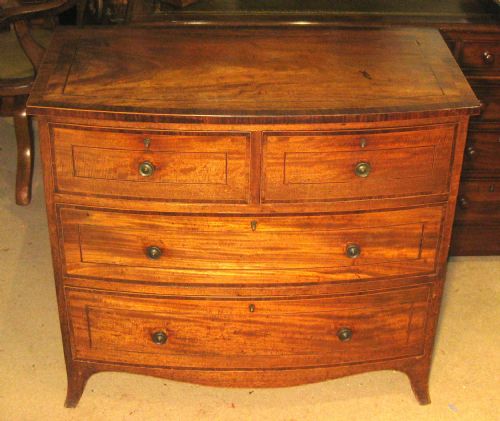
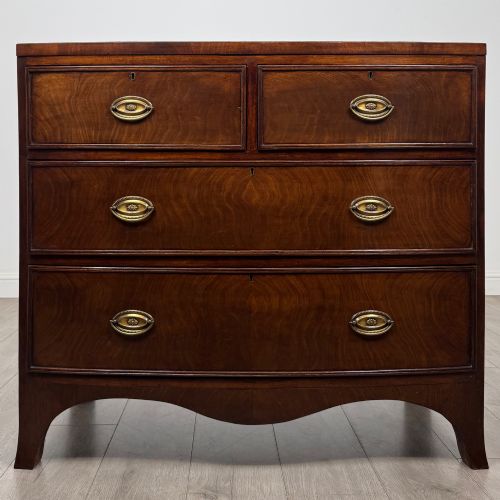
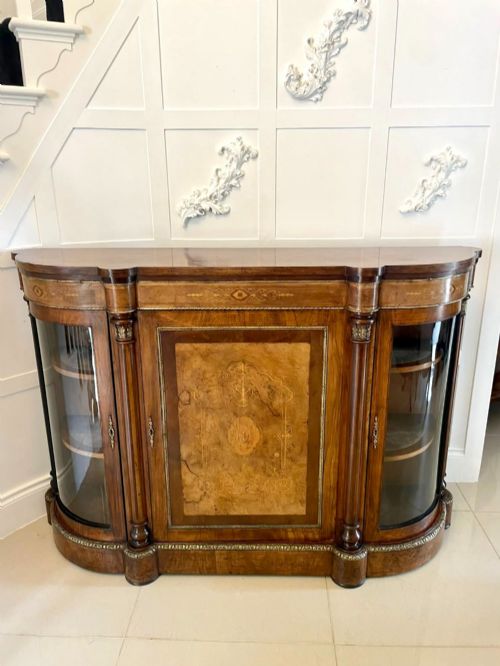
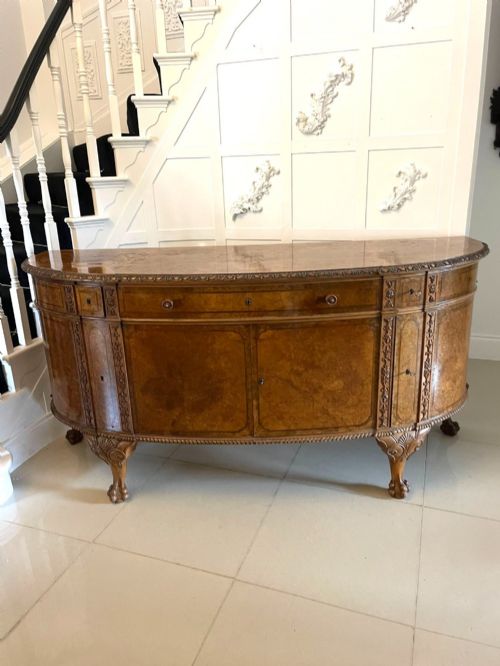
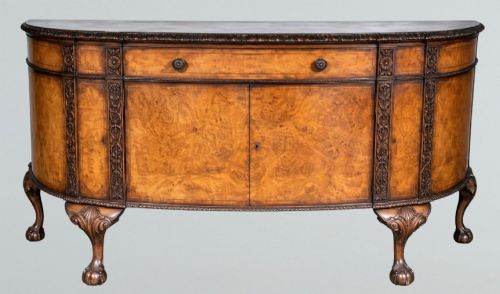
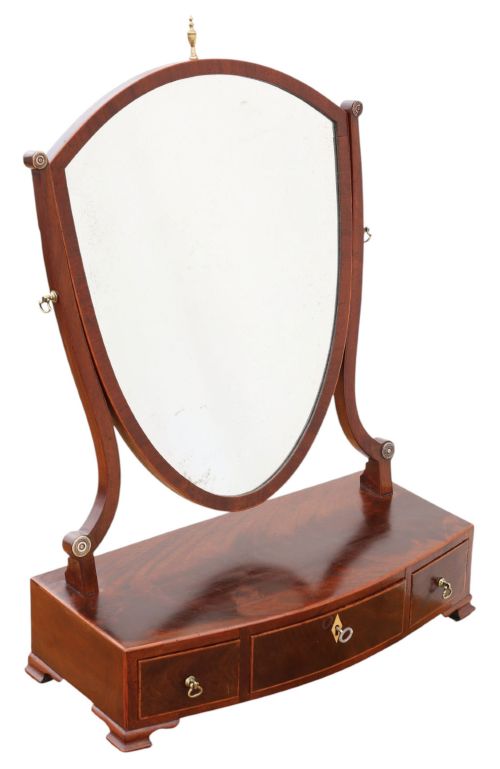
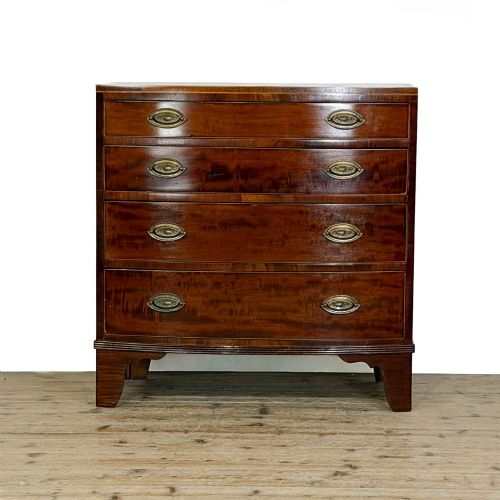
An antique bow front piece describes furniture designed with a convex, curved front that softens the room while offering deep interior capacity. The selection spans numerous practical forms, with chests of drawers and sideboards appearing most frequently alongside display cabinets, corner cupboards, and cocktail cabinets.
The material palette ranges widely across the centuries represented in the inventory. Mahogany and its figured or flame variants dominate, supported by burr walnut, satinwood, oak, and brass hardware.
Originating across multiple stylistic eras including Georgian, Regency, Victorian, Edwardian, and Art Deco, these items bridge functional storage with decorative presence. A buyer encounters everything from early Georgian golden mahogany chests to 1920s burr walnut cocktail cabinets.
Construction and materials
Cabinet makers utilised solid timbers alongside finely cut veneers to achieve the characteristic convex curve. Flame mahogany and burr walnut veneers were frequently laid over stable secondary woods to present striking grain patterns across the curved drawer fronts and doors.
Crossbanding and stringing in contrasting timbers such as satinwood added linear definition to the curved edges. Brass handles, escutcheons, and occasional glass panels completed the assembly of these case pieces.
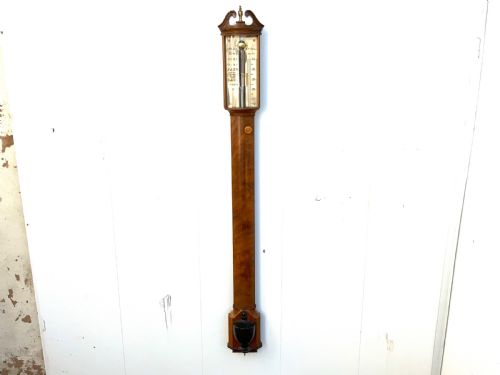
A stick barometer joins the furniture line-up, proving that makers were happy to curve anything they could get their hands on.
Evaluating craftsmanship and proportion
Quality rests heavily on the handling of the curved timber and the selection of grain figures. Superior examples display seamless alignment of veneer across multiple drawers and expert joinery that accommodates the natural movement of curved wood over centuries.
Proportion and secondary detailing separate standard pieces from exceptional ones. Refined pieces maintain harmonious heights and depths, often incorporating subtle satinwood banding or well-cast brass hardware that enhances the curved silhouette without overwhelming it.
The Antique Bow Front Glossary
- Bow front
- A convex, curved front elevation characteristic of certain chests of drawers, sideboards, and cabinets. This design softens the corners of furniture while maximising internal space.
- Flame mahogany
- A veneer cut from timber where the grain resembles flickering flames. It creates a highly decorative, rippling visual effect across large flat and curved surfaces.
- Burr walnut
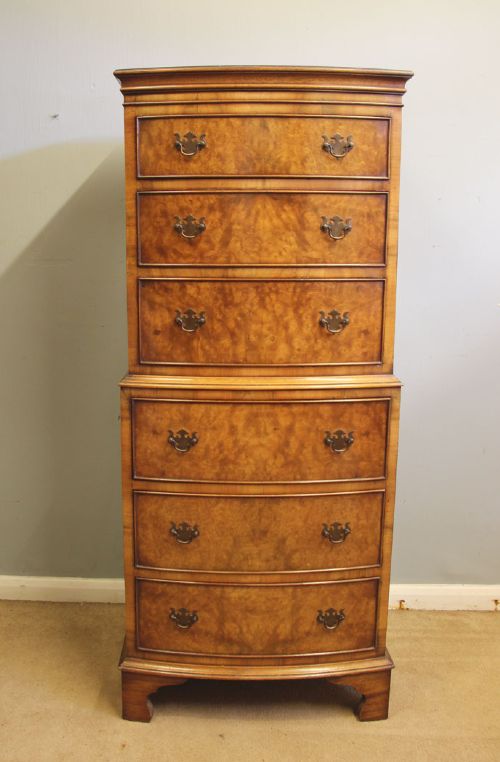
- Wood taken from the growth burls of walnut trees, yielding an intricate, swirling grain pattern. It was utilised on high-status cabinet work and cocktail cabinets.
- Crossbanding
- A narrow strip of veneer applied to the border of a surface with the grain running at right angles to the central panel. This technique frames the curved front edges.
- Tallboy
- A tall chest of drawers consisting of one chest stacked atop another, providing substantial vertical storage. They appear in both walnut and mahogany.
Antique Bow Front: Frequently Asked Questions
What rooms suit an antique bow front chest?
These chests work well in bedrooms, hallways, or living spaces where a softer profile is preferred over sharp corners. The curved shape allows smooth movement around the piece in tighter spaces.
The generous drawer depth also provides practical storage for clothing or linens while maintaining a decorative presence.
How do I care for mahogany bow front furniture?
Keep the wood away from direct sunlight and heat sources to prevent the veneers from drying out or lifting. Regular dusting with a dry, soft cloth maintains the finish.
Occasional application of appropriate wax polish helps nourish the timber and preserves the natural sheen of the grain.
How do I distinguish Georgian from Victorian pieces?
Georgian furniture generally displays understated elegance with classical proportions and subtle brass pulls. The timber selection often emphasises rich, golden or dark mahogany.
Victorian and later Edwardian iterations can feature heavier carving, darker finishes, or more elaborate inlay work such as satinwood banding.
What is the difference between a sideboard and a chest?
A sideboard is designed primarily for dining rooms to store cutlery, linen, or serving dishes, often featuring cupboards alongside drawers. A chest of drawers focuses entirely on stacked drawer storage for personal items.
Both utilise the convex curved front to soften their profile in a room.