





Antique Boulle Table
An antique boulle table brings nineteenth-century French luxury into a room through intricate brass and tortoiseshell marquetry.
Antique Boulle Table
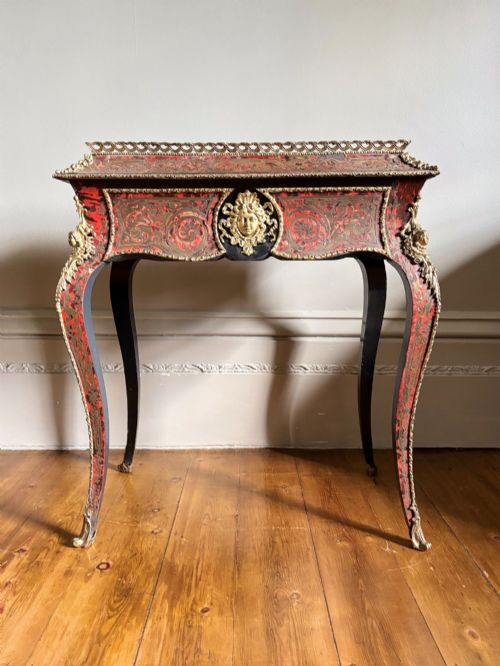
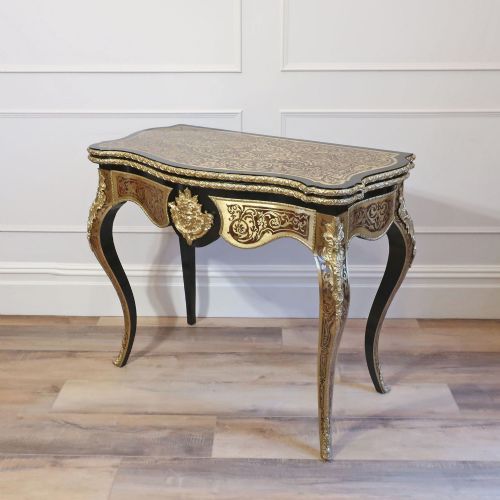
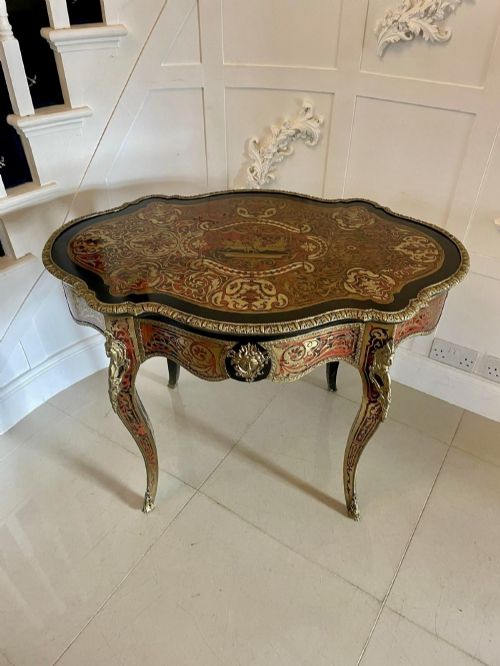
When searching for an antique boulle table, a buyer encounters nineteenth-century French pieces spanning centre tables, card tables, writing desks, and games tables. These forms follow revival styles such as Louis XIV, Louis XV, and Napoleon III, produced during the Victorian era and the decades surrounding it.
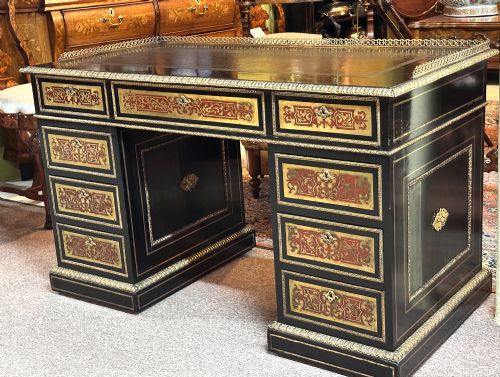
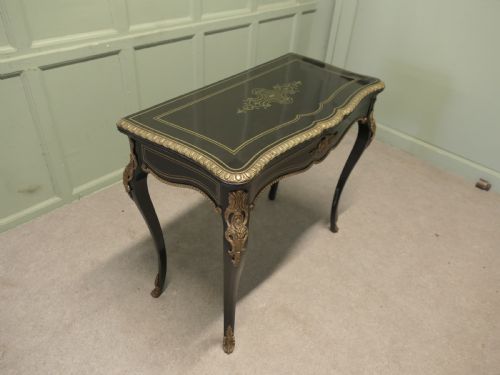
The centre tables and writing desks on this page demonstrate the scale and presence expected of formal nineteenth-century salon furniture. Card tables and games tables offer folding tops lined with baize or velvet, revealing the dual decorative and functional purpose intended by Parisian makers.
Materials and Technique
The characteristic surface relies on brass and tortoiseshell marquetry, often set into ebonised wood or red tortoiseshell grounds. Artisans cut these contrasting sheets together using a fine saw, producing paired positive and negative designs known as first-part and contre-partie.
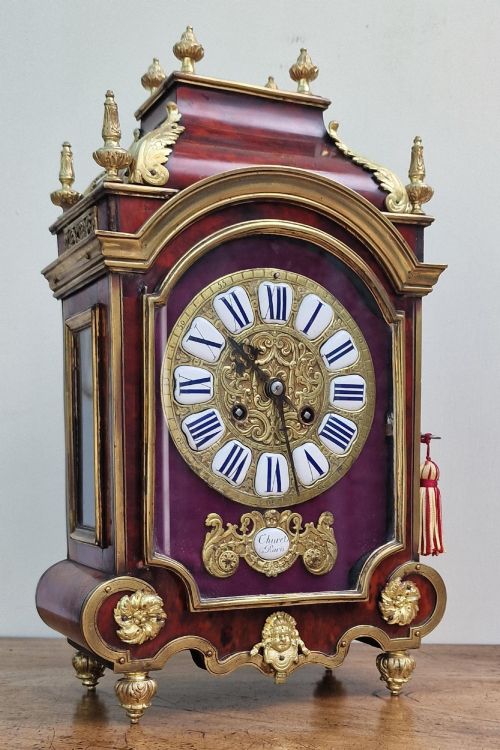
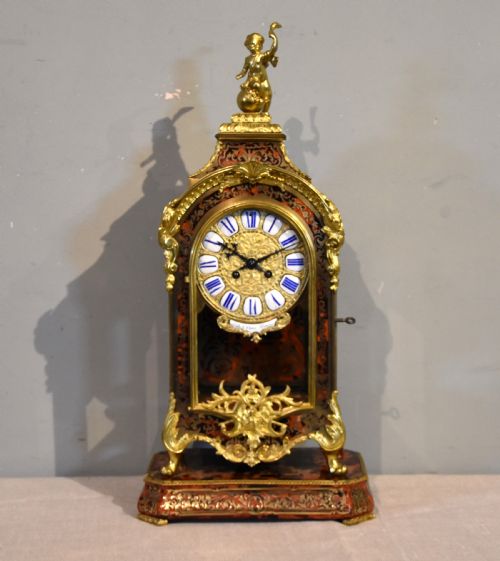
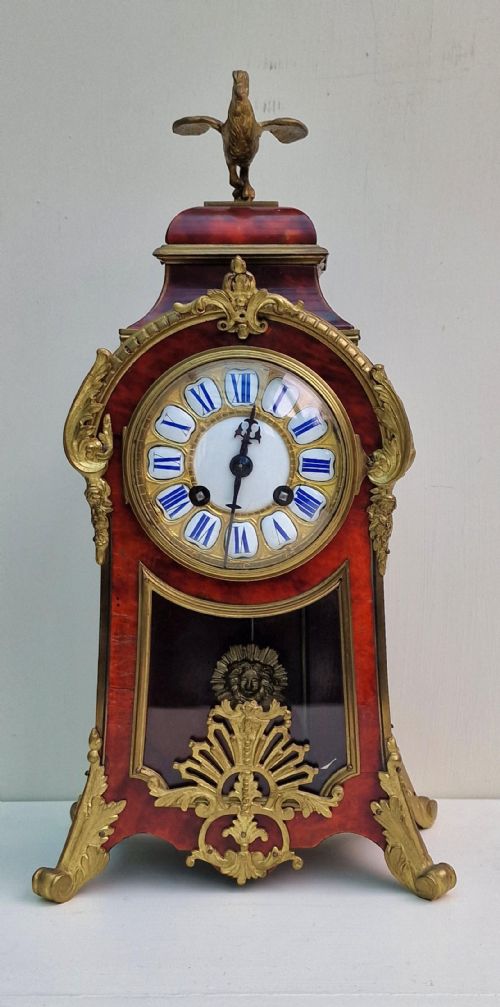
Gilt bronze and ormolu mounts frame the edges, corners, and legs, providing structural protection and sculptural relief. Glass panels appear on vitrine variations, while enamel numerals frequently face the mantel clocks and related pieces sharing the workshop tradition.
Antique Boulle Table Retail Price Guide 2026
Typical asking prices for boulle table among the pieces listed under this phrase on Sellingantiques today, from the lower quarter to the upper quarter. They describe what is for sale here now, not the wider market.
Several clocks on offer hide their ticking behind scarlet tortoiseshell and brass scrollwork, keeping nineteenth-century time in nineteenth-century style.
Craftsmanship and Design
Excellence in these pieces rests upon the precision of the brass and tortoiseshell cutting, where tighter joints and finer scrollwork distinguish superior examples from simpler production. The crispness of the chased ormolu mounts and the depth of the timber frame further separate workshop standards.
Makers known by signature or stamp, such as Maison Millet or Edwards & Roberts, command attention for their adherence to classic French cabinet-making standards. Unsigned items vary according to the weight of the brass inlay and the richness of the underlying shell veneer.
Thuret·Maison Millet·Edwards & Roberts·Samuel Marti·Payne London
The Antique Boulle Table Glossary
- Boulle
- A marquetry technique employing cut brass and tortoiseshell, named after André-Charles Boulle, cabinetmaker to Louis XIV. This method defines the primary decorative vocabulary of the tables and clocks seen here.
- Ormolu
- Gilded bronze used for decorative mounts and feet. The technique involves applying a mercury-gilding mixture to bronze before firing.
- Bureau plat
- A flat-topped writing desk with drawers, standing on legs rather than pedestals. These desks frequently feature leather writing surfaces framed by elaborate marquetry.
- Contre-partie
- The reverse variant of boulle marquetry where brass forms the background and tortoiseshell creates the pattern. This technique balances lighter and darker tones across paired furniture suites.
- Marquetry
- The art of applying pieces of veneer to a structure to form decorative patterns and pictures. In these listings, it combines metal and organic shell.
Antique Boulle Table: Frequently Asked Questions
What is an antique boulle table?
An antique boulle table is a nineteenth-century French furnishing decorated with tortoiseshell and brass marquetry in revival styles. These pieces range from games tables to writing desks and centre tables.
The surface technique originates from seventeenth-century court workshops and experienced a major revival during the Victorian period, particularly under Napoleon III.
How do I clean tortoiseshell and brass?
Tortoiseshell and brass require gentle maintenance using soft, dry cloths to remove dust without scratching the delicate organic shell or the metal inlay. Moisture and modern chemical polishes can damage the adhesive beneath the veneer.
Keeping the piece away from direct sunlight and fluctuating humidity prevents the tortoiseshell from warping or lifting away from the wooden carcase.
How do I identify French revival styles?
French revival styles on these tables reflect earlier monarchical periods, principally Louis XIV, Louis XV, and Louis XVI, reinterpreted during the nineteenth century. Louis XIV styles display bold symmetry and grand proportions, while Louis XV pieces favour asymmetrical curves and scrolling foliate ormolu.
Napoleon III examples combine these historical elements with eclectic Victorian tastes, often incorporating dense brass inlay across ebonised or red tortoiseshell grounds.
Where were these tables used?
These tables served primarily in formal nineteenth-century drawing rooms, reception spaces, and parlours designed for entertaining guests. Centre tables anchored the middle of a room, while card tables stood against walls until needed for evening games.
Writing desks and bureaus provided functional workspaces within private libraries or elegant boudoirs, combining display value with daily utility.