




Antique Boot Cleaner
An antique boot cleaner offers a sturdy threshold anchor, removing heavy mud before anyone steps inside.
Antique Boot Cleaner
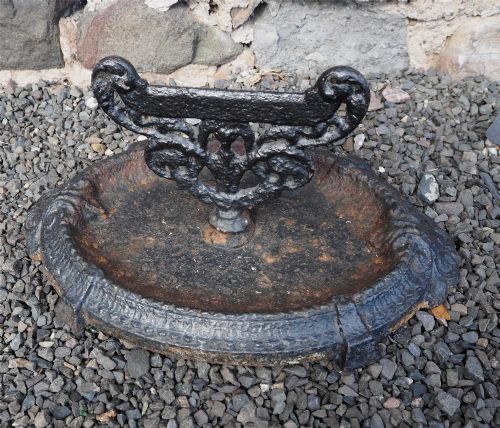
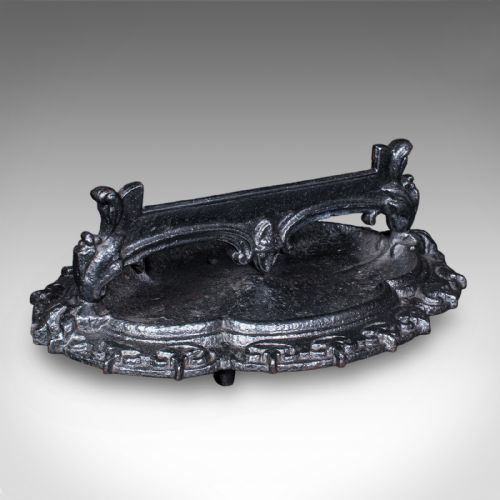
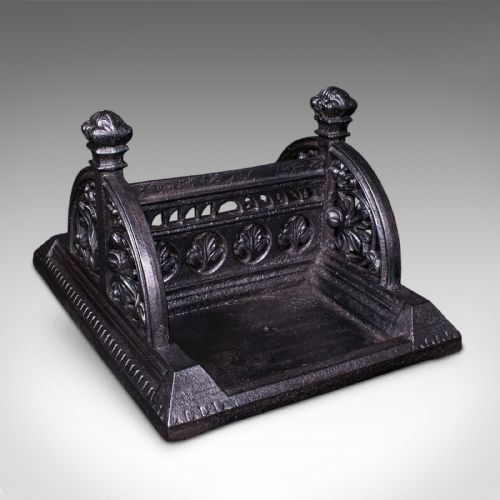
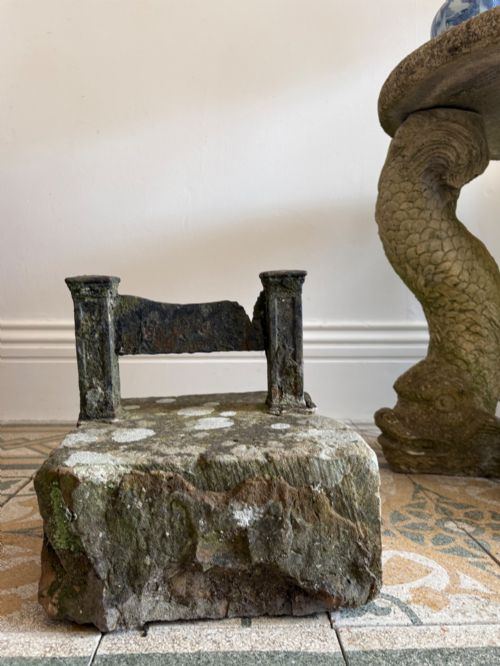
An antique boot cleaner is typically found as a boot scraper set by a doorway, constructed to tackle outdoor dirt. Buyers searching for an antique boot cleaner encounter heavy cast iron and wrought iron forms, often paired with stone blocks or integrated shoe pulls.
The pieces span the Georgian, Regency, and Victorian periods, reflecting the domestic needs of townhouses and country houses. Most examples serve as entrance furniture, while smaller desk accessories like silver pen wipes also appear under this heading.
Quality and execution
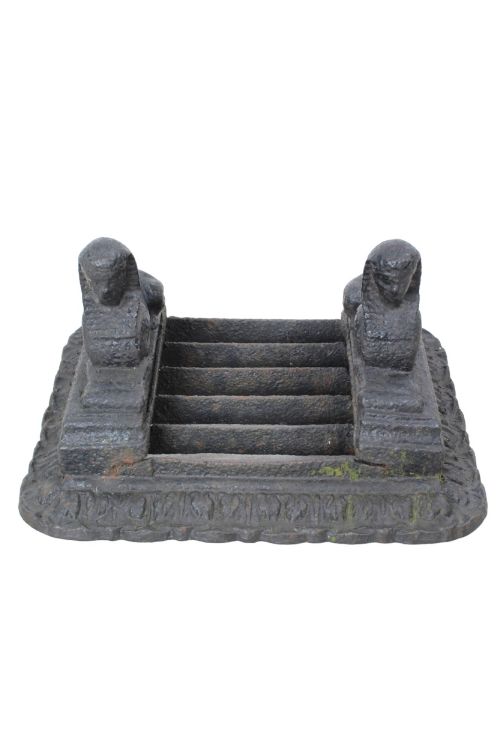
The distinction in quality lies in the heft of the metalwork and the ambition of the cast design, moving from plain utility items to elaborate Victorian Gothic Revival or Egyptian Revival motifs. Foundry work by known makers like Coalbrookdale displays crisper detailing in the iron.
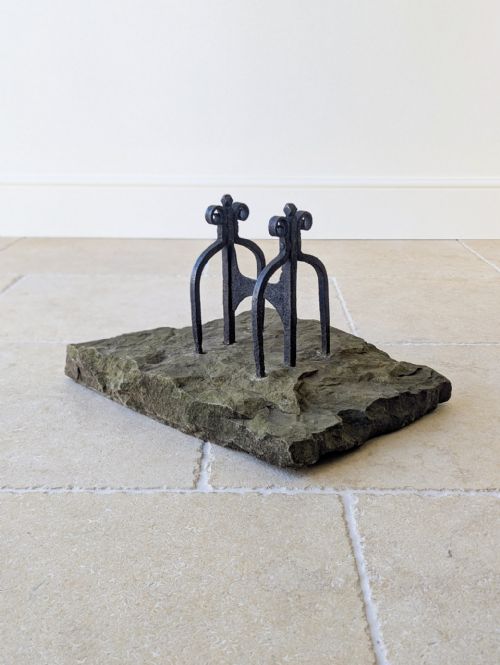
Integration with stone matters greatly, as original hewn Yorkstone bases provide superior stability compared to later replacements. The survival of functional shoe pulls and clean casting lines separates standard utilitarian examples from more distinguished pieces.
Some Victorians preferred their mud removal served with a side of whimsy, evidenced by solid silver miniature boots designed solely to wipe ink pens.
Sampson Mordan Co·Coalbrookdale
The Antique Boot Cleaner Glossary
- Boot scraper
- A fixed metal blade positioned near a doorway for scraping mud from the soles of footwear. They are typically secured into stone or anchored beside the threshold.
- Shoe pull
- An upward-pointing loop or hook cast into the scraper frame, used to steady the heel while pulling off muddy boots. This feature is common on Georgian and Victorian townhouse models.
- Yorkstone
- A dense British sandstone frequently used as a heavy base block for iron scrapers. It provides the necessary weight to keep the scraper steady during use.
- Cast iron
- Molten iron poured into a mould to create rigid architectural forms and decorative bases. It is the predominant material for Victorian and Georgian outdoor scrapers.
- Pen wipe
- A small desk accessory, sometimes fashioned in novelty boot shapes out of solid silver with bristle inserts. These items served a different domestic function than threshold scrapers.
Antique Boot Cleaner: Frequently Asked Questions
Where were boot scrapers placed?
They were positioned immediately outside front doors, entrance porches, and townhouse thresholds where visitors paused to clean their footwear before entering.
In country houses, heavier examples stood near stable entrances or back doors to handle farm and estate mud.
How do I date a cast iron scraper?
Dating relies on the stylistic motifs cast into the iron, such as Georgian simplicity versus elaborate Victorian Gothic or Egyptian Revival ornamentation.
Construction methods also help, as earlier pieces often combine hand-forged wrought iron with rough-hewn stone blocks.
Can these be used outside today?
Cast iron and stone scrapers remain entirely weather-resistant and function outdoors just as they did in the nineteenth century.
They simply require secure anchoring into the ground or a paved step to handle the leverage of scraping heavy boots.
What is a shoe pull?
A shoe pull is the looped section attached to the scraper frame designed to catch the heel of a boot.
This allows the user to leverage their foot upward and pull the boot off without bending down in the dirt.