
Antique Bookshelves
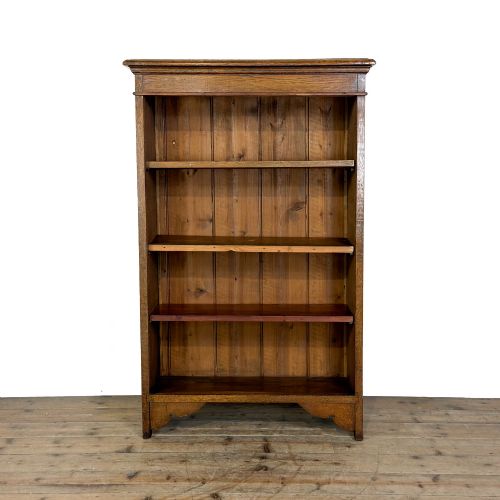
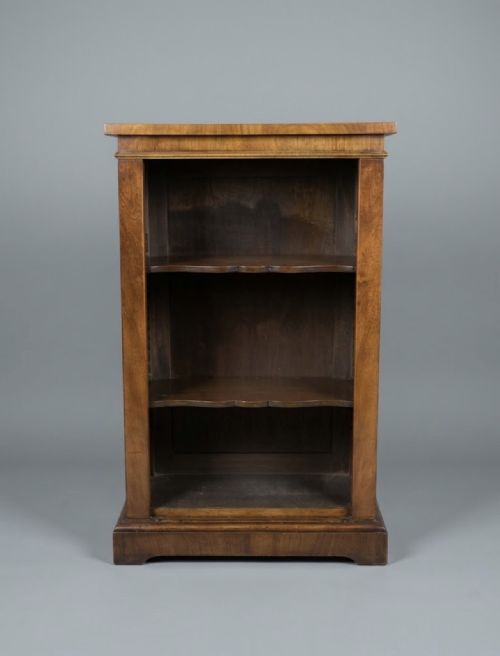
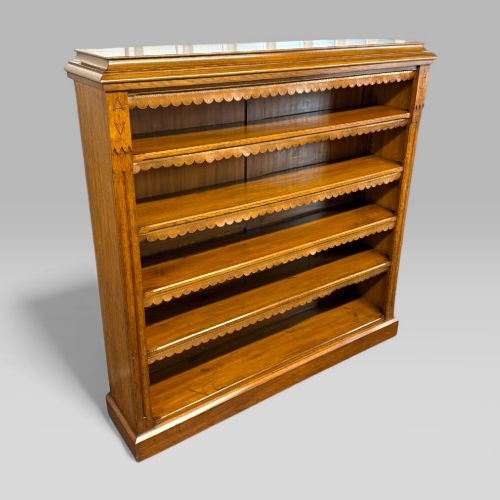
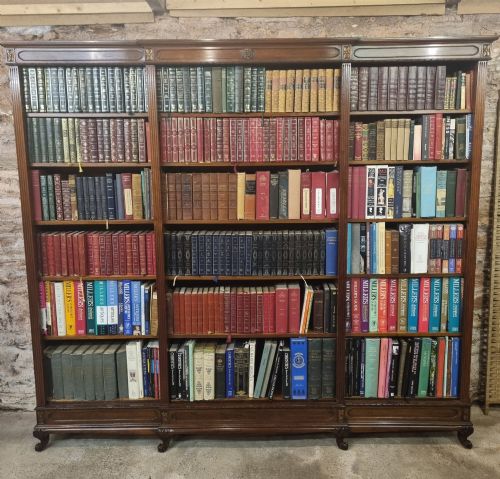
Antique bookshelves bring open storage and rich timber grain to a room, ranging from compact Edwardian oak pieces to grand Victorian library cabinets.
Antique Bookshelves
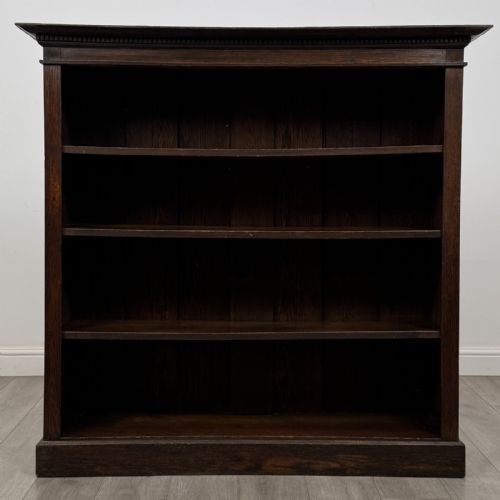
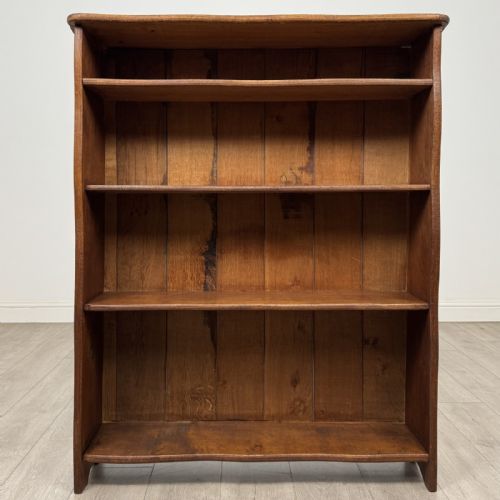
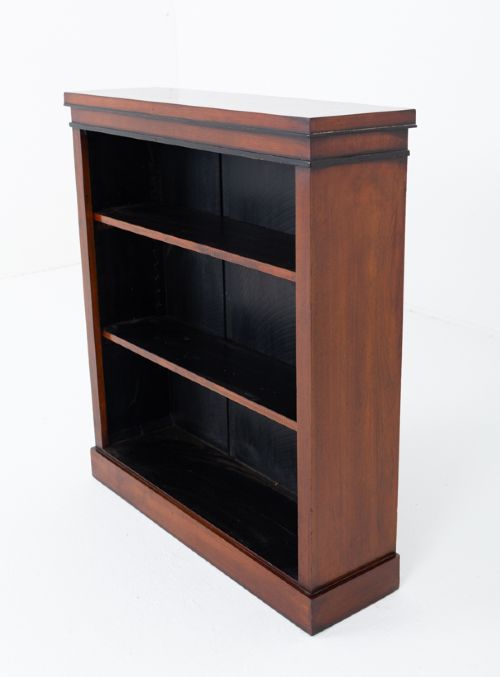
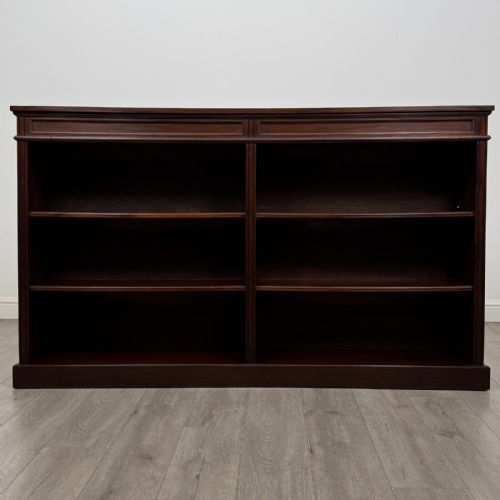
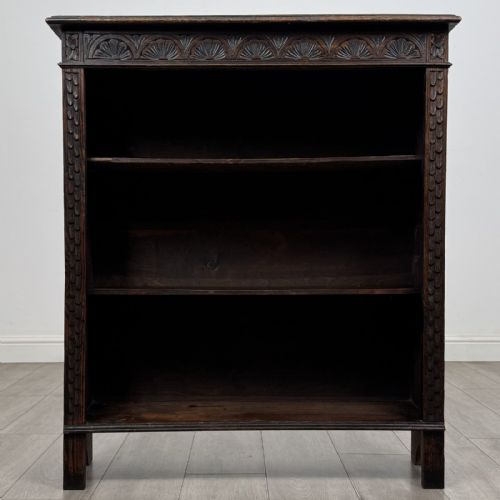
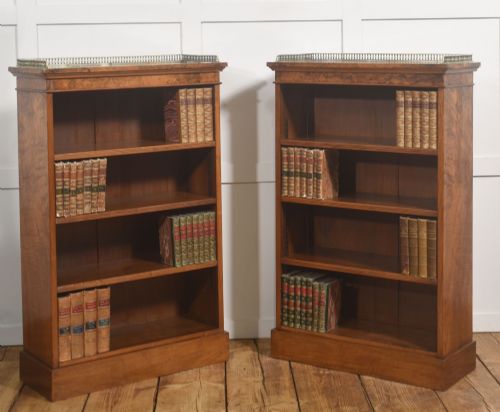
Antique bookshelves appear in several distinct forms, most commonly as open bookcases and freestanding shelving units designed for domestic libraries and studies. The selection spans compact Edwardian oak numbers and tall Victorian mahogany pieces alongside revolving designs and wall-hanging shelves.
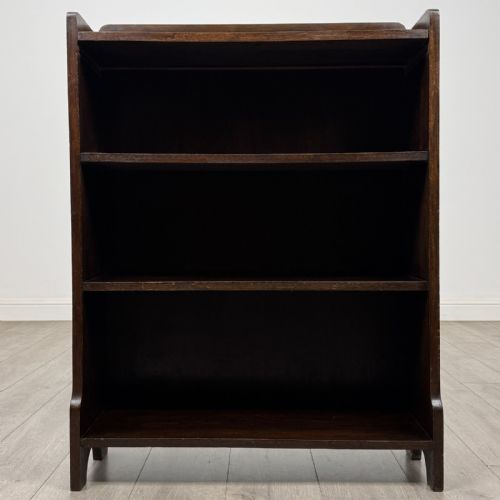
Makers and workshops utilised various layouts, from simple three-shelf oak units to elaborate revolving walnut bookcases and slender burr walnut configurations. Pieces frequently incorporate adjustable shelving, lower drawers, or magazine racks tailored to daily use.
How they were made
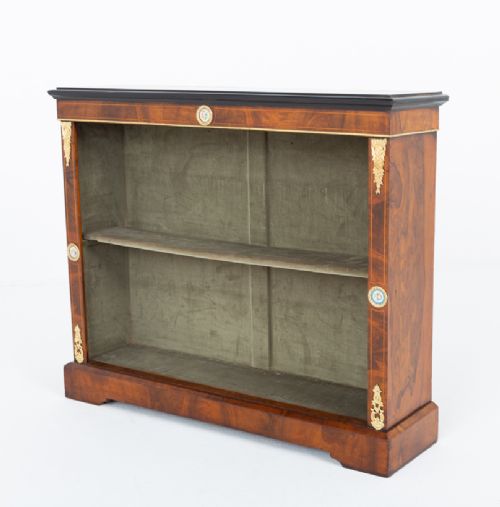
Cabinet makers relied primarily on solid timbers such as oak, mahogany, and walnut, often selecting figured burr walnut veneers for decorative surfaces. Brass hardware, painted finishes, and ormolu mounts appear selectively to accent specific styles.
Construction techniques prioritized durability, utilising adjustable wooden shelf supports, inlaid banding, and carved detailing. Revolving models integrated internal mechanisms that allowed the tiered shelving to turn smoothly on a central base.
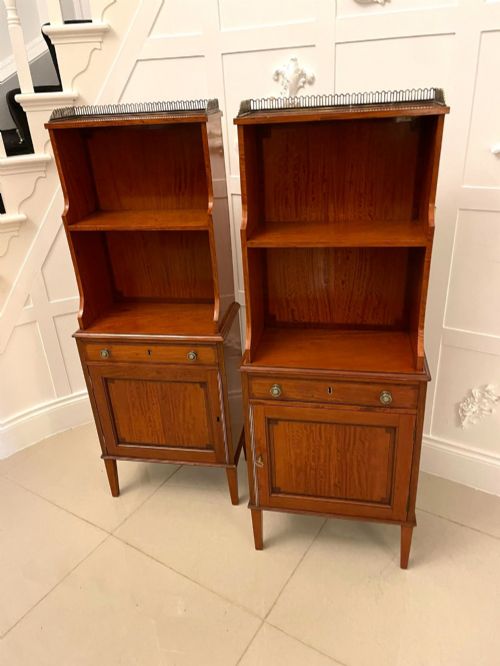
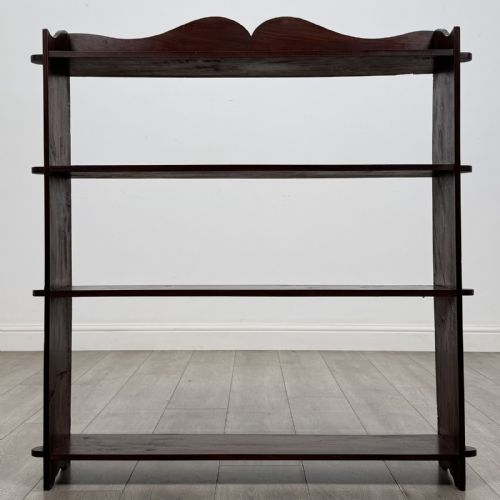
Listings feature specialised forms including revolving bookshelves, hanging shelves, corner cabinets, and waterfall bookcases.
What varies in quality
Quality rests heavily on the selection of timber and the precision of the cabinetwork, seen in the rich figuring of burr walnut or the clean grain of golden oak. Superior examples display careful timber matching across panels and shelves rather than uniform commercial planks.
Refinement in proportion and ornamentation separates standard items from exceptional pieces. Attributed works or stamped pieces from notable makers demonstrate finer carving, superior brass fittings, and more complex structural joinery.
Johnstone and Jeanes·Gillows
The Antique Bookshelves Glossary
- Open bookcase
- A piece of furniture designed for storing books without glass doors enclosing the front. This format allows immediate access to book spines and bindings.
- Revolving bookcase
- A low or medium-height shelving unit engineered to rotate on a central pivot base. This design lets a reader access multiple sides of books from a stationary seat.
- Waterfall bookcase
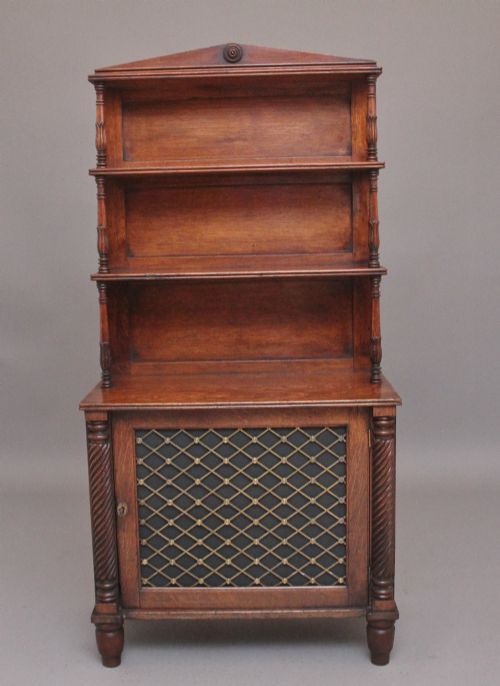
- A tiered shelving unit where each upper shelf is narrower and set back from the one below it, creating a cascading silhouette. It is typically constructed in mahogany or rosewood.
- Adjustable shelves
- Shelving that can be moved up or down to accommodate books of varying heights. This system usually relies on internal wooden ratchets or brass shelf studs.
- Satinwood banded
- Furniture decorated with narrow strips of contrasting pale satinwood inlaid around the edges of panels or shelves. It creates a refined border effect on mahogany surfaces.
Antique Bookshelves: Frequently Asked Questions
How do I choose the right size?
Measure your available wall space and consider the depth required for your volumes before selecting a piece. Compact Edwardian models fit tight corners, while large Victorian library bookcases demand substantial wall area.
Take note of whether the shelves are adjustable so you can accommodate oversized folios or shorter novels as your collection changes over time.
Where were these placed originally?
These furnishings populated domestic studies, drawing rooms, and libraries where easy access to literature was essential. Revolving models sat beside armchairs, while wall-hanging shelves utilised vertical space in smaller rooms.
Larger open library bookcases stood against principal walls to hold extensive household book collections.
How do I care for antique timber?
Keep wooden surfaces away from direct sunlight and strong heat sources to prevent the timber from drying out or splitting. Apply a suitable wax polish periodically to maintain the lustre of mahogany, walnut, or oak.
Dust regularly with a soft, dry cloth to prevent particles from settling into carved details or inlaid grain.
How do I tell Victorian from Edwardian?
Victorian pieces generally feature heavier proportions, darker mahogany or walnut timbers, and deeper carved ornamentation. Edwardian items tend to present lighter golden oak, simpler lines, and sometimes inlaid mahogany.
Stylistic influences also help with dating, as Arts and Crafts pieces emphasise plain functional construction while Neoclassical revivals lean towards formal symmetry.