

Antique Book Ends
Antique book ends hold volumes upright on a shelf, combining everyday utility with period craftsmanship.
Antique Book Ends
Antique book ends support heavy volumes on open shelves and desks using weighted bases and upright panels. These utilitarian objects evolved from simple sliding book slides into sculptural pairs designed to display a specific theme.
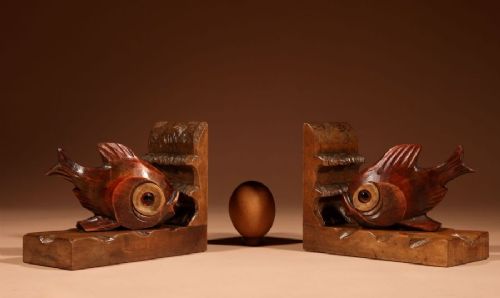
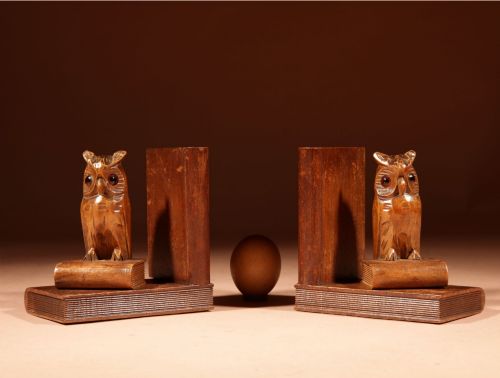
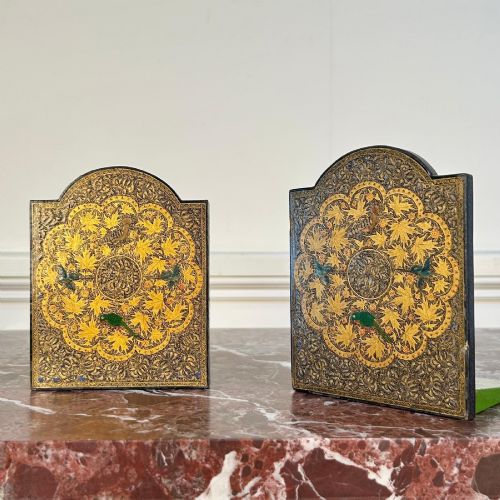
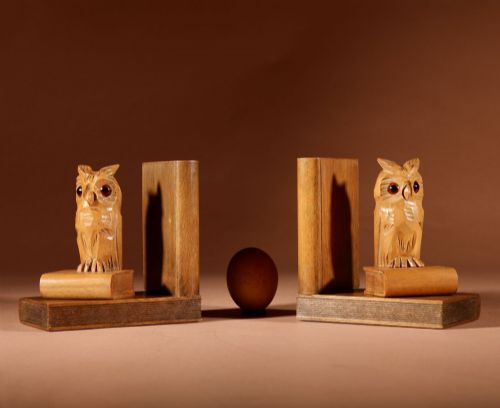
The versions most common in trade include cast metal figures, carved wooden animals and weighted architectural forms from the late nineteenth and early twentieth centuries. Makers applied diverse stylistic influences ranging from Victorian Gothic revival to Art Deco geometric lines.
How they were made
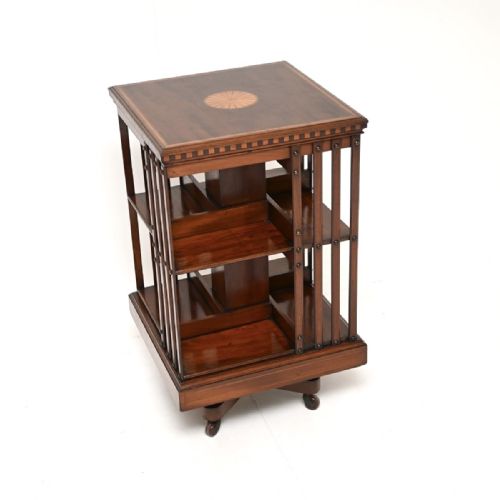
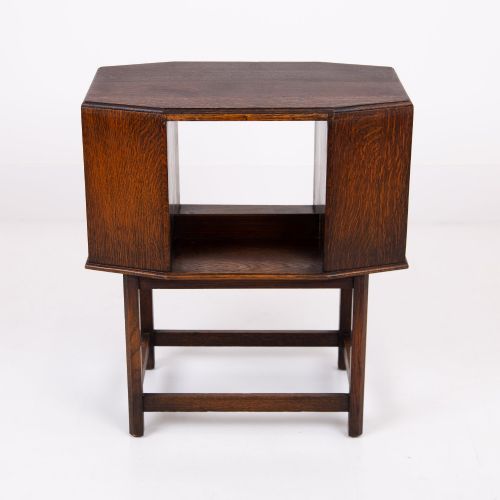
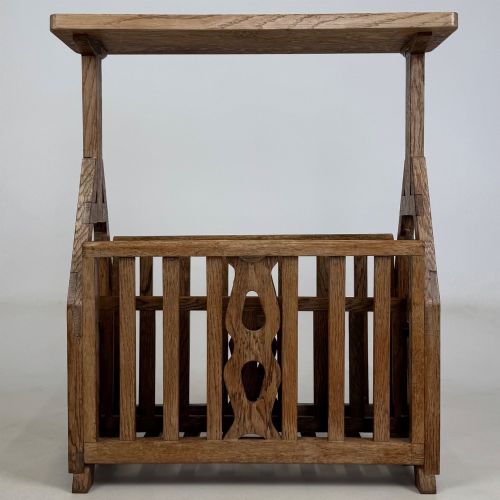
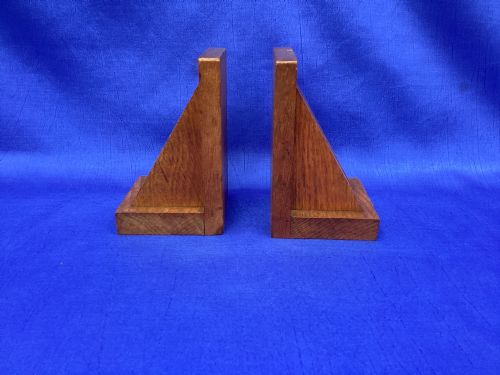
Craftsmen utilised traditional timber varieties like oak, walnut, mahogany and exotic woods such as coromandel, often mounting them with brass hinges, brackets and applied mouldings. Woodworkers shaped panels through hand carving and turning, whilst incorporating extendable mechanisms for sliding book rests.
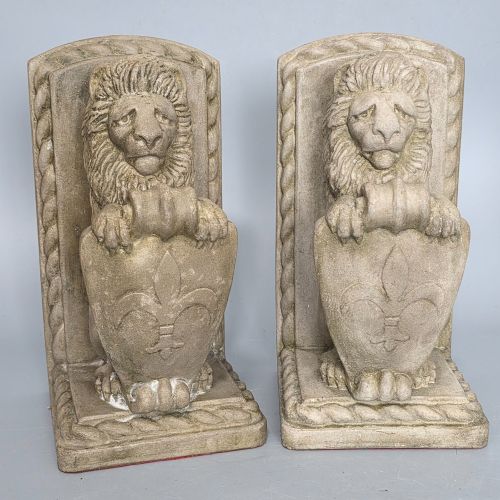
Foundries cast heavier examples in bronze, brass, spelter and iron, frequently applying patination, silvering or polychrome finish to metal surfaces. Stone materials such as marble and alabaster provided substantial weight for supporting larger volumes without sliding.
Antique Book Ends Retail Price Guide 2026
Typical asking prices for book ends among the pieces listed under this phrase on Sellingantiques today, from the lower quarter to the upper quarter. They describe what is for sale here now, not the wider market.
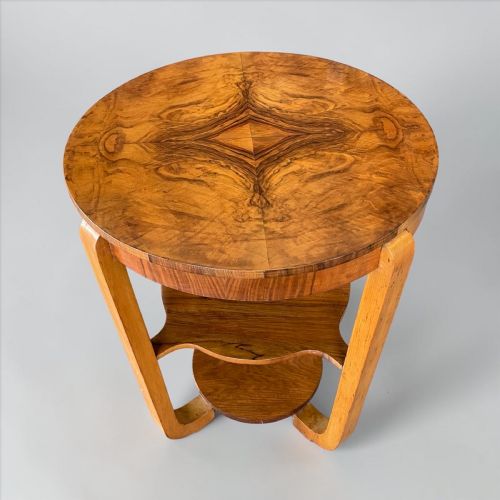
Listings feature oak, walnut, mahogany, brass, bronze, marble, and glass across various periods from the Regency era through the Art Deco decade.
What varies in quality
The standard of carving and casting defines the upper tier of production, where anatomical detail in figurative animal subjects or crispness in architectural ornament remains sharp. Lesser examples rely on simplified moulding and mechanical assembly without hand finishing.
Integrity of materials and original surface patination distinguish superior pieces from later alterations or replacements. The robustness of internal extending mechanisms in sliding book rests also marks the distinction between workshop standards.
Gordon Russell·Thornton Smith Co·C Omin
The Antique Book Ends Glossary
- Book slide
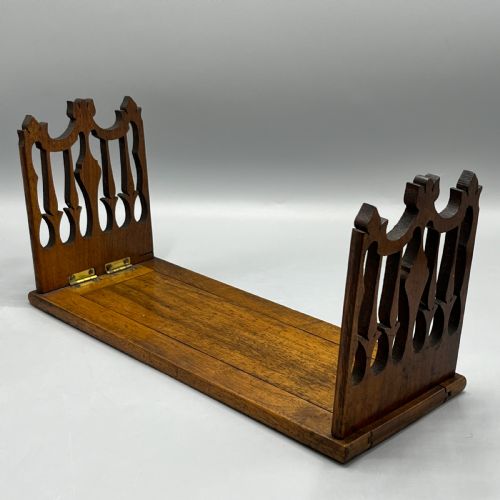
- An extending wooden platform fitted with sliding or hinged upright ends to hold varying numbers of volumes on a desk. These items often feature brass mounts and folding book rests.
- Spelter
- A zinc alloy utilised as a less expensive alternative to bronze for casting decorative figures during the nineteenth and early twentieth centuries. It is frequently painted or electroplated to simulate bronze.
- Ormolu
- Gilded bronze ornamentation applied to furniture, bases and desk accessories to provide decorative contrast. This technique involves coating bronze with a mercury and gold amalgam.
- Gothic Revival
- An architectural and decorative style drawing inspiration from medieval forms, characterised by pointed arches, heavy moulding and ecclesiastical motifs. Cabinet makers applied these designs to timber book slides and rests.
- Coromandel
- A dense, heavily figured dark timber imported from Asia, valued by nineteenth-century cabinet makers for luxury desk accessories and sliding book rests.
Antique Book Ends: Frequently Asked Questions
How do I clean antique wooden book supports?
Dust surfaces regularly with a dry cloth and apply occasional wax polish to nourish the timber grain. Avoid using water or chemical solvents that might damage the original polish.
Maintain stable humidity levels in the room to prevent timber panels from warping or splitting over time.
Were book slides used differently than book ends?
Book slides sat across a desk or table to hold a working selection of volumes upright between two adjustable ends. They allowed readers to adjust the span of shelf space as books were added or removed.
Traditional book ends functioned independently as a matched pair placed directly on a bookshelf.
What metal is commonly found in Art Deco pieces?
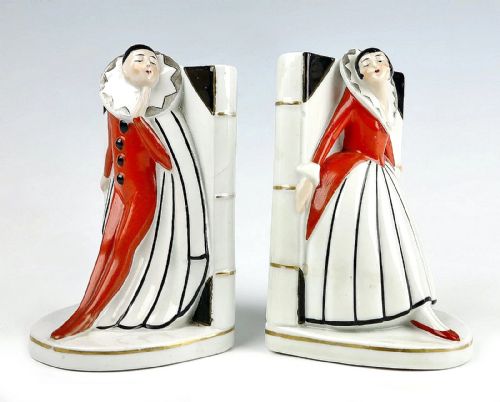
Foundries utilised bronze, brass, spelter and chromed metal for manufacturing sculptural book supports during the 1920s and 1930s. Spelter provided an economical base for detailed figurative castings.
These metals were often paired with marble or alabaster bases to provide the necessary weight for supporting heavy volumes.
How can I date a Victorian book slide?
Examine the timber species, construction joints and brass mounting hardware used in the extending mechanism. Patent mechanisms and maker stamps often provide a specific decade of manufacture.
Early Victorian examples typically display solid mahogany or walnut with hand-cut dovetails and brass inlay.