


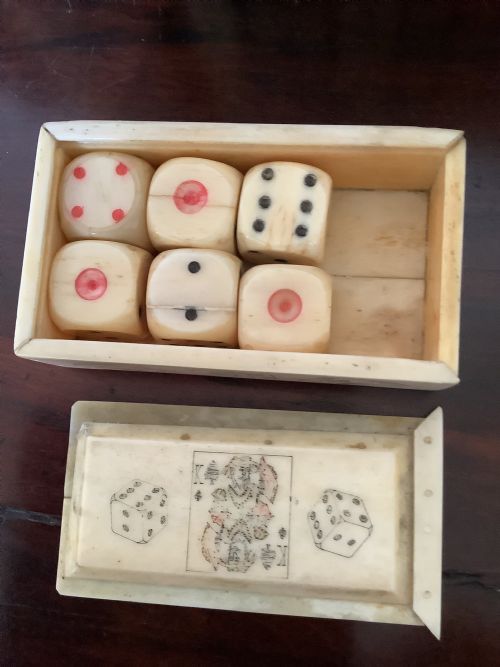


Antique Bone Games Set
An antique bone games set brings tactile parlour entertainment home, offering centuries of hand-carved craftsmanship for collectors of traditional pastimes.
Antique Bone Games Set
When you search for an antique bone games set, you encounter diverse pastimes ranging from travelling chess to boxed dominoes and mahjong. These objects reflect centuries of social entertainment, spanning the Victorian and Edwardian eras alongside earlier Georgian periods.
The selections on this page most frequently include intricately carved domino sets, complete chess sets, and gaming counters housed in dedicated wooden cabinets or leather cases. Materials such as bone, wood, and ebony predominate, reflecting the standard manufacturing choices of nineteenth and early twentieth-century workshops.
Originating from British domestic contexts as well as regional Chinese production, these sets provide a tangible link to historical parlour culture. Buyers encounter everything from miniature travelling pieces to oversized backgammon counters.
How they were made
Makers utilised organic bone as the primary medium, frequently shaping it into smooth dominoes, gaming counters, and miniature chess pieces using hand tools. Selected pieces often incorporate contrasting pigments or ink to darken carved numerals, pips, and intricate decorative lines.
Enclosing cabinets and travelling cases were constructed from dense timbers like mahogany, boxwood, and ebony, sometimes complemented by brass hardware. Craftspeople fitted these wooden boxes precisely to secure delicate counters and folding boards during transit.
What varies in quality
Quality in these sets rests upon the precision of the carving and the intact survival of every component within its original fitted container. Finer examples display crisp, uniform detailing on minuscule chess pieces or domino pips without splintering material.
The integrity of the housing box further distinguishes superior pieces, noting whether hinges, latches, and wooden joinery remain structurally sound and unaltered through generations of use.
The Antique Bone Games Set Glossary
- Bone
- A durable organic material harvested from animal sources, commonly carved and polished for historical gaming pieces. It accepts ink markings readily for numbering and decoration.
- Teetotum
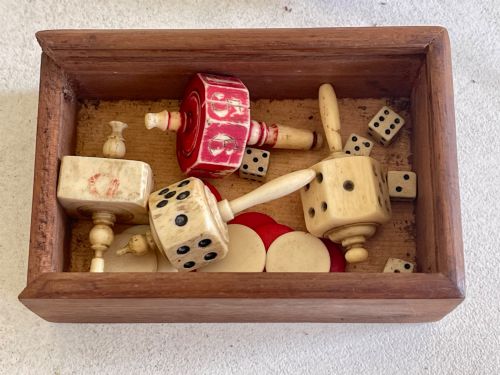
- A multi-sided spinning top used in historical gambling and parlour games, often spun with the fingers to determine a score. Prisoner of war examples are particularly sought by collectors.
- Mahjong
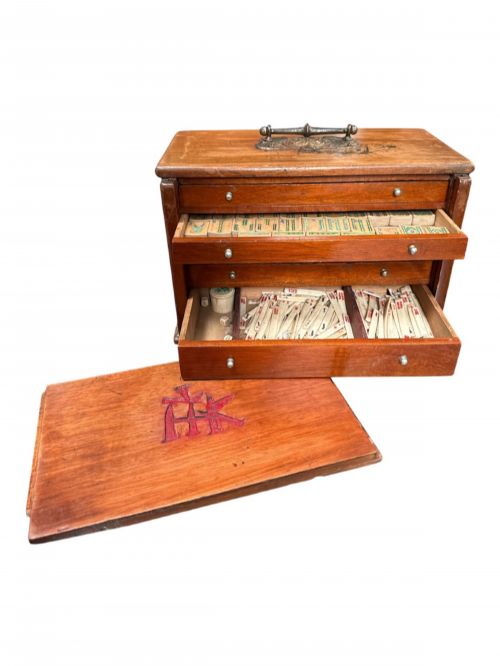
- A tile-based game originating in China, played with sets traditionally carved from bone and bamboo. Antique editions often feature hand-painted symbols and fitted wooden cabinets.
- Dominoes
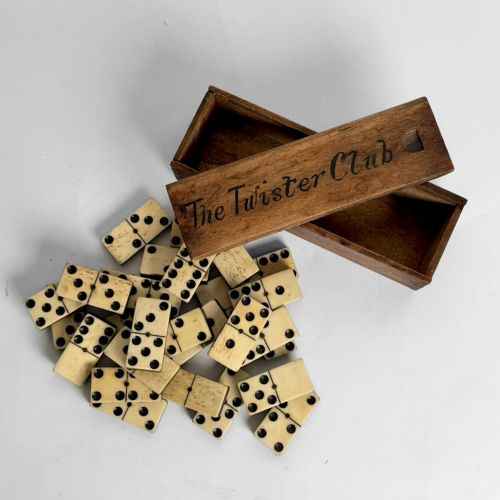
- Rectangular gaming pieces marked with pips on one face, utilised for various matching and scoring pastimes. Nineteenth-century versions frequently reside in sliding wooden boxes.
- Travelling set
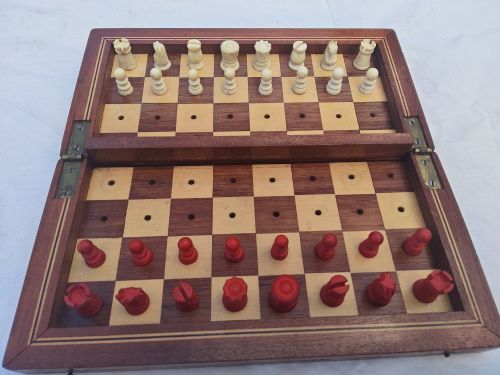
- A compact collection of games designed for portability, often featuring folding boards or secure magnetic or pegged components. These pieces allow play away from a fixed parlour table.
Antique Bone Games Set: Frequently Asked Questions
What games are included in these sets?
These collections encompass traditional pastimes such as chess, dominoes, mahjong, and backgammon. Many comprise standalone counters or complete portable kits designed for nineteenth-century parlour use.
Specific groupings range from miniature travelling chess boards to boxed dominoes accompanied by handmade dice.
How do I care for antique bone?
Keep bone items away from direct sunlight and extreme temperature fluctuations to prevent drying and cracking. Store them in stable humidity conditions without applying modern chemical cleaners.
Dust the surfaces gently with a soft, dry cloth to preserve the historical ink markings and natural patina.
Are all sets complete?
Completeness varies significantly among historical games, with some pieces lacking original counters or dice. Reviewing individual item descriptions clarifies whether a set retains its full complement of components.
Replacements are sometimes gathered over time, though original matching sets remain the most desirable for collectors.
How are periods identified?
Periods are determined through material composition, box construction styles, typography of numbers, and manufacturing techniques. Victorian and Edwardian pieces often exhibit distinct box linings and carving depths.
Comparison with documented historical examples helps narrow down the decade of manufacture for unsigned sets.
Can these pieces still be played with?
Most antique sets remain physically robust enough for careful, occasional play, provided the components are handled gently. The tactile nature of bone enhances the experience of traditional games.
Collectors often balance regular use with preservation needs to protect fragile items from unnecessary wear.