




Antique Boat Art
Antique boat art captures maritime history through paintings, watercolours, and carved models from the nineteenth and early twentieth centuries.
Antique Boat Art
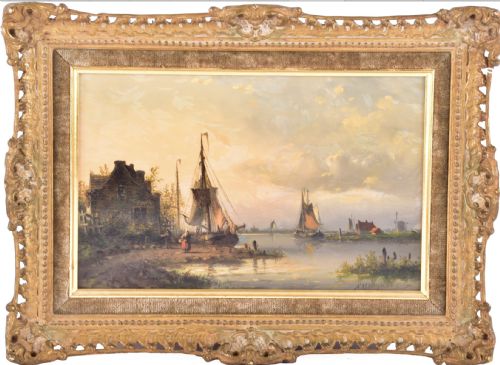
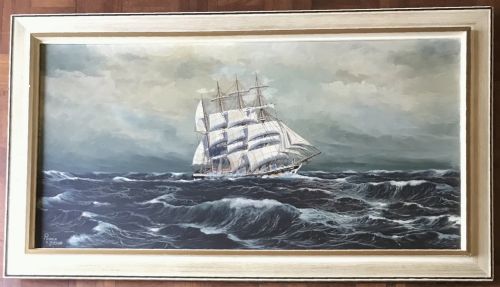
Antique boat art encompasses oil paintings, watercolours, and mixed media depictions of vessels upon rivers, harbours, and open seas. Collectors searching for antique boat art encounter maritime scenes produced across the nineteenth and twentieth centuries, spanning Victorian, Edwardian, and Art Deco periods.
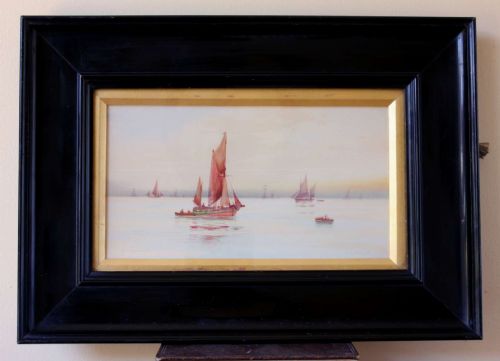
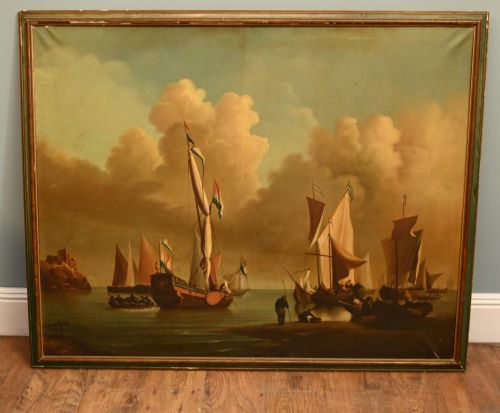
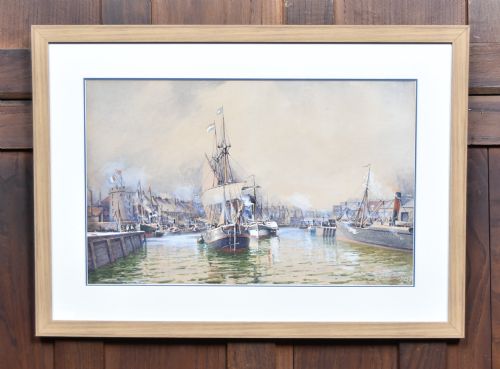
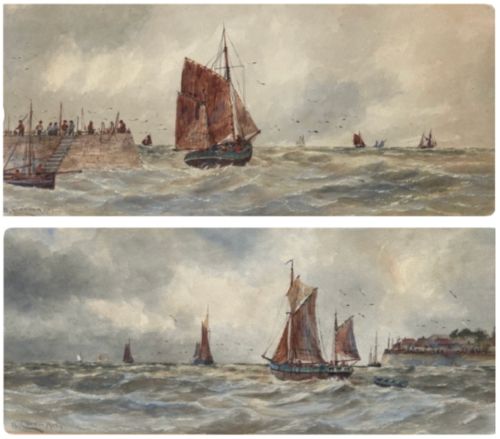
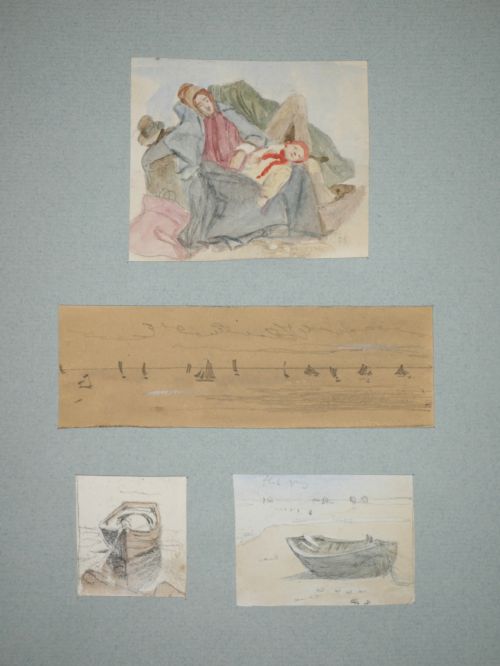
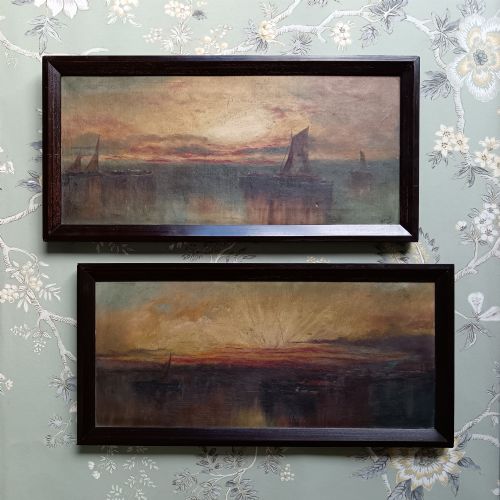
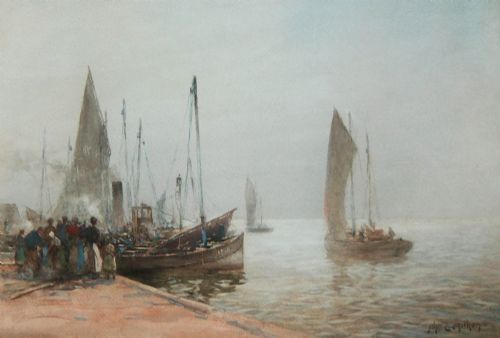
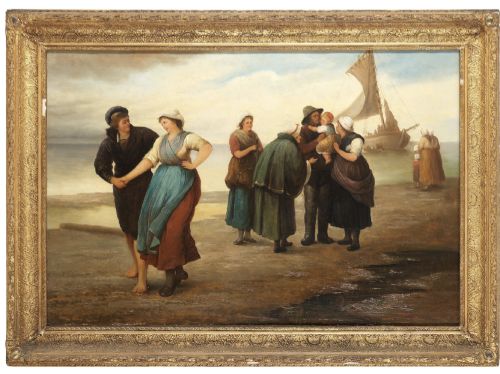
The selections on this page feature coastal views, port scenes, and vessel portraits originating from British and European schools. Works range from detailed watercolours of fishing boats to carved folk art half models and framed oil canvases.
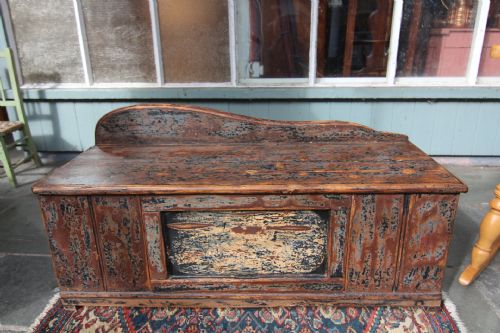
Beyond traditional canvas and paper paintings, the category extends to silver tableware shaped like sauce boats and novelty dishes, alongside polychrome barge box seats. These diverse objects reflect a broad cultural engagement with maritime life over successive generations.
Materials and techniques
Makers utilised traditional mediums including oil on canvas, watercolour on paper, and gouache to render water, sky, and vessel architecture. Canvasses often reside within original gilt frames, while works on paper employ protective glass settings.
Materials documented across the inventory include wood, paper, glass, canvas, oil, gilt, watercolour, and silver.
Distinctions in quality
Quality rests upon the artist's command of light, atmospheric perspective, and anatomical accuracy in depicting rigging and hull forms. Masterworks demonstrate fluid brushwork and precise tonal control that convey movement and maritime scale convincingly.
Condition of the support material, preservation of original pigment, and the integrity of period framing influence desirability. Artworks retaining signatures, legible historical documentation, and untouched surfaces command greater distinction among collectors.
GM Avondale·William Woolard·Nicolaas Martinus Wijdoogen·James Orrock·William Cannon·Hans Harlander·James Smetham·B Nash·James E Aitken·William Lionel Wyllie·Christofle Gallia·Frank William Scarbrough·Francis Moltino·Hector Caffieri·Thomas Creswick·Willem Bos·Cecil Allan Mould·John Wilson Carmichael·Alfred G Morgan·John Moore of Ipswich·William Matthison·Richard B Spencer·William Henry Williamson
The Antique Boat Art Glossary
- Maritime folk art
- Objects created by self-taught makers or craftsmen depicting nautical themes, often incorporating carved wood and bright polychrome paint.
- Gouache
- An opaque water-based medium that provides solid colour application, frequently utilised in Chinese export paintings of junks and ships.
- Half model
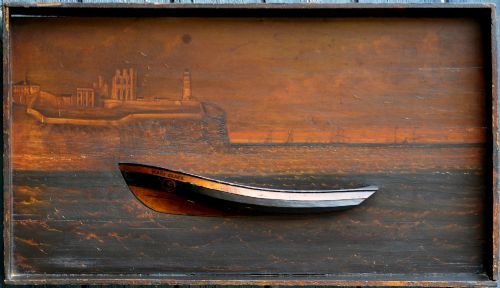
- A three-dimensional wooden representation of one side of a ship's hull, traditionally mounted on a board for display.
- Sauce boat
- A small pitcher designed for gravies or sauces, sometimes fashioned in silver or silver plate during the Victorian and Art Deco periods.
- Etching
- A printmaking technique where lines are bitten into a metal plate with acid to hold ink for impression on paper.
Antique Boat Art: Frequently Asked Questions
What periods do these artworks cover?
The listings span from the nineteenth century through the Edwardian era and into the mid-twentieth century. Most examples date from the Victorian period up to the interwar years.
Creators utilised oil, watercolour, and carved wood to document shipping, coastal towns, and maritime trades during these eras.
How were maritime watercolours displayed?
Watercolours from the nineteenth and early twentieth centuries were typically mounted behind glass within wooden frames to protect the delicate paper surface from atmospheric moisture.
Many retain their original gilt surrounds, which complement the tonal palette employed by artists of the period.
What is a half model hull?
A half model hull is a carved wooden representation of one side of a ship, built for design evaluation or decorative display. Makers mounted these wooden forms against backing boards alongside painted coastal backgrounds.
Such objects bridge the gap between naval architecture and folk art traditions.
Where did Chinese export gouache paintings originate?
These works were produced in China during the nineteenth century specifically for Western trade markets and collectors. Artists employed opaque gouache on paper to depict junks and international shipping vessels.
Sets of these paintings were often framed together as decorative wall art.