


Antique Blue Runner
An antique blue runner brings linear depth to a hallway, woven in wool and natural dyes by Persian, Caucasian, and Anatolian makers.
Antique Blue Runner
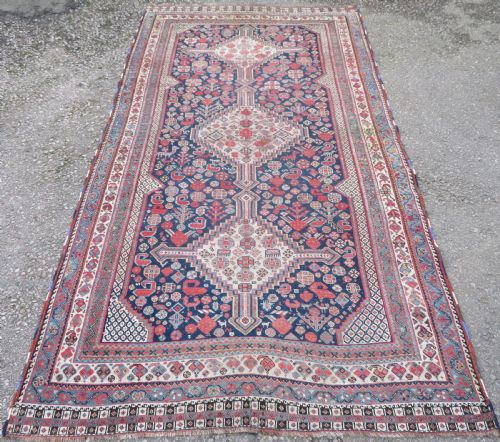
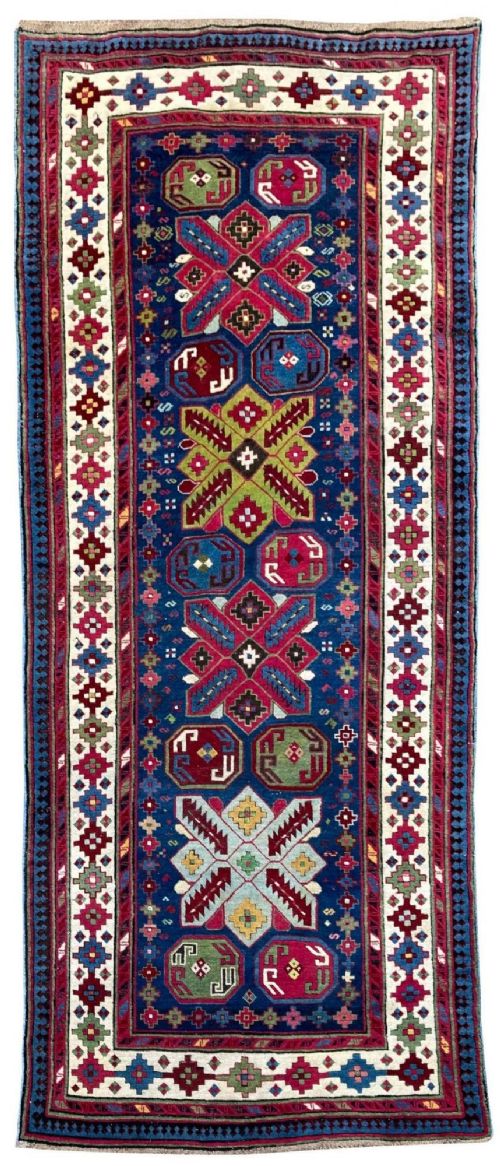
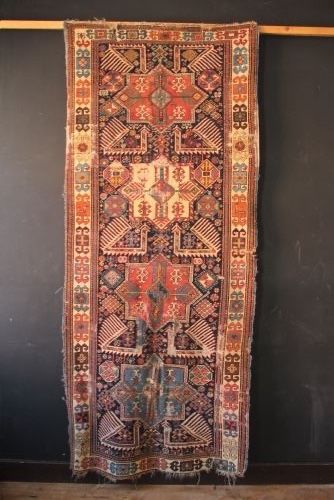
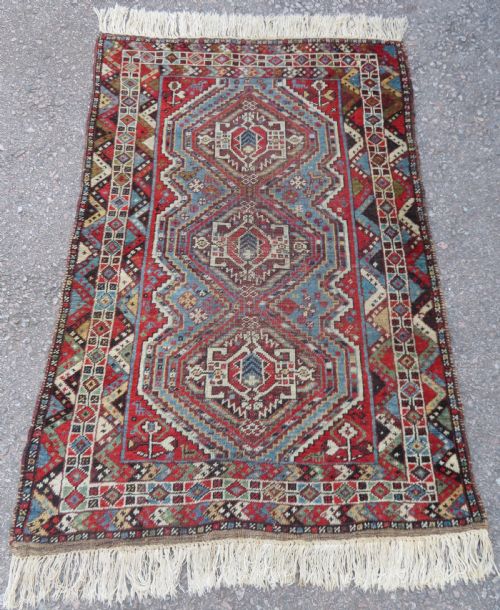
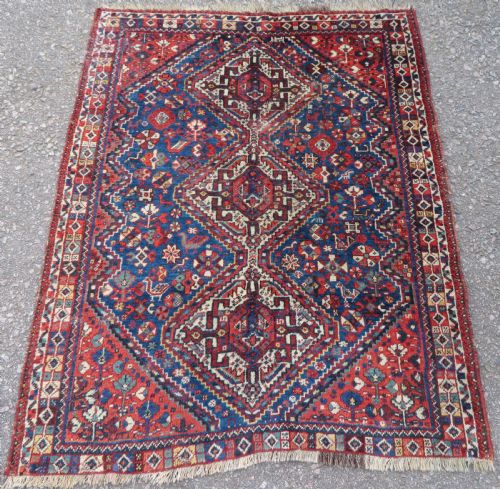
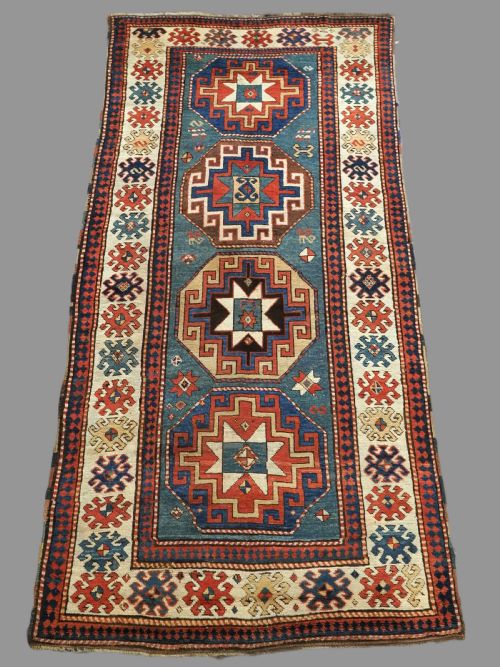
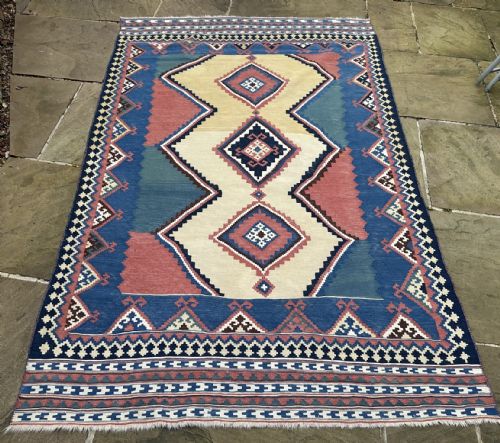
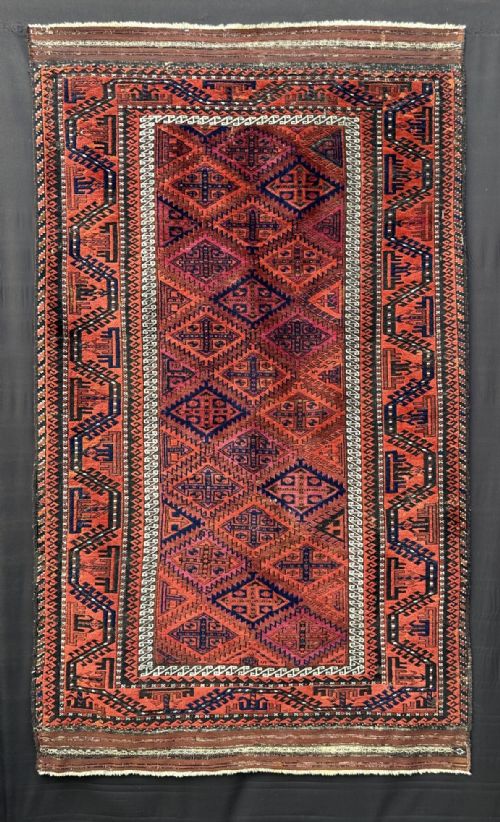
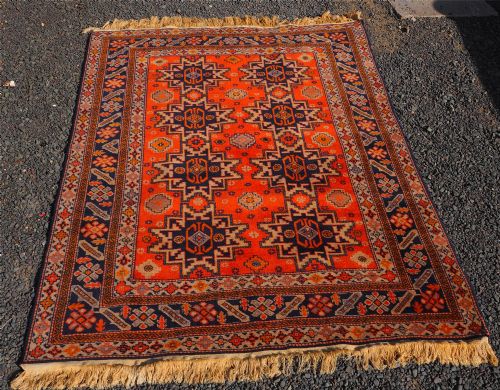
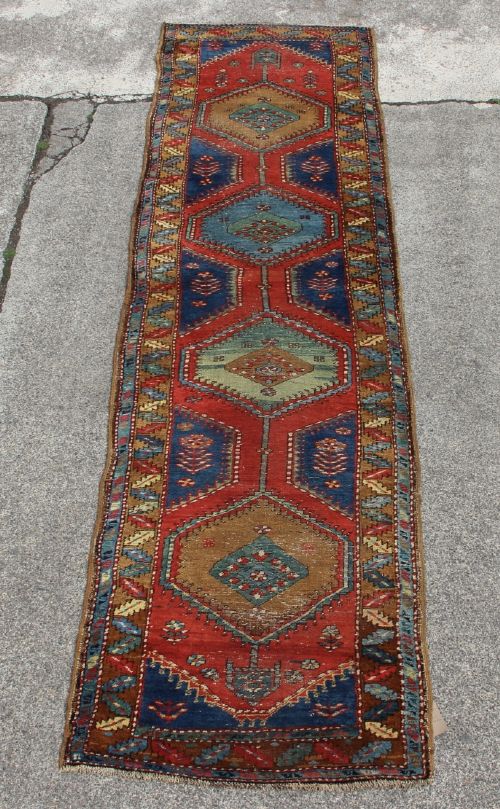
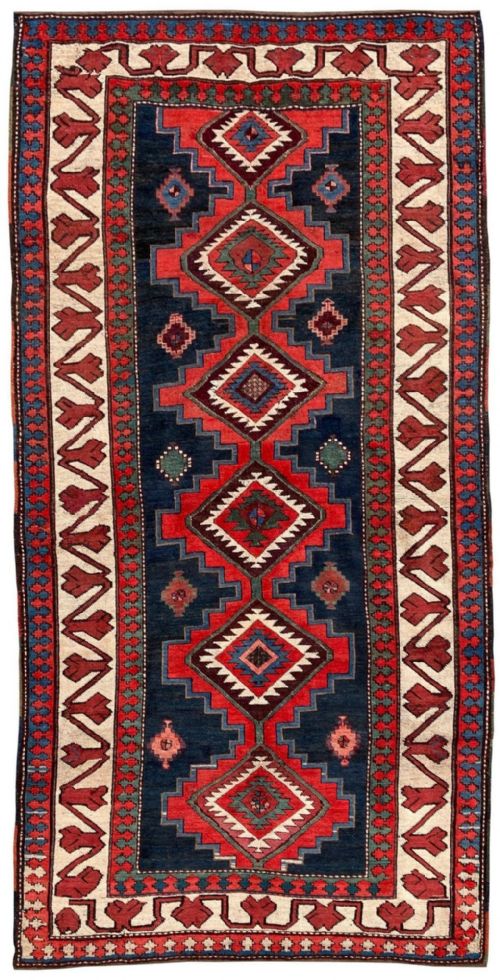
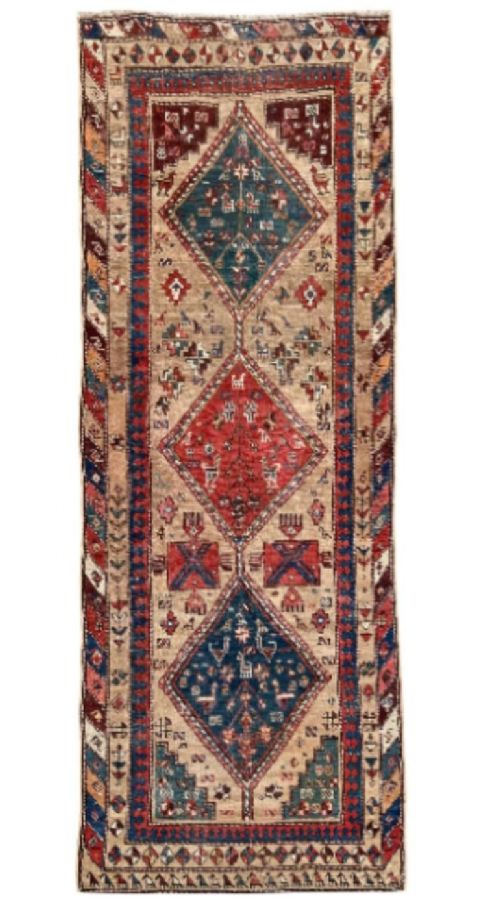
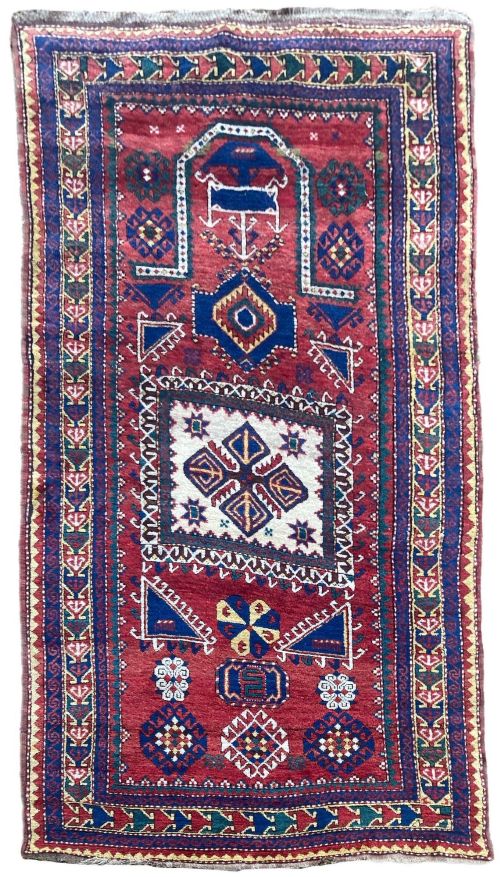
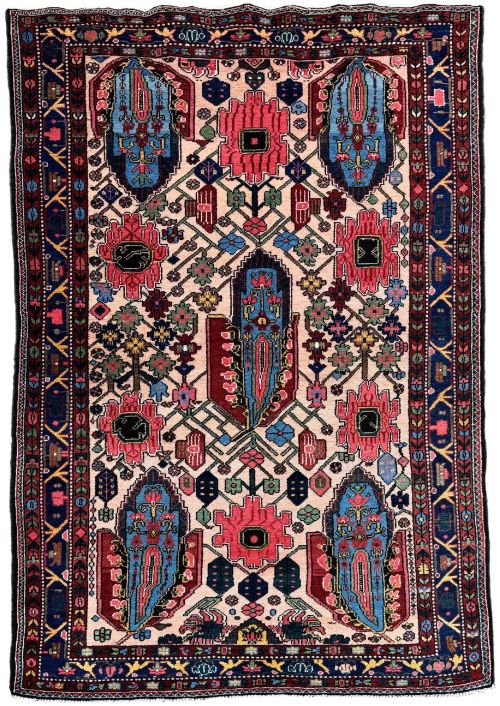
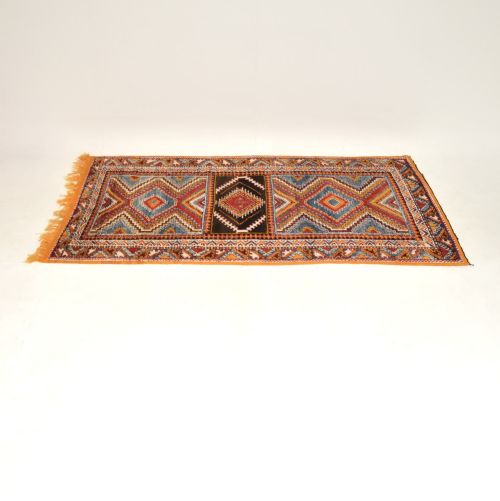
When you search for an antique blue runner, you encounter long floor coverings designed for corridors, hallways, and narrow spaces. The pieces listed here span the later nineteenth century through the early twentieth century, originating from Persian, Caucasian, and Anatolian weaving traditions.
Most examples take the form of elongated tribal or village carpets, featuring geometric medallions, repeated lattice motifs, or directional field patterns. They utilise wool foundation threads and pile, often dyed with natural indigo and vegetable extracts that create shifting tones along the length of the floor.
Makers from regions such as the Caucasus, Kurdistan, and Northwest Persia produced these runners for domestic use and trade. Their proportions vary from narrow corridor lengths to broader long rugs, reflecting the architecture of the rooms they originally occupied.
How they were made
Weavers constructed these runners using hand-spun wool for both the structural foundation and the soft surface pile. Cotton also appears in some foundations, providing dimensional stability to the elongated format.
Natural dyes provide the characteristic colour palette, utilising indigo for blues alongside madder and plant extracts for contrasting reds, greens, and neutrals. Artisans knotted the wool by hand onto warp threads before securing the ends with woollen selvedges.
Antique Blue Runner Retail Price Guide 2026
Typical asking prices for blue runner among the pieces listed under this phrase on Sellingantiques today, from the lower quarter to the upper quarter. They describe what is for sale here now, not the wider market.
Listings feature wool, cotton, and natural dyes across periods spanning the mid nineteenth century to the early twentieth century.
What varies in quality
The fineness of the knotting and the density of the wool foundation determine the structural integrity of each runner. Higher-grade pieces maintain precise geometric symmetry across long distances, whereas simpler village weaves display charming irregularities in line and proportion.
The depth and saturation of the natural dyes dictate visual appeal, particularly how the indigo blue patinates with age. Examples retaining vibrant, unfaded vegetable colours demonstrate superior dye preparation and material selection.
The Antique Blue Runner Glossary
- Runner
- A long, narrow carpet specifically proportioned for corridors, hallways, and staircases. These pieces measure significantly longer than they are wide.
- Natural Dyes
- Colourants derived from plants, insects, and minerals before the widespread adoption of synthetic alternatives. Indigo yields the deep blues seen in these textiles.
- Warp
- The vertical foundation threads stretched tightly on the loom before knotting begins. Wool and cotton form these underlying structural elements.
- Pile
- The soft, dense surface of cut wool knots that forms the visible design and bears the weight of foot traffic. Hand-spun wool gives this surface its varied texture.
- Selvedge
- The tightly bound side finish of a rug that prevents the outer knots from unravelling. Traditional examples feature overcast wool wrapping along the edges.
Antique Blue Runner: Frequently Asked Questions
Where should I place a runner?
These narrow textiles suit hallways, corridors, and long entryways where floor space is constrained. Their elongated format draws the eye down a passage while protecting wooden floorboards.
They also function effectively beside beds or in galley kitchens, provided foot traffic aligns with the durability of the wool pile.
How do I clean an old wool rug?
Gentle surface brushing and regular low-suction vacuuming remove grit without damaging the fragile hand-spun wool pile. Avoid shaking or beating antique textiles, as this stresses the aged foundation threads.
Professional specialist cleaning remains necessary for deeper washing to prevent dye migration and shrinkage in natural colourants.
What causes colour variation in wool?
Natural indigo and vegetable dyes react differently to sunlight, atmospheric conditions, and age across the surface of a textile. This uneven fading creates abrash, where bands of colour shift subtly in tone.
Hand-spun wool absorbs dye irregularly, which adds mottled depth to the blue fields characteristic of these regional weavings.
How can I tell the origin of a piece?
Specific knotting structures, border motifs, and wool characteristics point towards distinct weaving regions such as the Caucasus, Persia, or Anatolia. Geometric medallions often indicate tribal workshops in mountainous districts.
Palette choices, including the specific shade of indigo blue and secondary accent colours, help localize the provenance of older village runners.