


Antique Blue Perfume Bottle
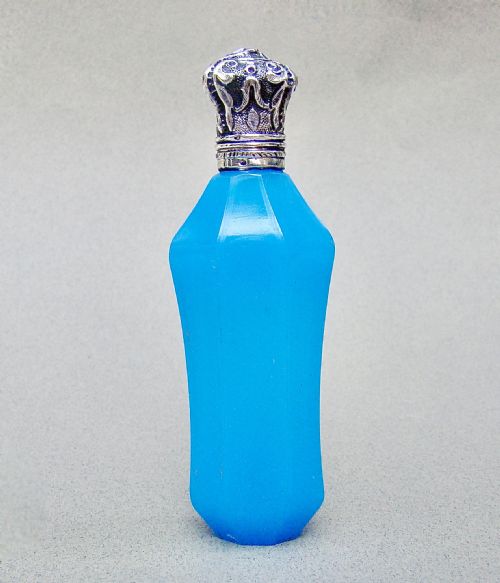
When you handle an antique blue perfume bottle, you hold a miniature vessel combining vivid cobalt or turquoise glass with precious metal mounts.
Antique Blue Perfume Bottle
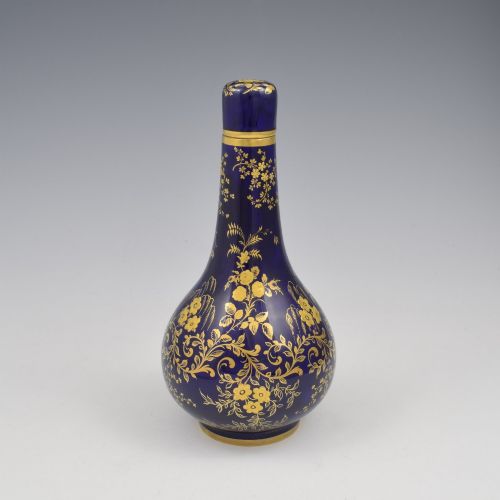
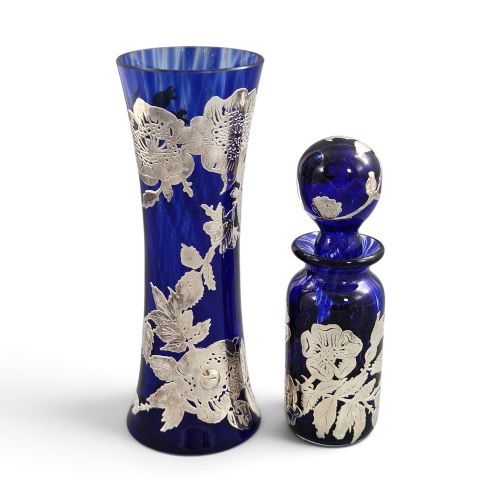
An antique blue perfume bottle encompasses small glass, porcelain, and enamel vessels designed to carry scented oils or salts. The selections span pocket-sized Victorian chatelaine companions, substantial Regency table flasks, and geometric Art Deco modernist forms.
The most frequent examples encountered on this page date from the Victorian era through the 1930s, heavily featuring rich overlay glass, opaline bodies, and sterling silver screw caps or hinged lids. Collectors also discover occasional Georgian enamel pieces alongside early French and English porcelain variants.
These objects served as personal accessories for the dressing table or evening wear, often secured inside leather travelling cases or suspended from chatelaine hooks by fine chains. Their survival depends on the durability of their fitted silver caps and the resilience of the inner glass.
Materials and production methods
Makers utilised glassblowing, cased overlay techniques, and mould-pressing to achieve deep cobalt, turquoise, and teal colouration. Overlay pieces involved fusing layers of coloured glass over clear or white glass before technicians sliced or wheel-cut facets through the top layer to expose the contrasting base.
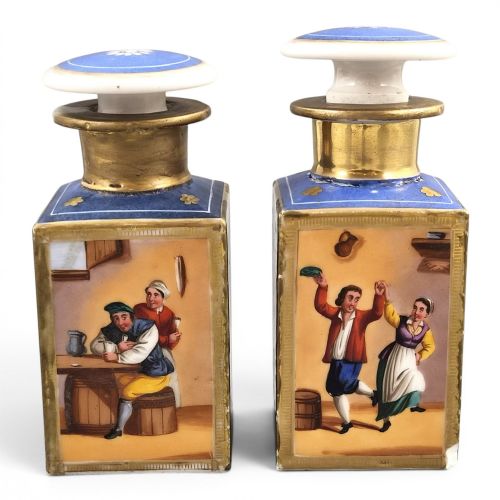
Metalworkers fitted many examples with sterling silver mounts, screw-threaded collars, and hinged lids, occasionally applying translucent guilloche enamel over engine-turned silver grounds. Porcelain versions from factories like Worcester and Derby were thrown, glazed, and hand-painted with gilt highlights or scenic vignettes.
The archive records numerous Victorian silver and blue overlay cut glass scent bottles alongside early twentieth-century enamel pieces.
Distinguishing quality factors
Quality rests upon the crispness of the glass cutting, the depth and saturation of the blue hue, and the integration of the metal mounts. Superior pieces display flawless overlay work where the facets align precisely with the underlying vessel form, free from cloudiness in the material.
The execution of the silver or enamel work dictates the tier of the piece, with hand-engraved mounts and undamaged guilloche enamel marking superior workshop standards. Signed works by notable designers or established factories command distinct attention for their documented provenance and artistic execution.
Rene Lalique·Franchini And Bigaglia·Crown Staffordshire·Flight Barr And Barr·Sabino
The Antique Blue Perfume Bottle Glossary
- Chatelaine
- A decorative belt hook worn with suspended chains carrying miniature utility items. Victorian ladies attached small scent bottles to these hooks for easy access.
- Guilloche
- A decorative technique where a mechanical lathe engraves precise geometric patterns into metal. Translucent enamel is then applied over the engraved surface.
- Opaline glass
- An opaque or translucent art glass developed in France during the nineteenth century. It often displays pastel or vivid turquoise shades.
- Overlay glass
- A vessel formed of two or more distinct layers of glass fused together. Craftsmen cut through the outer layer to reveal the contrasting colour beneath.
- Unguentaria
- Small ancient glass vessels used for oils or unguents. Roman examples occasionally appear alongside later nineteenth-century glasswork.
Antique Blue Perfume Bottle: Frequently Asked Questions
How do I date an antique blue perfume bottle?
Dating relies on stylistic markers, manufacturing techniques, and any accompanying hallmarks on the silver mounts. Victorian pieces often combine heavy overlay glass with stamped sterling marks, while 1930s examples favour geometric moulding and signatures.
Changes in glass composition and stopper fittings also help establish the decade of production. Comparing the vessel to documented factory designs narrows the timeframe further.
Were these bottles meant for travel?
Many smaller specimens were designed specifically for carriage inside fitted dressing cases or suspension from a chatelaine belt. Screw-threaded silver caps prevented leakage during daily movement.
Larger vessels remained stationary on dressing tables as decorative containers for rose water or concentrated scents. Their construction balanced portability with ornate visual appeal.
What is cased or overlay glass?
Cased or overlay glass involves dipping a hot glass gather into a second pot of contrasting molten glass to create layered walls. Artisans then cut away portions of the outer layer to expose the contrasting colour underneath.
This technique produced striking two-tone geometric patterns common in nineteenth-century decorative glassware. The depth of the cut measures the skill of the glass cutter.
How should I clean antique glass and silver?
Maintenance requires gentle cleaning with a soft, damp cloth to remove dust from intricate silver mounts and glass facets. Harsh chemical dips ruin delicate enamel and age patinas on sterling silver.
Avoid submerging capped bottles with cork or paper liners inside the collar. Regular dry dusting preserves both the glass clarity and the metal finish.