

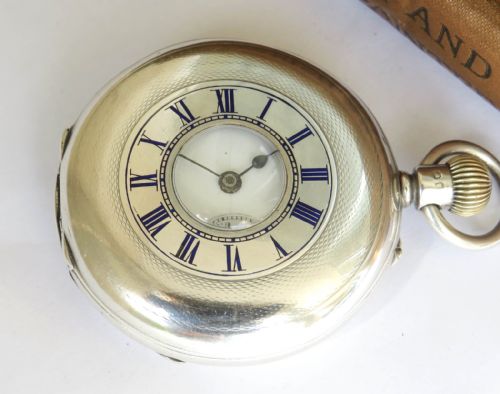
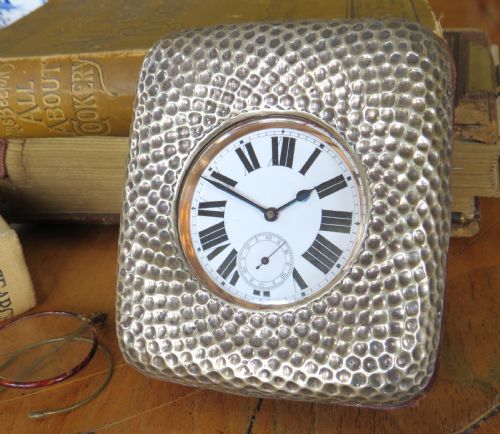


Antique Blue Enamel Timepiece
An antique blue enamel timepiece brings rich colour and precise mechanics together, offering a striking focal point for any desk or bedside table.
Antique Blue Enamel Timepiece
An antique blue enamel timepiece encompasses portable and desk-bound horology ranging from late nineteenth-century French carriage clocks to Edwardian boudoir pieces and 1920s miniatures. When searching for this phrase, collectors encounter various forms such as strut easel clocks, bedside clocks, and travel clocks housed in precious or base metals. These objects demonstrate the marriage of decorative surface treatment with functional timekeeping, originating primarily from English, French, and Swiss workshops.
The aesthetic relies heavily on the depth of the blue enamel, whether applied as translucent guilloché over engine-turned metal, opaque champlevé, or delicate floral decoration. Pieces span periods from late Victorian and Arts and Crafts eras through to Art Deco designs, reflecting shifting tastes in interior ornamentation. Most examples draw upon traditional brass, gilt bronze, or silver frameworks to support the vibrant vitreous coatings that define their visual appeal.
Buyers are most likely to meet small-scale travel or boudoir variations on this page, often featuring mechanical movements designed for portability or intimate domestic settings. The integration of enamel panels into carriage clocks and miniature timepieces demonstrates how utilitarian objects were elevated into decorative art. Surviving examples connect modern interiors with the detailed craftsmanship of past centuries.
Materials and Techniques
Makers formed the structural bodies of these timepieces using metals such as sterling silver, brass, gilt bronze, pewter, and copper. These substrates provided the rigid foundation necessary to support layers of powdered glass fused at high temperatures.
Vitreous enamel was applied to the metal surfaces, occasionally over engine-turned guilloché patterns to create shimmering light effects, or set within champlevé recesses. Artisans combined this colourful coating with glass crystals protecting the dial and mechanical gear trains driven by springs and escapements.
Antique Blue Enamel Timepiece Retail Price Guide 2026
Typical asking prices for blue enamel timepiece among the pieces listed under this phrase on Sellingantiques today, from the lower quarter to the upper quarter. They describe what is for sale here now, not the wider market.
Some travel clocks featured built-in alarms designed to rouse Victorian gentlemen before their steam trains departed.
Evaluating Quality and Execution
The standard of an antique blue enamel timepiece rests upon the complexity and precision of the enamel work itself. Finer examples display smooth, even surfaces free from chipping or excessive pitting, with intricate engine-turning beneath translucent blue glazes that catch the light uniformly.
Mechanical sophistication also dictates worth, separating standard production movements from those featuring repeating complications or higher jewelling counts. The harmony between the metal casework - whether gilt bronze, silver, or pewter - and the enamel panel determines the overall cohesion of the design.
David Veasey·Liberty and Co·Tissot
The Antique Blue Enamel Timepiece Glossary
- Guilloche
- A decorative mechanical technique where a precise repeating pattern is engraved into a metal substrate before translucent enamel is applied. This creates a shimmering, dimensional background effect beneath the coloured glass.
- Champleve
- An enamelling technique where troughs or cells are carved into the surface of the metal and filled with enamel powder prior to firing. The exposed metal lines remain visible as part of the final design.
- Carriage clock
- A small, spring-driven clock originally designed for travelling by horse-drawn carriage during the nineteenth century. They typically feature glass panels allowing the movement to be observed.
- Strut clock
- A portable timepiece featuring a hinged prop or stand attached to the rear casing, allowing the dial to rest upright on a flat surface. These were popular for boudoirs and desks.
- Ormolu
- Gilded bronze produced by applying a mercury-gilt amalgam to a bronze base, yielding a rich golden finish common on nineteenth-century French clock cases.
Antique Blue Enamel Timepiece: Frequently Asked Questions
How do I wind an antique mechanical timepiece?
Most portable timepieces use a dedicated key or an attached winding crown to tension the internal mainspring. Care must be taken not to overwind the mechanism, stopping as soon as resistance is felt.
Ensuring the clock rests on a level surface helps maintain a steady beat and prevents uneven wear on the internal balance wheel and escapement.
Were these clocks meant for travel?
Many examples, particularly brass carriage clocks and leather-cased travel pieces, were engineered specifically for portability by Victorian and Edwardian travellers. Sturdy metal housings and hinged handles protected the delicate gear trains during transit.
Smaller strut and boudoir clocks, however, were intended primarily for stationary placement on dressing tables or desks rather than frequent journeys.
How should I clean the enamel surfaces?
Enamel is essentially glass fused to metal and requires gentle maintenance to preserve its lustrous finish. A soft, dry microfiber cloth is usually sufficient to remove dust without scratching the surrounding gilt or silver mounts.
Harsh chemical solvents or abrasive metal polishes must be kept away from the enamel panels to prevent dulling or permanent surface damage.
What indicates a piece from the Art Deco period?
Art Deco timepieces typically exhibit geometric precision, stylised numeric fonts, and clean architectural lines rather than the flowing organic motifs of earlier Victorian or Arts and Crafts designs. The use of vibrant blue guilloché enamel aligns strongly with the modernist aesthetic of the 1920s.
Movements from this era often show advancements in manufacturing standardisation while retaining hand-finished decorative elements on the exterior casing.