

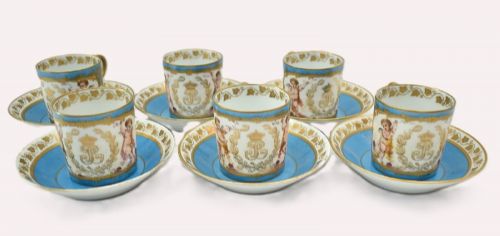


Antique Blue Enamel Cups
These antique blue enamel cups bring rich colour and intricate craft to the table, spanning centuries of global design.
Antique Blue Enamel Cups
When you search for antique blue enamel cups, you encounter a diverse range of forms, from porcelain tea bowls and saucers to cloisonne wine vessels and stem cups. These objects bridge functional teaware and decorative art, originating from European porcelain houses and Chinese workshops alike.
The pieces you meet on this page cross multiple periods, including the eighteenth and nineteenth centuries, alongside Edwardian and Art Deco examples. Forms vary from simple cups and saucers to lidded chocolate cups and silver-mounted coffee cans.
European makers interpret enamel through painted porcelain and hand-gilded glass, while Asian pieces frequently utilise intricate cloisonne wirework on copper or bronze bodies. Each style reflects the distinct aesthetic preferences of its era, from Chinese Qing Dynasty archaism to Bohemian and French revival designs.
Materials and construction methods
The fabrication of these vessels relies upon durable base materials such as porcelain, bone china, copper, and glass, which provide a stable foundation for the vitreous coatings. Artisans fuse powdered glass to these surfaces through high-temperature firing, locking in vibrant blue pigments.
Many examples incorporate delicate surface ornamentation, including applied gold leaf, hand-gilding, and fine metal wire partitions to contain the enamel pastes. Skilled craftspeople combine ceramic throwing, glass blowing, and metalworking techniques before applying the final decorative enamel layers.
Antique Blue Enamel Cups Retail Price Guide 2026
Typical asking prices for blue enamel cups among the pieces listed under this phrase on Sellingantiques today, from the lower quarter to the upper quarter. They describe what is for sale here now, not the wider market.
Materials documented across these objects include porcelain, bone china, copper, glass, gilt bronze, and gold leaf.
Distinctions in craftsmanship
Quality in these pieces rests upon the precision of the enamel work and the refinement of the underlying form. Finer examples display smooth, evenly distributed colour without bubbling or distortion in the glass paste.
The dexterity required for intricate hand-painting, precise gilding, and secure metal mounting distinguishes superior workshop production from standard commercial output. Preservation of the original surface finish and delicate decorative details also dictates the standing of each piece.
The Antique Blue Enamel Cups Glossary
- Cloisonne enamel
- A technique where metal wires are soldered to a base to form compartments filled with enamel paste. This method creates detailed patterns defined by thin metal lines.
- Tea bowl
- A handleless drinking vessel used historically for tea service. These small bowls often include a matching saucer.
- Imari
- A style of decorative ceramic featuring distinct blue and red patterns with gold highlights. It originates from Japanese export traditions and inspired various European copies.
- Gilding
- The application of gold leaf or gold powder to a surface for decoration. Artisans use this technique to accent rims, handles, and painted scenes.
- Chateau des Tuileries
- A French royal palace associated with specific porcelain commissions. Pieces bearing this provenance reflect official court taste.
Antique Blue Enamel Cups: Frequently Asked Questions
How were these cups used historically?
Many served practical roles in formal tea and chocolate service, holding hot beverages for the upper classes. Others functioned as decorative vessels or wine cups in scholarly and court settings.
Over time, many transitioned from daily dining tables into display cabinets and collections.
How do I care for antique enamel cups?
Gentle handling and hand washing with mild soap protect the delicate enamel and gold leaf from damage. Avoid abrasive cleaners, harsh scrubbing, and immersion in very hot water.
Display them away from direct sunlight and extreme temperature shifts to preserve the pigments.
How can I tell different periods apart?
Stylistic cues such as neoclassical shapes, Art Deco geometric lines, or Qing Dynasty archaistic forms help indicate the era of manufacture. Material combinations, mark styles, and manufacturing techniques also provide clues to the period.
Comparing known workshop practices assists in dating individual examples accurately.