






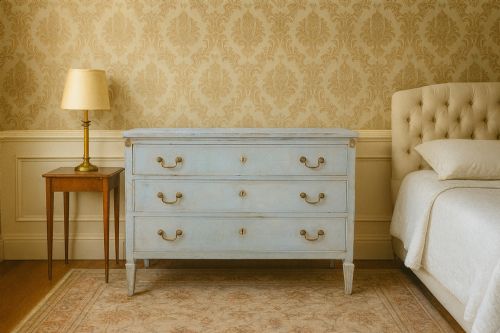

Antique Blue Bedroom Chest
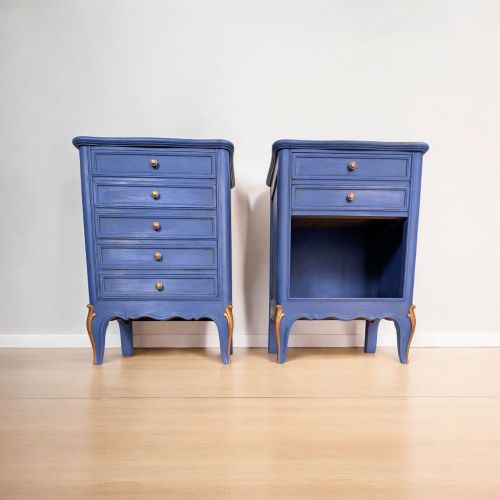
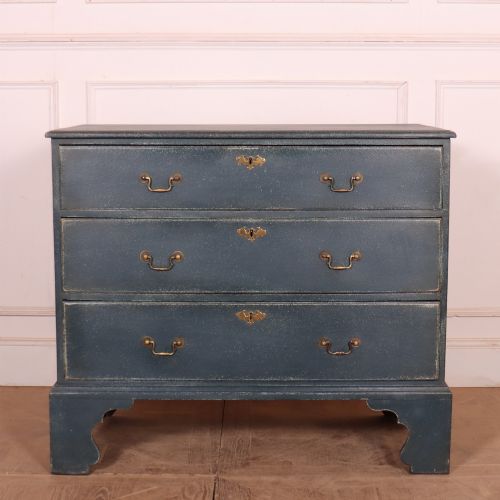
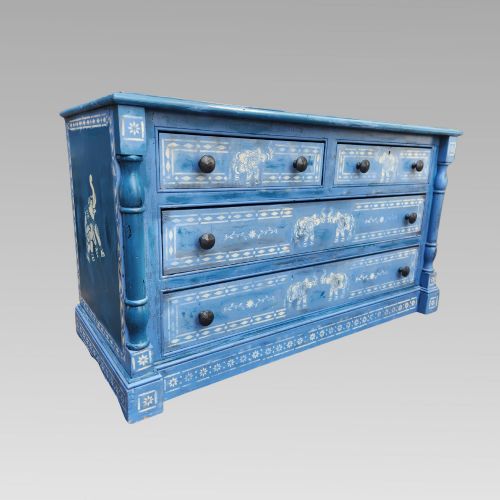
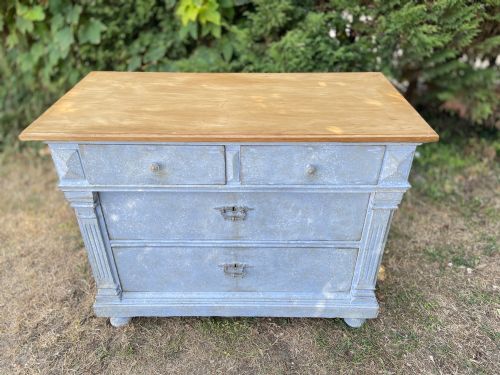
An antique blue bedroom chest brings calm colour and practical storage to a room, ranging from Swedish commodes to English painted drawers.
Antique Blue Bedroom Chest
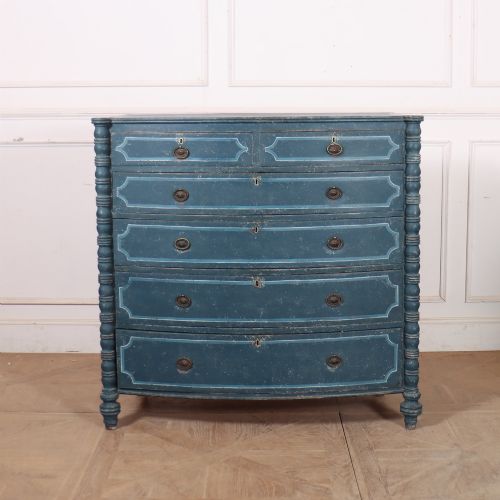
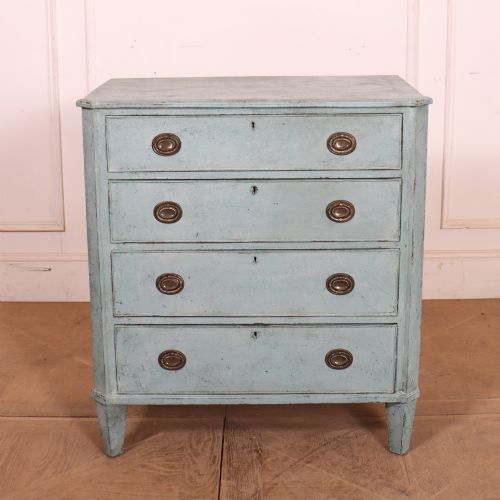
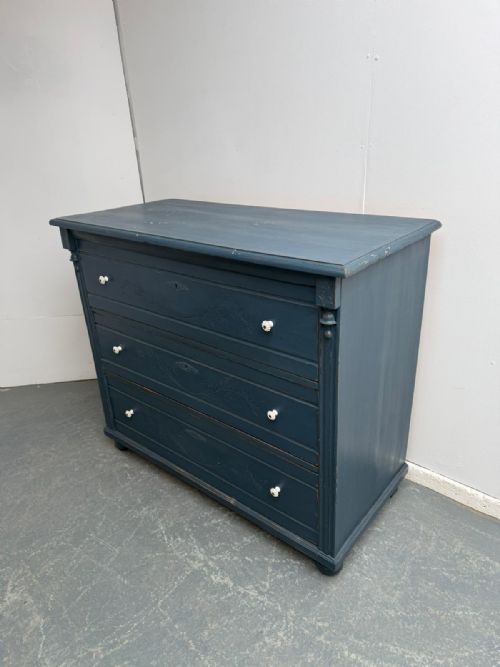
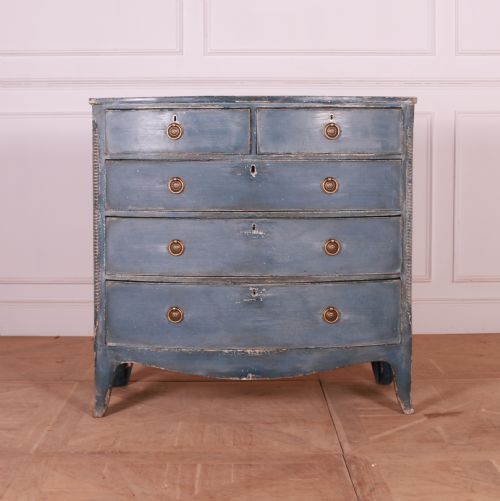
An antique blue bedroom chest spans several centuries of European and English cabinet-making, uniting practical drawer storage with painted finishes. When searching for an antique blue bedroom chest, buyers encounter pieces ranging from formal Regency linen presses to rustic English country chests and Swedish neoclassical commodes.
The selection on this page leans heavily into painted wood, featuring pine and oak carcasses finished in various shades of blue. Forms include standard two-over-three drawer configurations, bowfront designs, and specialised pieces like blanket boxes and linen presses dating from the eighteenth to the nineteenth century.
How they were made
Carpenters constructed these chests primarily using solid pine or oak timbers, assembled with traditional joinery before applying paint finishes. Surfaces received multiple layers of pigment, sometimes over earlier priming coats, resulting in the patinated blue surfaces visible today.
Metal hardware such as brass handles and key escutcheons were fitted to drawer fronts, while specialist styles incorporated carved details, raised diamond-point moulding, or concave shaping into the timber construction.
Antique Blue Bedroom Chest Retail Price Guide 2026
Typical asking prices for blue bedroom chest among the pieces listed under this phrase on Sellingantiques today, from the lower quarter to the upper quarter. They describe what is for sale here now, not the wider market.
Listings combine eighteenth-century Italian and Swedish neoclassical commodes with nineteenth-century English pine and Victorian painted drawer chests.
What varies in quality
The division between standard and superior pieces rests largely on the sophistication of the joinery and the integrity of the painted surface. Earlier eighteenth-century examples exhibit finer proportions and more deliberate carving, whereas later nineteenth-century pieces often rely on simpler pine construction.
Depth of character in the painted finish dictates visual appeal, where layers built up over decades create a richer texture than uniform modern applications. Original hardware and smooth drawer action further separate well-preserved specimens from heavily altered furniture.
The Antique Blue Bedroom Chest Glossary
- Commode
- A low chest of drawers, typically of French or Swedish origin, standing on relatively tall legs. These pieces often feature shaped fronts and decorative painted schemes.
- Linen Press
- A tall piece of furniture combining upper cupboard storage for textiles with lower drawers for smaller garments. They frequently appear in Regency styles with painted finishes.
- Bowfront
- A convex curved chest front that projects outward in the centre, softening the rectangular silhouette of the furniture. This design appears on nineteenth-century English examples.
- Gustavian
- A Swedish neoclassical style characterised by restrained classical ornament, pale palettes, and symmetrical forms derived from French Louis XVI design. Pieces from this tradition often feature painted blue finishes.
- Baroque Revival
- A nineteenth-century style that reinterprets seventeenth-century theatricality through heavy carving, exaggerated curves, and robust proportions. Surviving examples demonstrate this revival in painted pine and oak.
Antique Blue Bedroom Chest: Frequently Asked Questions
How do I date a painted chest?
Dating relies on examining construction methods, timber types, and the composition of the painted layers beneath the surface. Secondary woods inside the drawers and the style of dovetail joints provide reliable clues to the period.
Changes in hardware styles and the tool marks left by cabinet-makers also help narrow down the decade of manufacture. Comparing the overall proportions to established regional designs confirms the likely era.
Are these chests suitable for modern bedrooms?
These chests offer deep drawer capacity and sturdy surfaces that function well for bedside storage or general clothing organisation. Their painted finishes introduce soft colour into contemporary or traditional domestic spaces.
Care should be taken to place them away from direct heat sources to protect the historic timber and painted surfaces from cracking. Regular dusting with a dry cloth preserves the finish without harsh chemical cleaning.
What is a Swedish commode?
A Swedish commode is a drawer unit influenced by French neoclassical design but executed with local Nordic restraint. They frequently feature carved details, shaped aprons, and layered paintwork.
These pieces often date from the Gustavian or baroque revival periods, bringing distinct regional character to bedroom interiors. Their proportions tend to be compact compared to larger English chests.
How should I maintain the painted finish?
Maintenance requires keeping the furniture in stable room conditions with moderate humidity to prevent the wood from expanding or contracting. Avoid using abrasive cleaning agents or modern polishes that can lift historic paint layers.
Applying microcrystalline wax occasionally can protect exposed timber edges and stabilise the surface pigment. Gentle handling of drawers and hardware ensures the longevity of the structure.