



Antique Black Silhouette
An antique black silhouette captures the likeness of a sitter in pure profile, offering a direct window into Georgian and Victorian life.
Antique Black Silhouette
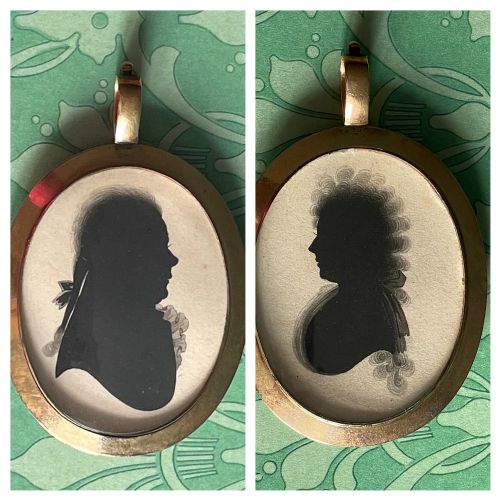
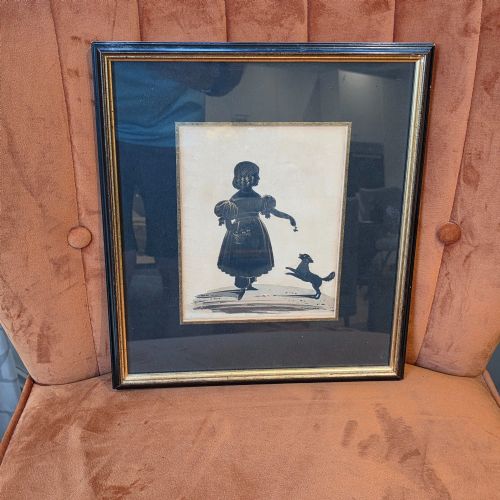
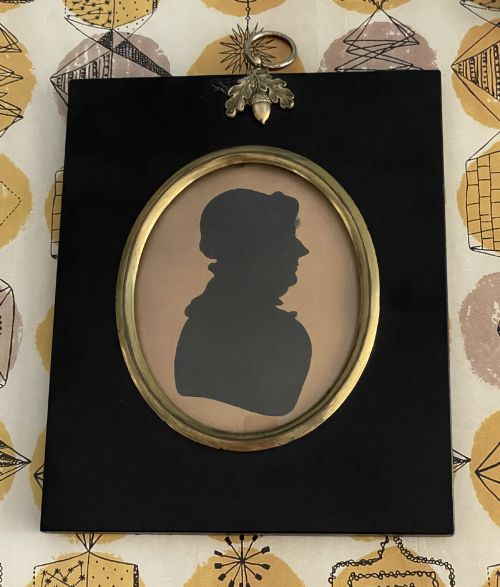
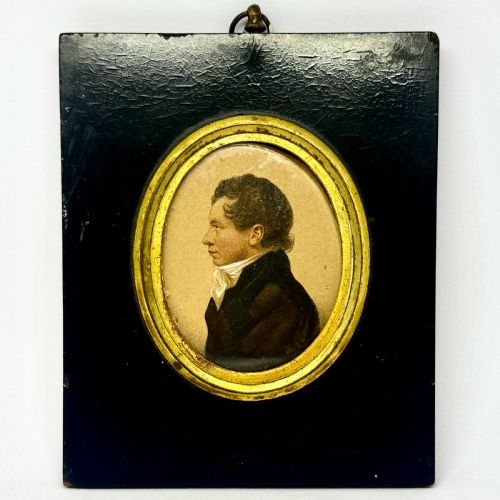
An antique black silhouette presents the profile likeness of a sitter, typically rendered in deep monochrome against a pale background or painted behind glass. These works appear across the Georgian, Regency, and Victorian periods, taking forms such as framed portrait miniatures, full-length figures, and conversation pieces depicting multiple people.
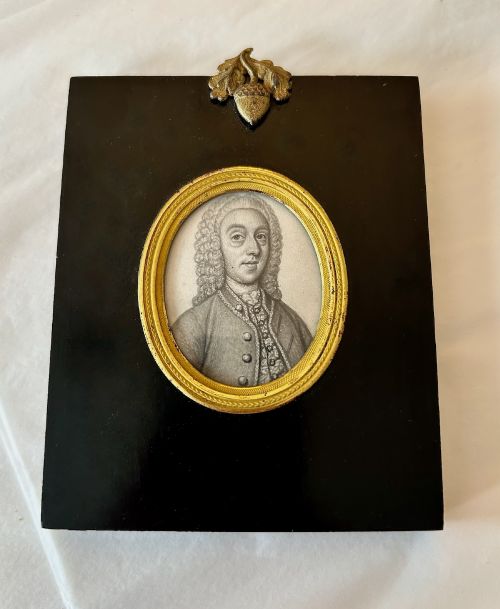
The version most commonly met on this page is the framed portrait of a gentleman or lady, often created using cut paper or dark pigment. Makers frequently set these profiles within ebonised wood, brass, or rosewood frames, sometimes enhancing the dark form with delicate gold leaf details or watercolour highlights.
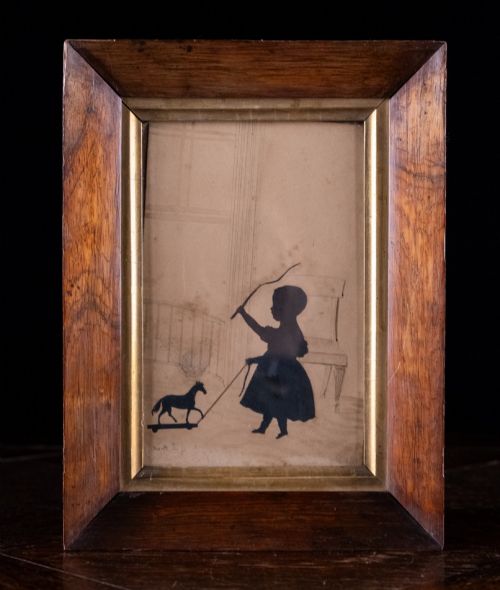
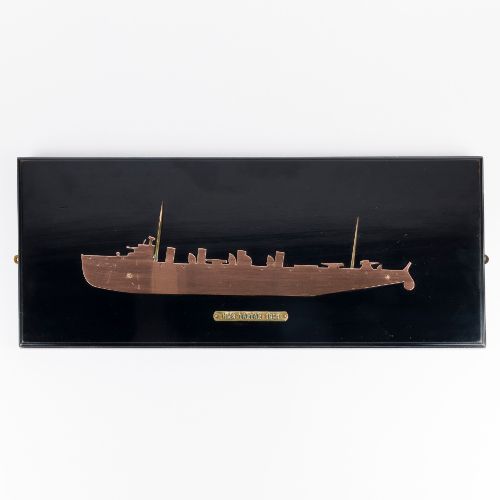
Beyond single portraits, the pieces in this selection include animal studies, equestrian scenes, and floral cut paper pictures. These varied formats reflect how silhouette portraiture evolved from an affordable method of recording likenesses into a popular domestic art form throughout the nineteenth century.
Materials and methods of production
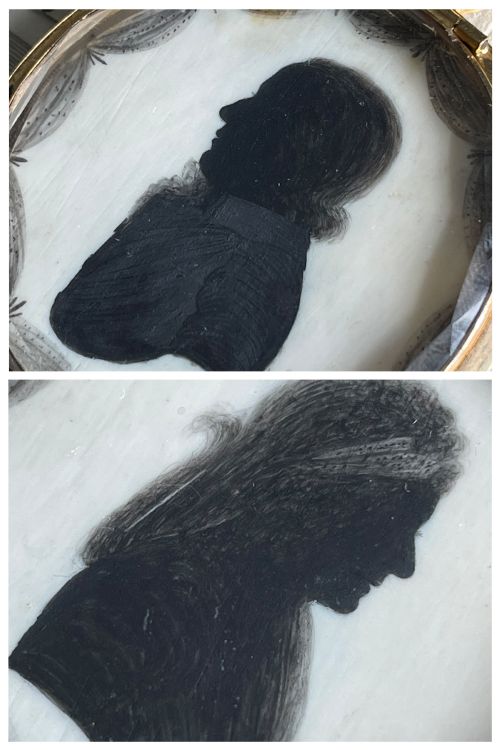
Artists created these profile portraits using a range of media, including black ink, paint, and paper cut freehand with scissors. Many workers applied reverse painting techniques directly onto glass, building up the dark silhouette and fine gold leaf embellishments from the rear.
Makers also worked with specialised plaster surfaces, utilising dark pigments to define the subject before enclosing the piece in a protective frame. The support materials commonly matched the period aesthetic, relying on brass fittings, paper grounds, and polished wood surrounds to complete the object.
Antique Black Silhouette Retail Price Guide 2026
Typical asking prices for black silhouette among the pieces listed under this phrase on Sellingantiques today, from the lower quarter to the upper quarter. They describe what is for sale here now, not the wider market.
Listings feature works created across the eighteenth, nineteenth, and early twentieth centuries, utilising paper, glass, brass, and ebonised wood.
Factors that distinguish finer examples
The inclusion of delicate bronzing, gold leaf highlights, or watercolour accents elevates a piece, particularly when applied by a recognised practitioner. Furthermore, the original framing - such as period rosewood or ebonised wood with brass fittings - preserves the context and enhances the overall integrity of the work.
Bateman·William James Hubard·Frith·James Gillespie·Augustin Edouart·Elizabeth Hudson·Frederick Frith·Thomas London·J. Deacon·George Atkinson·John Miers·John Smith of Edinburgh·Alfred Darbyshire
The Antique Black Silhouette Glossary
- Silhouette
- A portrait profile filled in with a solid dark colour, typically black, against a lighter background. This art form gained widespread popularity in the eighteenth and nineteenth centuries before photography.
- Reverse painting on glass
- A technique where the artist paints the image on the reverse side of a glass panel so it is viewed through the front. This method protects the pigment and produces a glossy finish.
- Convex plaster
- A rounded plaster plaque used as a base for painted profiles, giving the portrait a subtle three-dimensional relief effect. It was favoured by prominent profileists for its smooth texture.
- Ebonised wood
- Timber treated to imitate ebony, commonly used for the dark frames surrounding these profile portraits. It provides a sharp contrast to gilded highlights.
- Bronze-shade
- A method of adding metallic powder highlights to a dark profile to define hair, lace, or clothing details. This work required a steady hand and fine brushes.
Antique Black Silhouette: Frequently Asked Questions
How do I date an antique silhouette?
Dating relies heavily on the costume of the sitter, the hairstyle, and the framing materials used. Regency pieces often display high-waisted dresses or specific military uniforms, while Victorian works show different collar and skirt shapes.
Makers' trade labels pasted on the reverse of the frame also provide reliable clues for dating. Comparing the style of the cut or paintwork to documented examples helps narrow down the decade of production.
Who were the notable silhouette artists?
Several professional profileists worked in Britain during the Georgian and Regency eras, leaving signed pieces or trade labels behind. Practitioners like John Miers and Augustin Edouart gained renown for their exceptional skill in cutting paper or painting on plaster and glass.
Many of these artists travelled extensively, establishing galleries or temporary studios in London and major provincial towns to take likenesses.
How were these portraits originally displayed?
Owners typically hung framed silhouettes in domestic parlours, often grouping several family members together on a wall. Miniature versions were also designed to be carried in pockets or worn as personal mementos.
Conversation pieces, which depicted multiple figures and animals in a single scene, served as decorative table or wall displays in middle-class homes.