
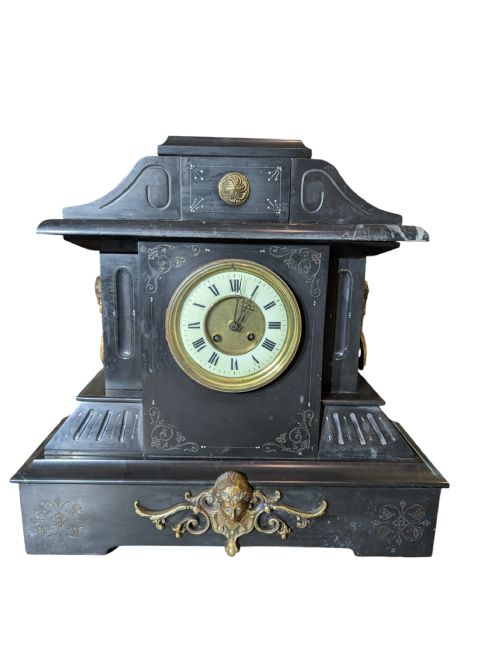


Antique Black Shelf Clock
An antique black shelf clock brings architectural presence and steady mechanical rhythm to a room, drawing the eye with dark stone and polished brass.
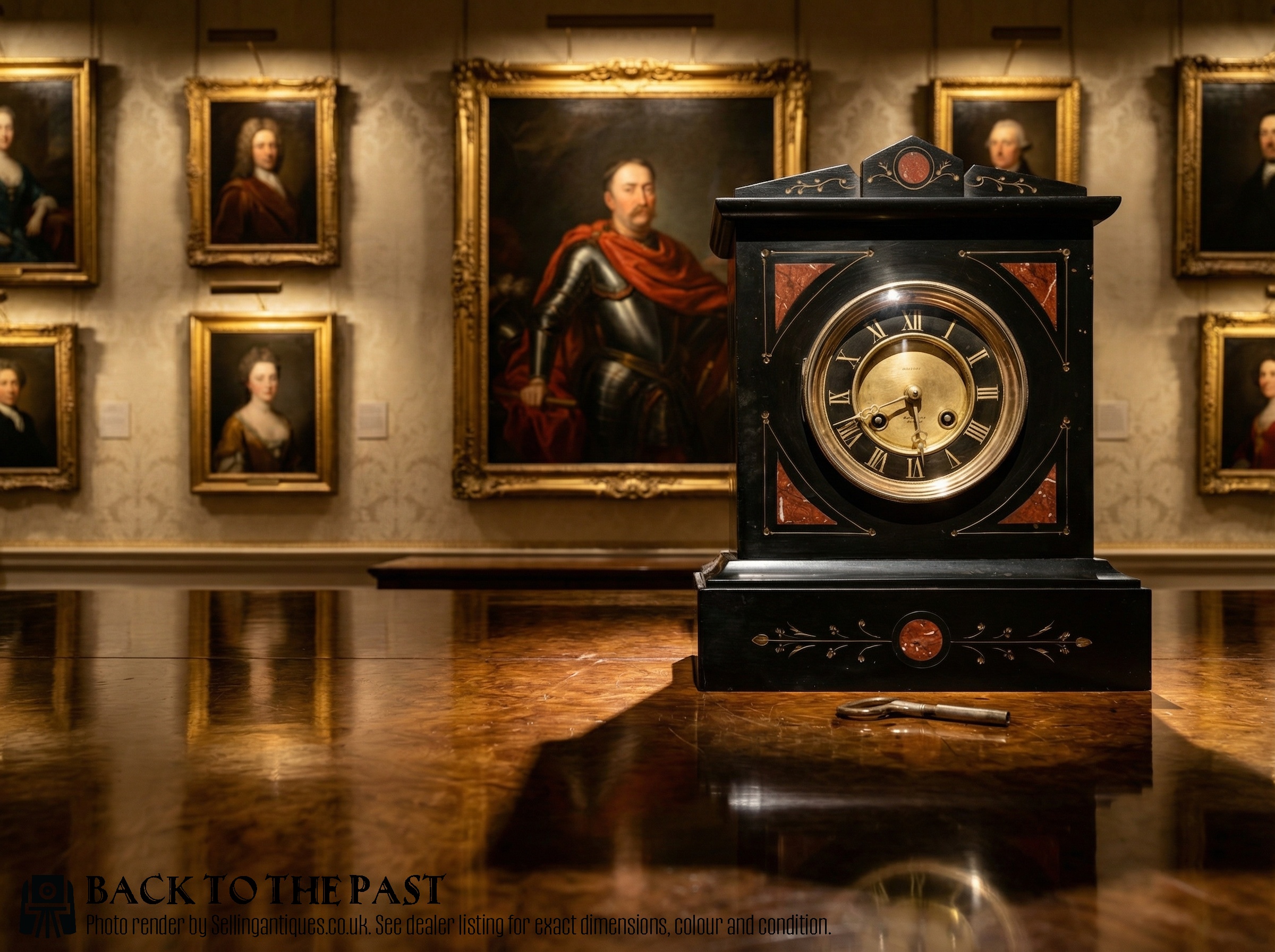
Antique Black Shelf Clock
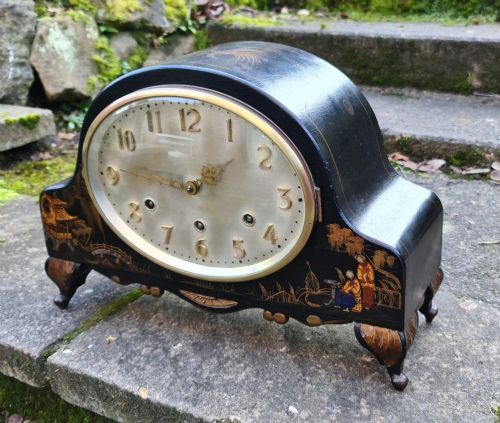
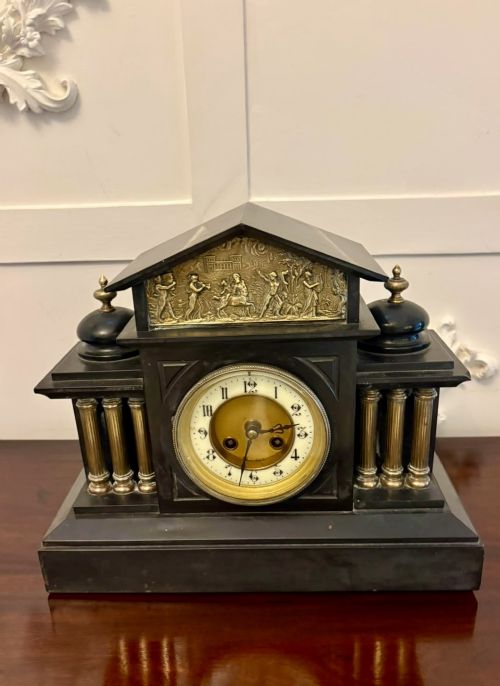
When you search for an antique black shelf clock, you look at heavy, upright timepieces designed to sit on mantelpieces, ledges and brackets. The version you meet most often on this page is the Victorian marble or slate clock, frequently accompanied by brass details and enamel dials.
These objects span the nineteenth and early twentieth centuries, appearing in styles from straightforward Victorian forms to Egyptian Revival, Black Forest carvings and Art Deco designs. Makers housed movements inside stone architectural cases or dark ebonised wood bodies, creating solid centrepieces for domestic rooms.
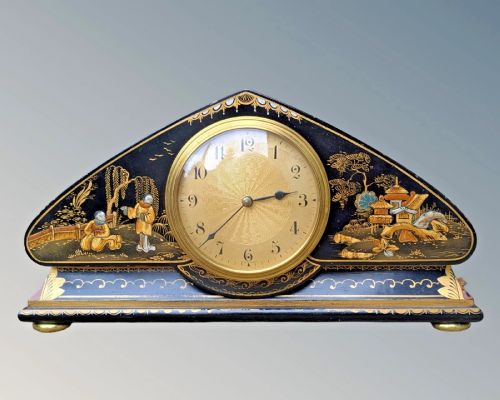
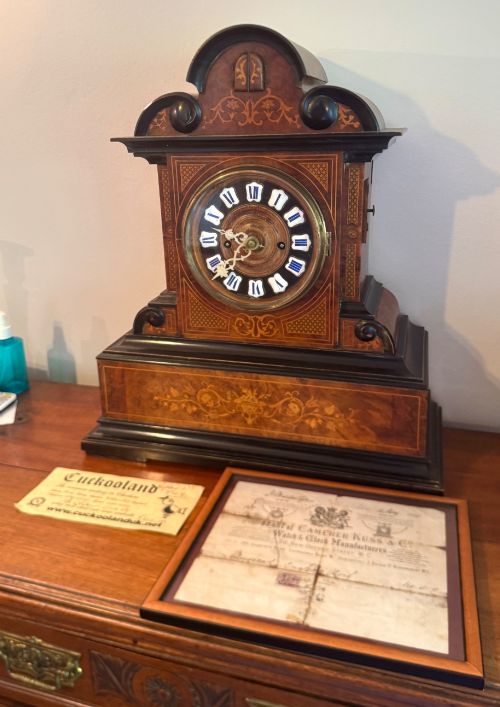
Beyond standard mantel clocks, the selection includes drumhead shapes, calendar mechanisms and bracket clocks featuring walnut marquetry or lacquer. Their origins stretch across British, French and German workshops, reflecting diverse regional tastes in domestic horology.
How they were made
Makers utilised heavy materials such as black marble, black slate and ebonised wood to form the structural body of each clock. These dense substances were cut and polished to resemble solid architecture, sometimes inlaid with contrasting stones or detailed with gilt brass mounts.
Some maritime timepieces kept time aboard steamships crossing the ocean long before sitting quietly on a Victorian drawing room shelf.
What varies in quality
Quality reveals itself in the crispness of the stone carving, the depth of the marble polish and the precision of any gilt brass or bronze mounts. Plain slate bodies sit at one end, while elaborate architectural facades with precise incised work and inlaid marble represent the upper range.
The sophistication of the internal movement also dictates value, with perpetual calendars, Westminster chimes and marked signatures from known makers elevating a piece. Well-balanced proportions and harmonious material combinations separate standard factory output from exceptional workshop production.
Philippes Paris·John Bull of Bedford·Baby and Jannings·Thomas A Paris·Smiths England·D. Munsey of Cambridge·Achille Brocot·Desbois and Wheeler
The Antique Black Shelf Clock Glossary
- Black Slate
- A fine-grained metamorphic rock used extensively for Victorian clock cases because it could be shaped easily and polished to a dark, uniform finish. It often mimicked much costlier black marble.
- Ebonised Wood
- Timber treated with a stain or finish to imitate true ebony, popular in nineteenth-century cabinet work and clock cases. This technique provided a deep black surface that contrasted with brass dials.
- Drumhead Clock
- A timepiece featuring a circular clock case mounted on a stepped plinth base, resembling the shape of a side drum. This form appeared frequently in Victorian slate and marble designs.
- Bezel
- The metal ring that holds the glass protecting the clock face in place, usually hinged to allow access for setting the time. On better pieces, these are cast in brass and finished with fine knurling.
Antique Black Shelf Clock: Frequently Asked Questions
Where should I place a heavy slate clock?
Select a sturdy mantelpiece, shelf or heavy wall bracket capable of supporting considerable weight. Marble and slate clocks are remarkably dense and require a stable, level surface.
Keep the clock away from direct sunlight, damp walls and excessive heat sources such as radiators. A stable environment protects both the stone case and the delicate steel internal pivots.
How do I date a Victorian marble clock?
Examine the style of the numerals on the enamel dial, the shape of the brass hands and the presence of architectural motifs. Classical Revival and Egyptian Revival influences often point towards the middle and later decades of the nineteenth century.
Signatures etched onto the movement backplate or painted on the dial offer further clues. Makers frequently stamped movement serial numbers and exhibition medals that help narrow down the decade of production.
Why does my clock gain or lose time?
Mechanical clocks adjust via a pendulum regulation nut located behind the dial glass. Turning this nut raises or lowers the pendulum bob to speed up or slow down the beat.
Temperature changes, dust in the gear train and old oil can also affect timekeeping. Regular professional servicing keeps the metal components moving accurately without excessive wear.