


Antique Black Desk
An antique black desk brings gravitas to a room through dark polished finishes and structured forms.
Antique Black Desk
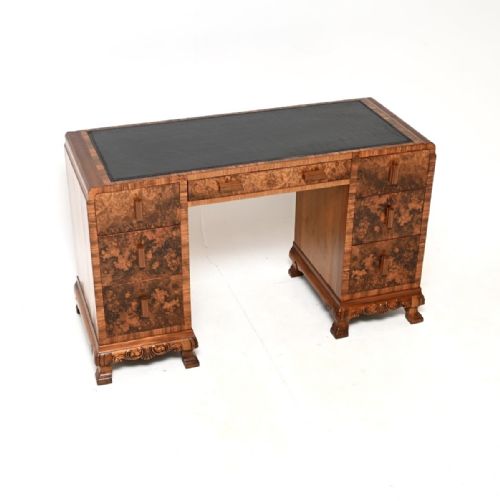
When searching for an antique black desk, buyers encounter writing tables, pedestal desks, and bureaus finished in dark tones. The selections span the nineteenth century through the art deco period, offering distinct silhouettes for study spaces.
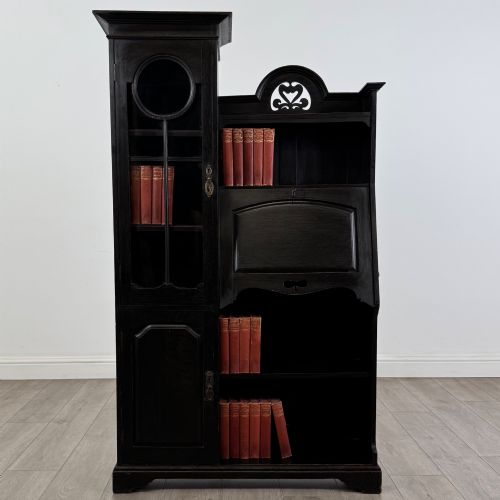
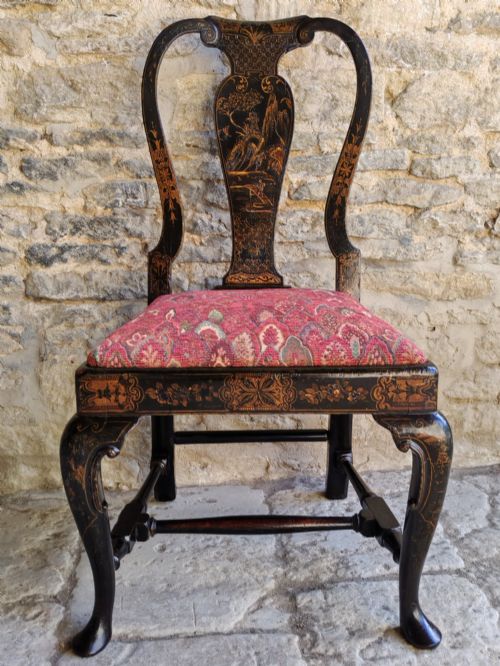
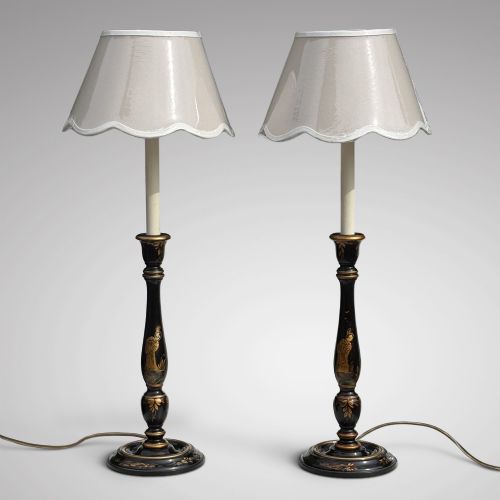
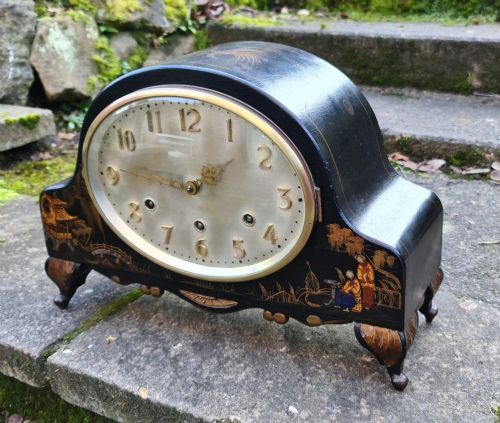
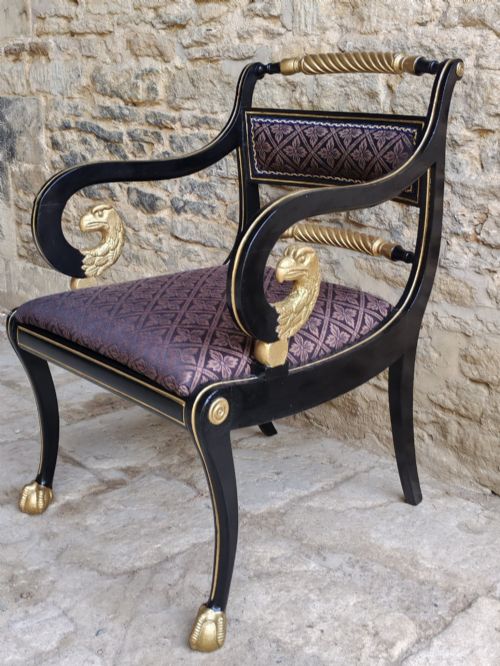
Many examples employ ebonised wood or oriental lacquer, sometimes enhanced by gilt decoration or contrasting burr walnut panels. These pieces range from restrained Victorian library tables to ornate regency and chinoiserie work tables.
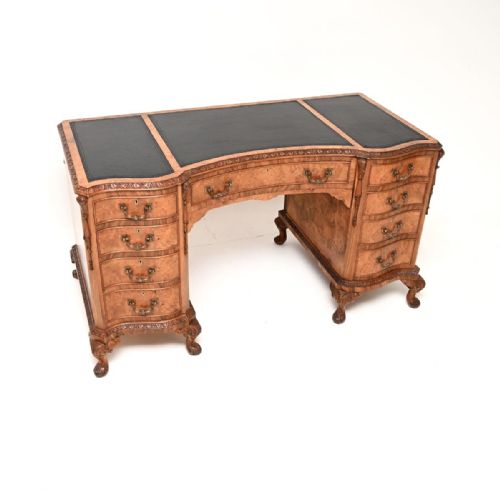
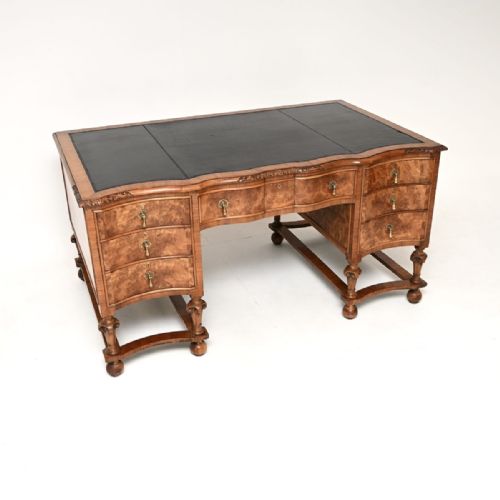
Pedestal desks and bureau plats dominate the larger formats, while smaller writing tables provide compact workspaces. Each variation reflects the prevailing taste of its decade, from nineteenth-century revivalism to twentieth-century modernism.
How they were made
Cabinetmakers utilised timber carcasses built from oak, walnut, or mahogany, applying ebonising treatments or black lacquer to achieve deep dark surfaces. Gilt detailing and hand-painted motifs frequently decorated these polished exteriors.
Writing surfaces incorporated inset panels of leather, often tooled with gold leaf borders to frame the workspace. Brass handles, hinges, and gallery rails provided functional contrast against the dark wood.
A carved black forest bear desk blotter waits patiently among the archives to guard your correspondence.
What varies in quality
The refinement of the lacquer or ebonised finish dictates much of the visual success, alongside the crispness of any applied gilding or hand-painted chinoiserie detail. Superior examples maintain depth in the polished dark surface without clouding.
Construction methods distinguish standard utility pieces from fine cabinetwork, particularly in the dovetailing of drawers and the selection of secondary timbers. Original leather writing inserts and matching hardware further elevate an example.
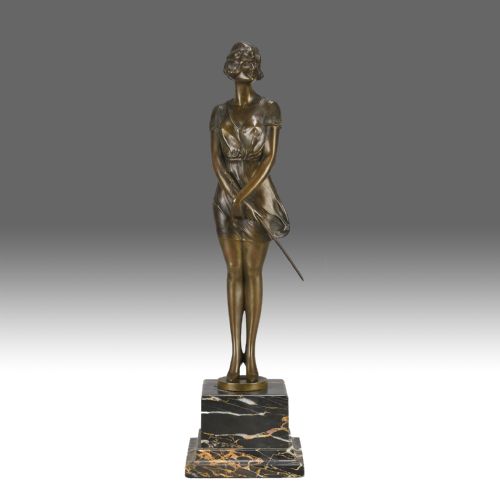
Maple and Co·Johnstone and Jeanes·Bruno Zach·Pierre-Augustin Caron de Beaumarchais
The Antique Black Desk Glossary
- Ebonised
- Wood treated with stain or paint to imitate expensive ebony. This technique was popular during the Victorian and Regency periods for formal furniture.
- Chinoiserie
- European interpretations of Chinese and East Asian artistic styles. These designs frequently feature hand-painted figures and landscapes on black lacquer grounds.
- Bureau Plat
- A freestanding writing table fitted with drawers across the frieze. Originating in France, these desks are finished on all sides for placement in the centre of a room.
- Partners Desk
- A large pedestal desk designed with drawers and cupboards on both sides to accommodate two users facing one another.
- Pedestal Desk
- A heavy writing table supported by two separate stacks of drawers flanking the central kneehole.
Antique Black Desk: Frequently Asked Questions
How do I care for a leather desk top?
Leather writing inserts require gentle cleaning with a damp cloth and periodic treatment with appropriate leather balms to prevent drying.
Avoid placing hot cups or excessive moisture directly on the hide to preserve the gilt tooling and surface sheen.
Are these desks suitable for daily work?
Many period pedestal desks and writing tables offer generous dimensions and sturdy construction suited to contemporary office tasks.
Kneehole heights and surface areas vary by decade, so verifying physical dimensions ensures comfortable daily use.
How do I identify ebonised wood?
Ebonised timber reveals its underlying grain only upon close inspection under good light where the dark stain settles into the pores.
Unlike solid ebony, these pieces use native hardwoods like beech or fruitwood finished to resemble exotic dark stock.
Where should I place a bureau plat?
Because these French writing tables feature finished backs, they suit placement in the middle of a study rather than against a wall.
This orientation displays the full expanse of the lacquer or ebonised woodwork and surrounding brass mounts.