



Antique Black Buffet
An antique black buffet brings deep ebonised finishes and dark painted surfaces into a room, offering both bold presence and practical storage.
Antique Black Buffet
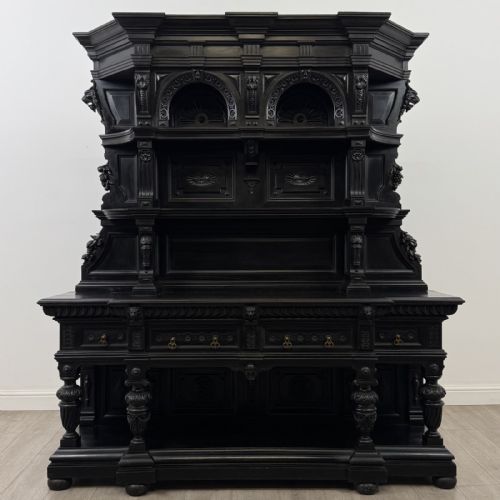
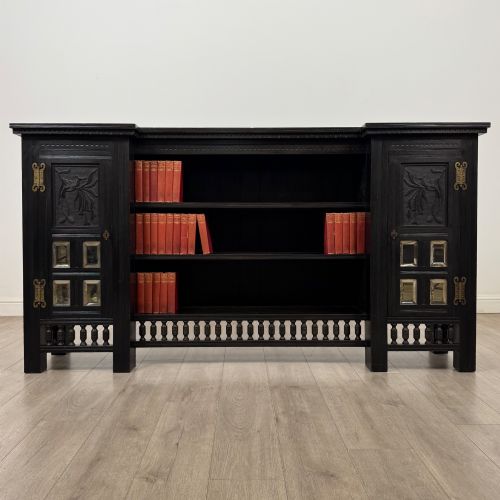
When you search for an antique black buffet, you encounter dark wood sideboards, ebonised credenzas, and painted storage pieces originating from the eighteenth, nineteenth, and early twentieth centuries. These large serving pieces and cabinets provide substantial surface areas and interior storage while anchoring a dining room or hallway with dark, dramatic tones.
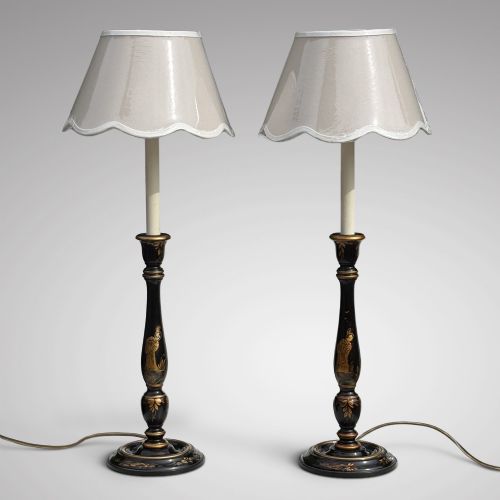
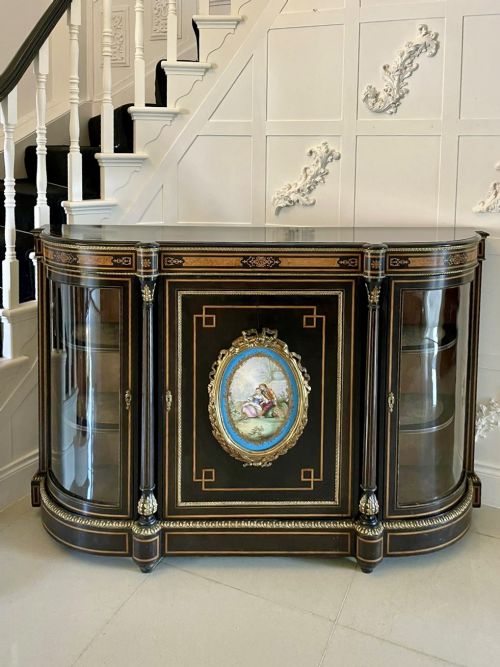
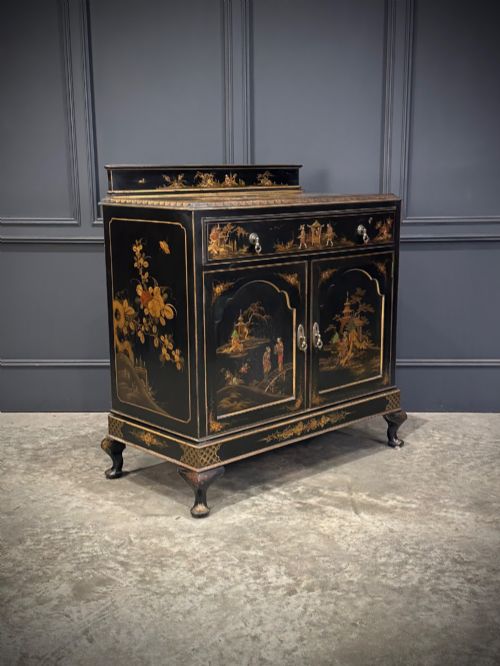
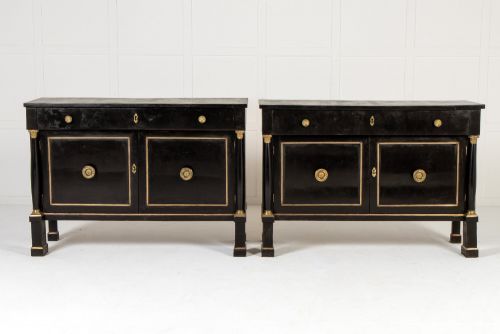
The selections span distinct stylistic traditions, including Victorian ebonised sideboards with carved details, French credenzas with classical inlays, and Chinoiserie lacquered cabinets decorated with motifs. Alongside full-sized sideboards and dressers, the category includes painted side cabinets and marble-topped buffets that serve the same foundational role in a room.
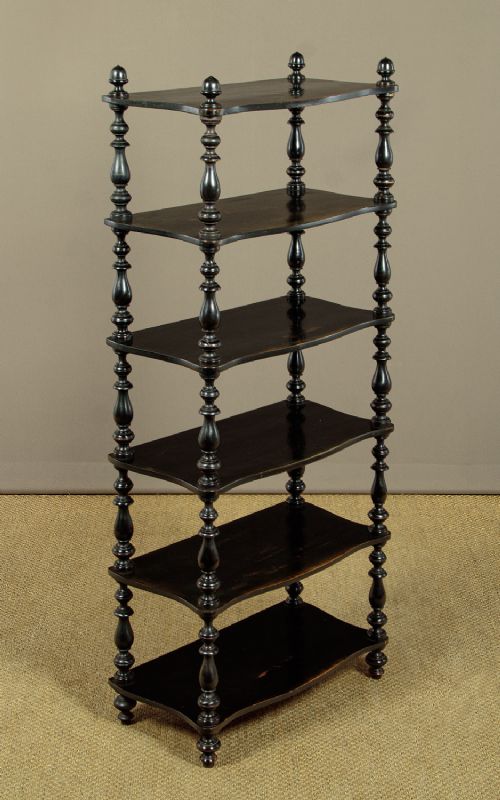
Most pieces you meet on this page date from the Victorian era and the nineteenth century, finished in ebonised wood or dark paint, though earlier eighteenth-century English and Italian examples appear. These items range from sturdy country dresser bases to ornate urban credenzas fitted with mirrored backs and brass mounts.
Materials and construction
Cabinet makers achieved dark finishes on these pieces using ebonising techniques on standard timber, applying black paint, or employing traditional lacquer and japanning methods. Secondary woods form the carcase, while visible surfaces receive careful coats of black pigment or dark varnish to simulate more expensive ebony.
Surface decoration frequently includes hand-painted motifs, gilt details, and inlaid contrasting timbers such as amboyna. Makers integrated brass hardware, ormolu mounts, and mirrored backs to complement the dark woodwork, while some examples incorporated inset marble tops for durability.
Antique Black Buffet Retail Price Guide 2026
Typical asking prices for black buffet among the pieces listed under this phrase on Sellingantiques today, from the lower quarter to the upper quarter. They describe what is for sale here now, not the wider market.
The furniture spans distinct movements including Victorian, Arts and Crafts, Chinoiserie, and French Empire styles.
What separates the finest examples
The distinction between standard utility furniture and superior pieces rests on the execution of the ebonising or lacquering and the finesse of the joinery. Fine examples display smooth, even dark surfaces that retain their depth, whereas lesser pieces show heavy flaking or clumsy overpainting on the wood.
Carved ornaments, such as lion masks or classical mouldings, reveal the hand of a skilled artisan when they are crisply defined rather than cast roughly or applied as mass-produced composition. The integration of fine secondary materials, like inset marble tops or gilt bronze mounts, elevates a cabinet from basic storage to high craftsmanship.
Krieger of Paris·Melissa White
The Antique Black Buffet Glossary
- Ebonised wood
- Timber treated with stain, polish, or paint to imitate expensive ebony wood. This finish became widespread during the nineteenth century, particularly in Victorian and Aesthetic Movement furniture.
- Credenza
- A low dining room cabinet or sideboard used for serving food and displaying dishware. These pieces often feature glass doors or mirrored backs.
- Chinoiserie
- European decorative style reflecting Chinese artistic influences, frequently featuring lacquered surfaces and hand-painted gilt motifs. It appears on cabinets and screens from various periods.
- Japanning
- European imitation of East Asian lacquerwork involving layered varnishes and heat-cured finishes. The technique produced hard, glossy black surfaces adorned with raised metallic designs.
- Dresser base
- A lower kitchen or dining cabinet fitted with drawers and cupboards, lacking the upper shelving tiers of a traditional dresser. English country versions provide robust storage.
Antique Black Buffet: Frequently Asked Questions
What is an antique black buffet used for?
These large storage pieces serve primarily in dining rooms and living spaces to hold tableware, linens, and serving platters. The flat top surface functions well for serving food during meals or displaying decorative items.
Beyond dining storage, they act as focal points in a room, bringing deep colour and architectural presence to walls. Their enclosed cupboards and drawers keep household items organised out of sight.
How do I date a black sideboard?
Dating relies on examining the secondary woods inside the drawers, the style of the hardware, and the construction methods used for the joints. Hand-cut dovetails and specific aesthetic movements point to distinct decades.
Finish application also offers clues, as nineteenth-century ebonising techniques differ from twentieth-century lacquering methods. Stylistic details like Victorian carvings or French Empire mounts help narrow the period.
How do I care for ebonised wood?
Maintain ebonised surfaces by dusting them regularly with a soft, dry cloth to prevent abrasive particles from scratching the dark finish. Avoid using harsh chemical sprays or silicone polishes that can build up a hazy residue over time.
Keep the timber away from direct sunlight and strong heat sources, which can cause the dark paint or lacquer to fade or crack. Occasional applications of appropriate wax help preserve the lustre of the historic finish.