


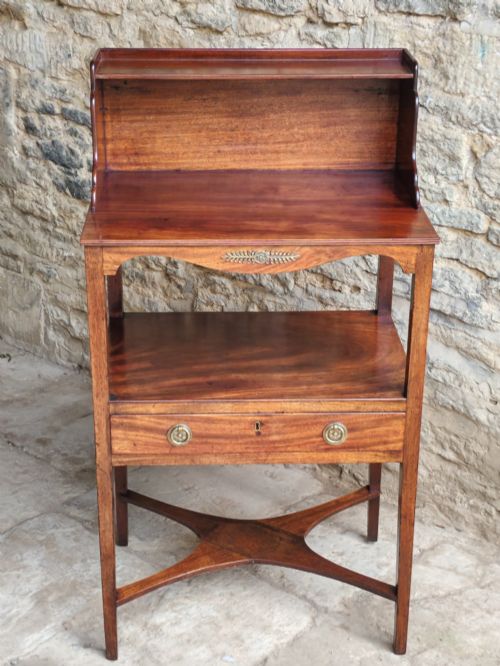
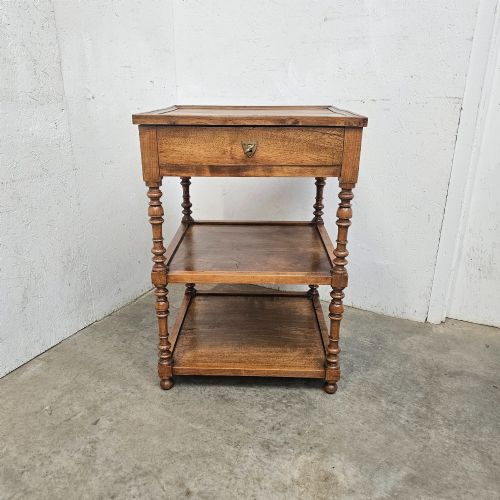
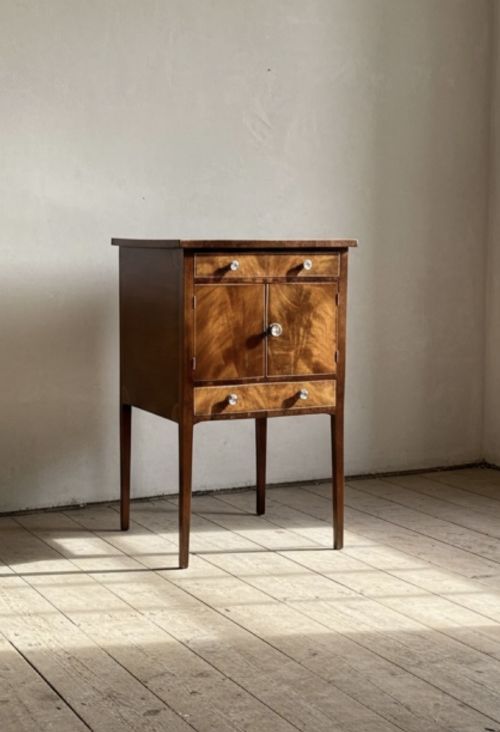

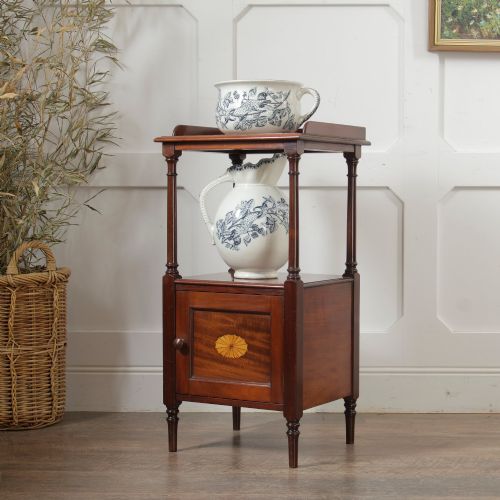
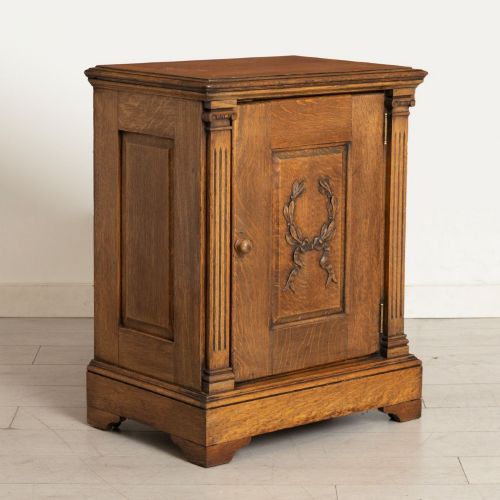

Antique Bedside Washstand
An antique bedside washstand brings period utility to the bedroom, offering clever enclosed storage and sturdy wooden surfaces designed for daily grooming.
Antique Bedside Washstand
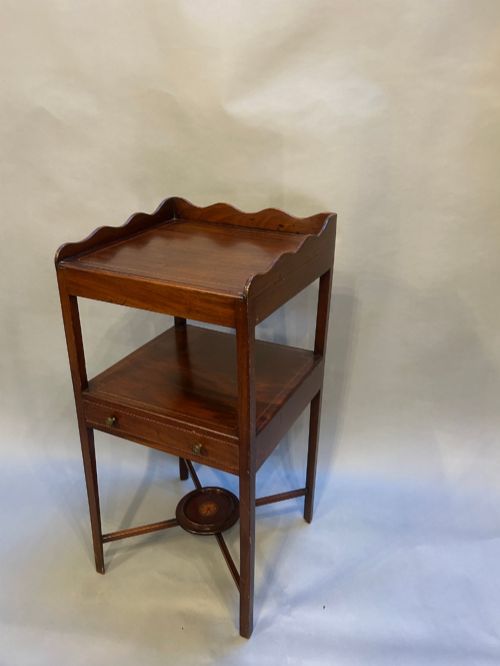
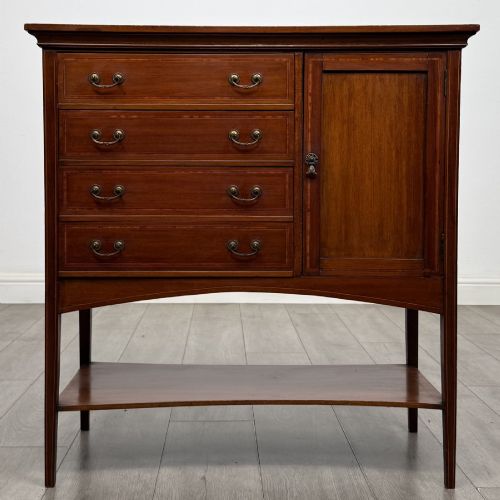
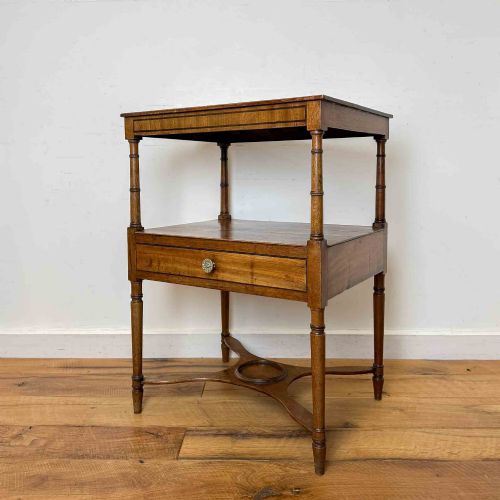
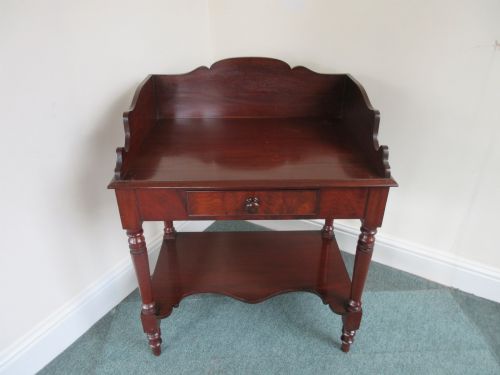
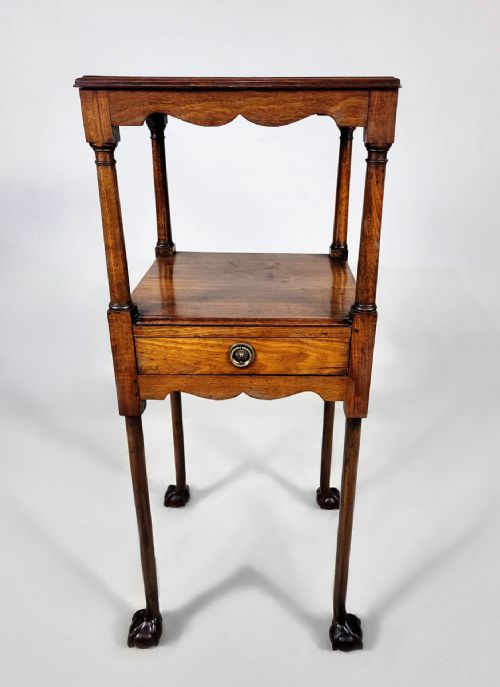
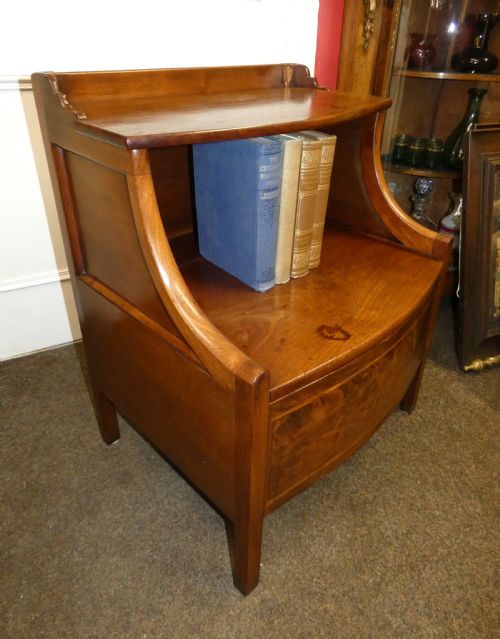
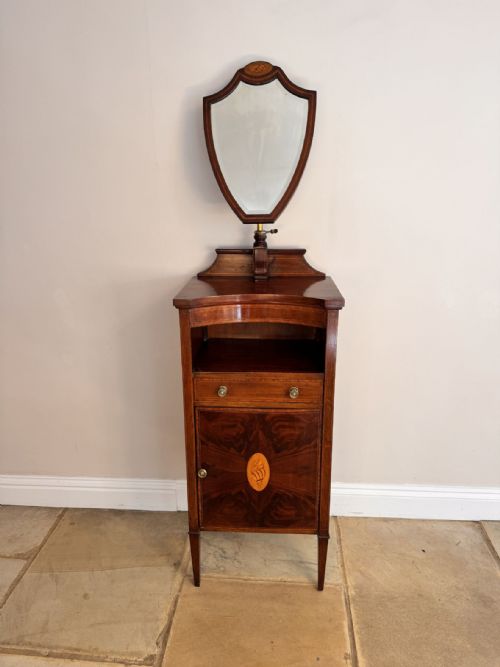
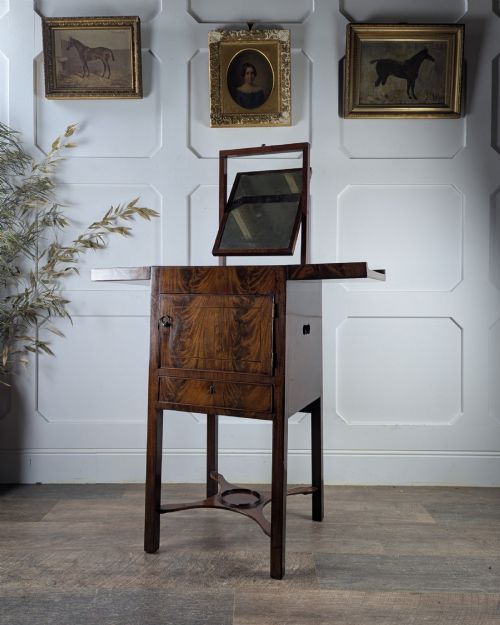
An antique bedside washstand serves as a functional bedroom cabinet or small table, originating primarily from the Georgian and Victorian periods. These pieces bridge the gap between practical domestic hardware and fine furniture, often taking the form of enclosed cupboards or open tables.
The selection on this page centres heavily on mahogany specimens from the eighteenth and nineteenth centuries, including fold-away designs, corner pot cupboards, and compact night stands. Walnut, pine, and oak also appear, showing the diverse domestic requirements of past households.
Makers produced these utilitarian forms to fit small spaces beside the bed, housing washing basins, chamber pots, or personal items out of sight. Their survival reflects both solid construction and continuous utility through successive generations.
Materials and construction
Cabinet makers relied predominantly on solid mahogany and flame mahogany veneer, supplemented by structural pine, walnut, and oak. These dense timbers provided the necessary durability for furniture subjected to water and heavy daily use.
Joinery techniques combined traditional framing with turned supports, brass hardware, and occasional satinwood inlay. Surfaces often received protective polishing or painted finishes, particularly on Victorian pine and provincial French examples.
Antique Bedside Washstand Retail Price Guide 2026
Typical asking prices for bedside washstand among the pieces listed under this phrase on Sellingantiques today, from the lower quarter to the upper quarter. They describe what is for sale here now, not the wider market.
Listings feature mahogany, walnut, oak, and pine across Georgian and Victorian periods, with styles ranging from George III to Gothic Revival.
Distinguishing quality in period washstands
Quality rests in the selection of timber and the precision of the cabinetwork, particularly where secondary woods meet primary veneers. Fine pieces exhibit tight grain matching, crisp turning on the legs, and well-fitted internal compartments.
The degree of preservation and the retention of original brass handles or marble tops elevate an example significantly. Alterations, such as conversions from washstands to standard cupboards, distinguish pristine survivors from heavily adapted pieces.
The Antique Bedside Washstand Glossary
- Pot cupboard
- A small bedside cabinet originally designed to enclose a chamber pot behind a panelled door. These items frequently double as general night tables today.
- Washstand
- A piece of furniture built to hold a basin and jug for morning washing. Many surviving examples feature enclosed top surfaces or folding lids.
- Commode
- In the context of bedside furniture, a term often used interchangeably with a pot cupboard or enclosed cabinet. It denotes a seated or enclosed storage unit.
- Flame mahogany
- A veneer cut from the fork of the mahogany tree to produce a distinctive flickering grain pattern. Cabinet makers used it on prominent drawer fronts and doors.
- Etagere
- A set of open shelves used for display or bedside storage. These lighter forms contrast with heavier enclosed cupboards.
Antique Bedside Washstand: Frequently Asked Questions
What is an antique bedside washstand?
An antique bedside washstand is a small period cabinet or table originally made to hold washing equipment or chamber pots in the bedroom.
Today, these compact pieces function well as bedside tables with convenient enclosed storage for modern items.
How do I date a washstand?
Dating relies on timber selection, structural joinery, and the prevailing style of the legs and handles. Georgian examples often feature straight or tapered legs, while Victorian pieces show heavier turned supports.
Secondary woods inside drawers and backboards also offer clues regarding the decade of manufacture.
Can I use a washstand beside a modern bed?
These pieces suit modern bedrooms because their historical dimensions align well with contemporary bed heights. The enclosed cupboards hide modern bedside clutter while adding distinct period character.