



Antique Barware Box
An antique barware box brings proper hospitality to a room, holding decanters and glasses securely while looking handsome on a sideboard.
Antique Barware Box
When you search for an antique barware box, you encounter a specialised form of portable drink storage that encompasses tantalus sets, liqueur cellarettes, and biscuit boxes. These pieces range from compact tabletop containers to substantial fitted cabinets designed to lock away spirits.
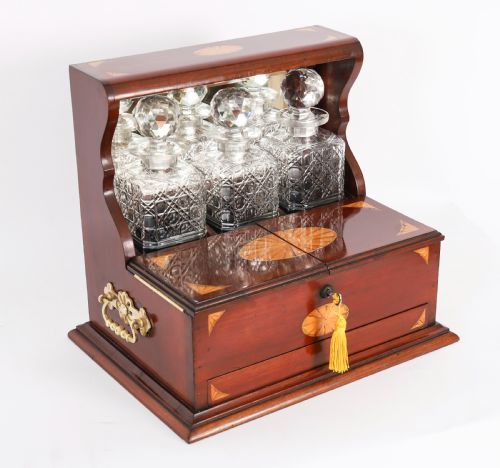
The most common versions seen on this page are tantalus sets housing two or three cut crystal decanters within oak or mahogany frames. Many incorporate games compartments or silver-plated mountings characteristic of late nineteenth and early twentieth-century entertaining.
The materials and forms span from Georgian wine coolers to Edwardian oak frames and Napoleon III liqueur boxes. Each type reflects the shifting domestic habits of affluent households through the nineteenth and early twentieth centuries.
Materials and construction methods
Cabinetmakers utilised dense timbers such as mahogany, oak, coromandel, and satinwood to build these rigid enclosures. These woods were frequently enhanced with marquetry stringing, brass inlay, or carved details such as Black Forest motifs.
Fitted interiors required precise joinery to cradle fragile glassware securely during transit or everyday use. Makers paired these wooden housings with cast brass locks, silver plate mounts, and hand-blown cut crystal or Baccarat glass decanters.
Antique Barware Box Retail Price Guide 2026
Typical asking prices for barware box among the pieces listed under this phrase on Sellingantiques today, from the lower quarter to the upper quarter. They describe what is for sale here now, not the wider market.
Some nineteenth-century drinkers apparently needed playing cards locked away alongside their gin to prevent overly enthusiastic evening wagers.
Markers of quality in construction
The distinction between ordinary and superior examples lies in the integrity of the timber selection and the complexity of the internal mechanism. Heavy brass hardware, original working locks with matching keys, and finely fitted game boards elevate a piece considerably.
Glassware quality also dictates the standing of a box, with heavy cut crystal and signed Baccarat decanters representing the upper tier. The crispness of the marquetry and the tightness of the mitre joints further separate standard production from exceptional work.
Philip Ashberry
The Antique Barware Box Glossary
- Tantalus
- A locking drink cabinet that holds decanters securely by their necks while displaying the contents within. The locking mechanism prevents unauthorised access to the spirits while allowing the bottles to be seen.
- Cave a Liqueur
- A French portable liqueur chest, often lined with velvet and fitted with a set of small decanters and glasses. These boxes frequently feature tortoiseshell, brass inlay, or exotic wood veneers.
- Cellarette
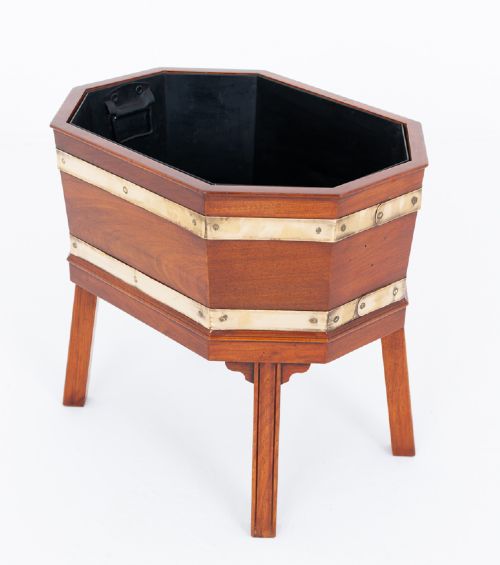
- A receptacle for holding wine bottles near the dining table, often taking the form of a freestanding wooden box or a pedestal cooler. Earlier Georgian examples stood on legs, while later Victorian versions sat directly on the floor or sideboard.
- Biscuit Barrel
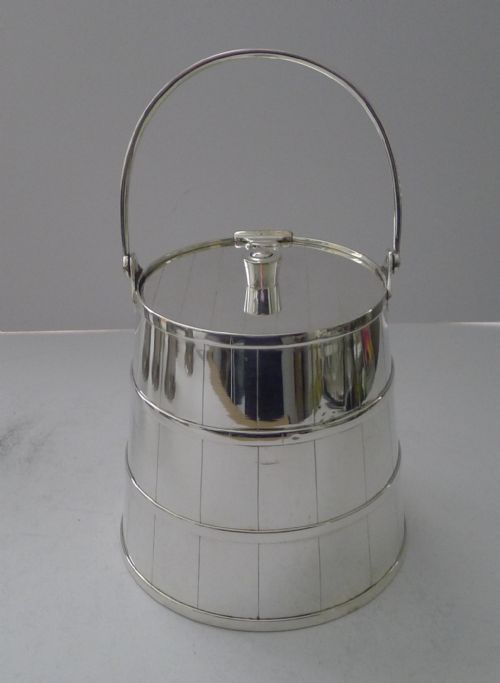
- A covered container designed to store dry foodstuffs, occasionally repurposed as an ice bucket in Edwardian barware sets. Silver-plated mountings and ceramic or glass bodies are typical.
- Marquetry
- The art of applying pieces of veneer to a structure to form decorative patterns and pictures. Craftsmen used contrasting woods to create intricate geometric or floral designs on the box lids.
Antique Barware Box: Frequently Asked Questions
How do I unlock a tantalus without a key?
Most antique barware boxes rely on lever-lock mechanisms that require a specialist locksmith to pick safely without damaging the surrounding timber or brass collar.
Forcing the lock often cracks the expensive wood veneer or breaks the internal locking bar entirely.
Are the decanters usually original to the box?
Decanters frequently became chipped or broken through heavy use, leading to period replacements being slipped into the compartments later on.
Matching the exact cut of the crystal and the height of the stopper to the frame helps determine if the glassware belongs to the original manufacture.
What is the difference between a tantalus and a cellarette?
A tantalus specifically displays spirits in locked decanters where the stoppers cannot be removed until the top bar is unlocked. A cellarette is generally a larger chest or cooler designed to hold multiple whole wine bottles upright or on their sides.
Both served similar functions in the dining room but catered to different tiers of beverage storage.
How should I clean the wood and silver plate?
Wood surfaces respond best to a light application of traditional beeswax to nourish the dry grain without stripping the aged patina. Silver-plated mounts require gentle attention with a non-abrasive cloth to avoid wearing through the thin metal layer.