

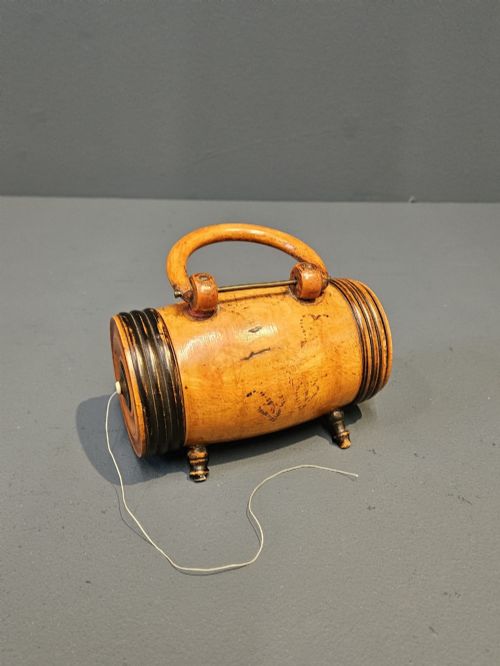


Antique Barrel Dispenser
An antique barrel dispenser brings the character of the traditional pub or parlour straight to the sideboard, offering a handsome vessel for spirits, wine, or string.
Antique Barrel Dispenser
The pieces on this page span Victorian, Edwardian, and French Country styles, alongside traditional British pub and Black Forest designs. You are most likely to meet wooden barrels bound in brass, cut glass spirit dispensing lamps, and stoneware vessels bearing period brewery or maker details.
Beyond barware, the selection includes utilitarian objects such as fruitwood and sycamore string barrels, pottery water filter urns, and gilt bronze-mounted glass scent barrels. Their origins stretch from English workshops to French provincial kilns, reflecting both domestic utility and hospitality trades.
What varies in quality
Quality rests upon the crispness of the turning, the snugness of the cooperage, and the weight of the materials chosen. A superior timber barrel displays tight, even staves and well-fitted brass banding that holds its tension across the grain.
Artistry also dictates value, seen in the depth of cut glass facets, the elegance of silver plated mounts, or the complexity of carved Black Forest stands. Pieces bearing specific brewery names or maker attribution elevate the historical interest of the work.
Antique Barrel Dispenser Retail Price Guide 2026
Typical asking prices for barrel dispenser among the pieces listed under this phrase on Sellingantiques today, from the lower quarter to the upper quarter. They describe what is for sale here now, not the wider market.
Objects range from triple spirit barware sets to single fruitwood string dispensers and water filter urns.
l. Lumley·Benskins Brewery
The Antique Barrel Dispenser Glossary
- Lignum vitae
- A dense, heavy heartwood prized by turners for its durability and oily nature. It was frequently utilised for nineteenth-century string barrels and utilitarian desk objects.
- Silver plate
- A layer of silver fused to a base metal foundation, commonly used for taps, hoops, and mounts on nineteenth-century barware.
- Salt glaze
- A decorative and protective finish applied to stoneware by throwing common salt into the kiln during high-temperature firing, creating an orange-peel texture.
- Sycamore
- A light-coloured hardwood belonging to the maple family, often turned into smooth, pale domestic containers and string holders in the nineteenth century.
- Charles X
- A French design period spanning the 1820s, characterised by restrained neoclassical elegance and fine bronze mounts on decorative glassware.
Antique Barrel Dispenser: Frequently Asked Questions
What is an antique barrel dispenser?
An antique barrel dispenser is a small vessel shaped like a cask, historically used to hold and pour spirits, wine, or water in homes and public houses. They also include utilitarian versions designed to dispense string or cotton in domestic settings.
These pieces combine practical function with decorative appeal, often resting on dedicated wooden or metal stands. They reflect the social habits and interior styling of the nineteenth and eighteenth centuries.
How were glass barrel dispensers used?
Glass barrel dispensers typically sat on bars, sideboards, or dining tables to serve spirits like gin, whisky, and brandy directly to guests or patrons. Some double-ended or lamp variants combined illumination with liquid storage.
Operators filled the glass body from the top and drew the contents through a small metal tap or spigot at the base. Their transparent walls allowed hosts to monitor the remaining volume of liquor.
How do I care for wooden barrel dispensers?
Wooden barrel dispensers require stable indoor humidity to prevent the timber staves from shrinking or cracking over time. Keep them away from direct heat sources and strong sunlight.
Dust the wood gently with a dry cloth and avoid harsh chemical polishes. If the interior housed liquids historically, treat the timber with care and avoid soaking the exterior metal mounts.
How do I distinguish Victorian from earlier barrels?
Victorian barrels often feature machine-tooled precision, heavier brass banding, and frosted or cut glass typical of nineteenth-century industrial techniques. They frequently bear registration marks or commercial brewery stamps.
Earlier eighteenth-century or Charles X examples tend to display hand-turned timber characteristics, simpler iron or brass bindings, and French bronze mounts. Examining the joinery and metal patination helps clarify the manufacturing era.