





Antique Bar Cart Wheels
These antique bar cart wheels support serving trolleys and drinks carts from the Victorian period through to the 1930s.
Antique Bar Cart Wheels
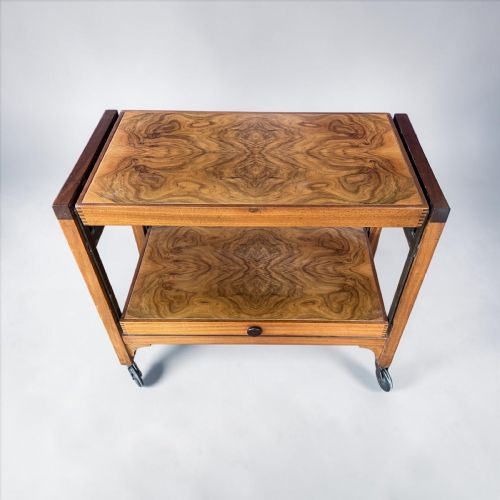
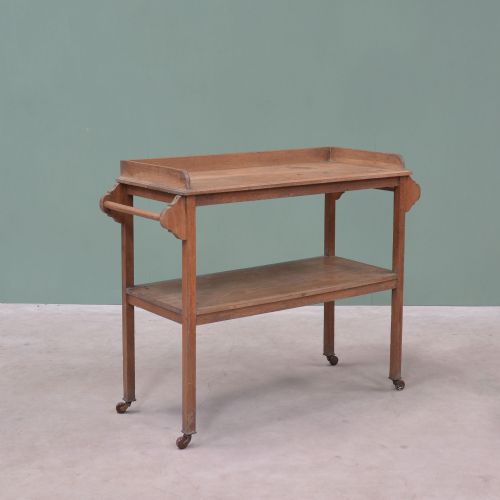
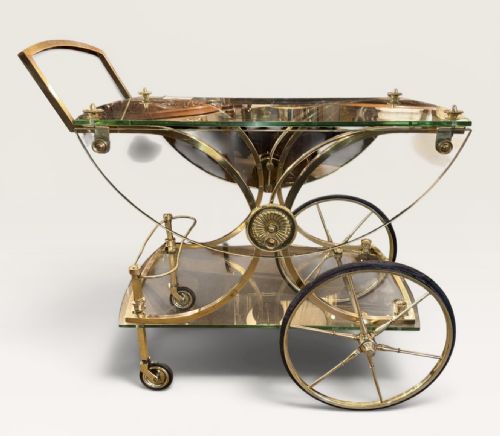
When you search for antique bar cart wheels, you are looking at the underpinnings of drinks trolleys, tea trolleys, and serving trolleys from periods such as the Victorian era, the Edwardian years, and the 1930s. The items they support range from simple oak folding tea trolleys to French Art Deco gilded serving carts and multi-tiered glass etageres.
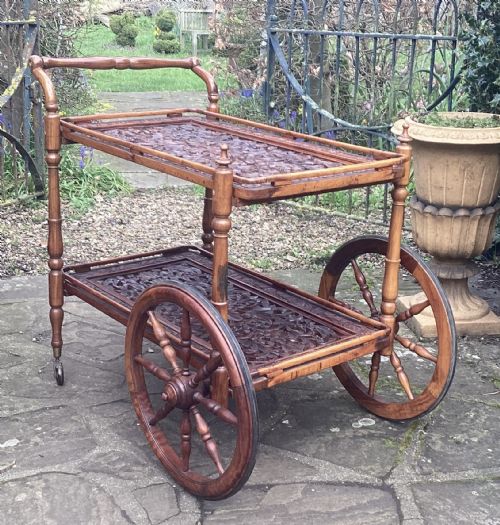
You are most likely to meet wooden trolleys in oak or mahogany, alongside metal and brass frames fitted with smaller castor wheels that allowed these pieces to move easily across Victorian and Edwardian drawing rooms. Styles span from Jacobean Revival and Edwardian simplicity to French Mid-Century and Anglo-Indian carved hardwood designs.
The wheels themselves bear the weight of two-tier and three-tier formats, some featuring lift-off trays or metamorphic actions. They form an integral part of mobile entertaining furniture that evolved from afternoon tea service to cocktail hours.
Materials and construction
The physical evidence shows frameworks built primarily from timbers like oak, mahogany, and walnut, alongside hardwoods and metallic structures in brass and silver plate. Glass inserts frequently form the tiers of etageres and drinks trolleys.
Makers combined these materials using traditional joinery for wooden frames, such as the folding mechanisms seen on Edwardian tea trolleys and the carved details on Indian hardwood pieces. Metal elements provide structural support and mobility through the attached wheels.
Antique Bar Cart Wheels Retail Price Guide 2026
Typical asking prices for bar cart wheels among the pieces listed under this phrase on Sellingantiques today, from the lower quarter to the upper quarter. They describe what is for sale here now, not the wider market.
Some trolleys come with lift-off trays, meaning the tea service could abandon the wheels entirely and run off on its own.
Quality variations
Quality reveals itself in the selection of materials, from plain oak and mahogany up to specialised French Art Deco gilding and intricate carved hardwood. The sophistication of the mechanism, such as a metamorphic serving trolley action or a lift-off tray, marks out finer examples.
Design ambition also separates standard tea trolleys from high-end pieces by recognised workshops like Maison Bagues. The integration of brass fittings, glass tiers, and the crispness of the carving determine the standing of each piece.
Maison Bagues
The Antique Bar Cart Wheels Glossary
- Metamorphic
- Describing furniture that transforms from one form or shape into another. An example is a serving trolley with a folding top.
- Serving trolley
- A mobile table used for moving food, tea, or drinks across a room. These pieces form the primary objects supported by the wheels.
- Silver plate
- A thin layer of silver applied to a base metal surface. This finish appears on metal components of certain trolleys.
Antique Bar Cart Wheels: Frequently Asked Questions
What periods do these trolleys come from?
The listings include pieces originating from the Victorian era, the Edwardian period, and the 1930s.
Designs span across these decades, reflecting changing tastes from formal tea service to Art Deco entertaining.
How were these trolleys used?
They served primarily for moving tea, food, and drinks within large homes without requiring permanent side tables.
The wheels allowed hosts to transport refreshments easily between rooms during gatherings.
What materials are most common?
Timber frames in oak and mahogany appear frequently alongside brass and glass combinations.
Less common materials include silver plate, walnut, and Indian carved hardwood.
How do I identify an Art Deco trolley?
Art Deco pieces from the 1920s and 1930s often feature streamlined geometric lines or French gilded finishes.
They stand apart from earlier Victorian and Edwardian styles through their modernist aesthetic.