



Antique Bamboo Console
These antique bamboo console pieces bring light, organic texture and structured utility into a room.
Antique Bamboo Console
An antique bamboo console is a slender table designed to stand against a wall, often taking forms such as side tables, writing tables, or half-moon console tables. They appear in styles ranging from Regency and Victorian Aesthetic Movement to Edwardian and Chinese Traditional designs.
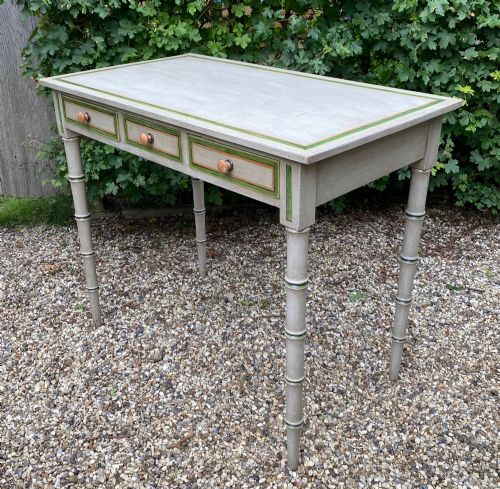
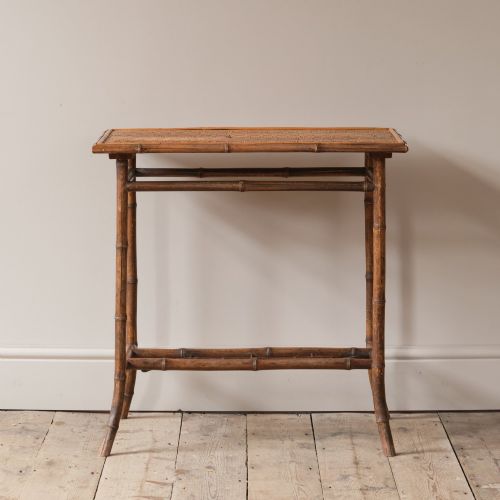
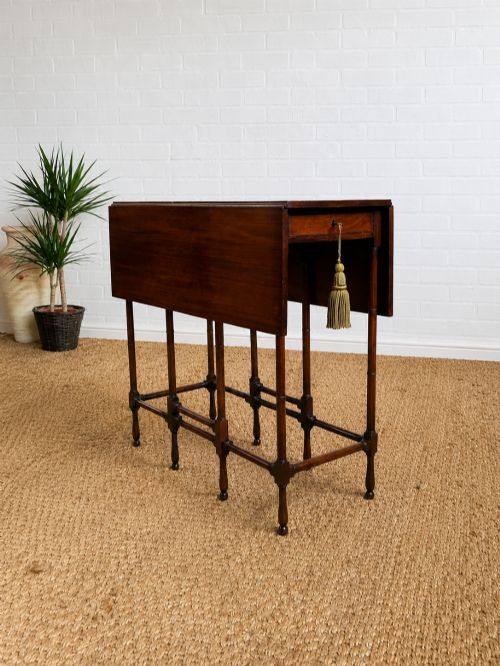
The pieces on this page span the nineteenth century through the early twentieth century, incorporating materials like natural bamboo, rattan, cane, painted wood, and mahogany. Buyers encounter both genuine bamboo constructions and clever painted faux bamboo interpretations from various periods.
How they were made
Makers utilised natural bamboo stems, shaped and joined to form sturdy frameworks for tables, whilst others employed solid mahogany and softwood turned on a lathe to simulate the characteristic joints of bamboo.
Surface finishes include original ochre paint and decorative lacquer work, complemented by secondary materials like brass fittings, cane panelling, and rattan detailing.
Antique Bamboo Console Retail Price Guide 2026
Typical asking prices for bamboo console among the pieces listed under this phrase on Sellingantiques today, from the lower quarter to the upper quarter. They describe what is for sale here now, not the wider market.
Current listings feature pieces spanning the nineteenth century through 1920, incorporating bamboo, mahogany, softwood, rattan, and brass.
What varies in quality
Quality rests in the structural integrity of the bamboo joints and the preservation of original surface finishes, such as early paintwork or polished mahogany.
Higher grade pieces demonstrate refined joinery and careful selection of materials, whether in genuine bamboo stems or finely turned faux bamboo timber.
The Antique Bamboo Console Glossary
- Bamboo
- A woody grass utilised for structural frames and decorative details in furniture making. It provides a lightweight yet durable framework.
- Faux bamboo
- Timber turned on a lathe to imitate the segmented nodes of natural bamboo stems. This technique was popular in Regency and Victorian periods.
- Console table
- A table designed to be fixed against a wall, often supported by brackets or legs at the front. These pieces serve functional and decorative roles in hallways and living spaces.
- Aesthetic Movement
- A late nineteenth-century design style emphasising visual beauty over narrative subject matter. It frequently incorporated oriental influences and bamboo materials.
Antique Bamboo Console: Frequently Asked Questions
Where should I place an antique bamboo console?
These consoles suit narrow spaces such as hallways, landings, or living room perimeters where a deep table would obstruct movement. Their slender proportions provide surface area without overwhelming the room.
Because many examples feature natural cane or bamboo, placing them away from direct heat sources and strong moisture fluctuations helps preserve the organic materials.
How do I distinguish faux bamboo from real bamboo?
Faux bamboo is carved or turned from solid timbers like mahogany or softwood, meaning it feels heavier and shows wood grain beneath the paint. Real bamboo consists of hollow, segmented stems joined together.
Closer inspection of the nodes reveals whether the material is botanical growth or skilled carpentry.
What periods do these tables come from?
The pieces span the nineteenth and early twentieth centuries, covering Regency, Victorian, Aesthetic Movement, and Edwardian eras. Each period brought distinct interpretations to the form.
Earlier examples often feature painted faux bamboo finishes, whilst later pieces embrace natural bamboo and oriental influences.
How do I care for antique bamboo furniture?
Regular dusting with a soft, dry cloth prevents particle buildup in the textured nodes and joints of the bamboo. Avoid heavy commercial polishes that can seal or degrade historic paint finishes.
Keeping the furniture in stable indoor humidity protects both the organic cane elements and the underlying wooden structures from splitting.