





Antique Baby Cup
An antique baby cup is a tangible family record of early life, crafted to mark a birth or christening with enduring metal.
Antique Baby Cup
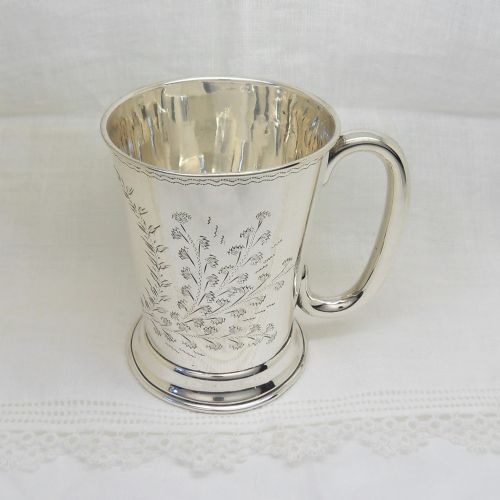
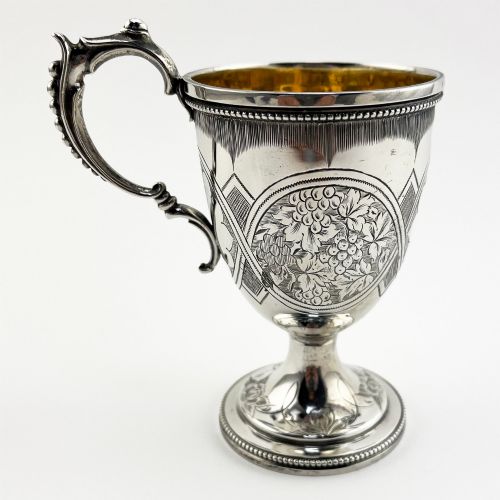
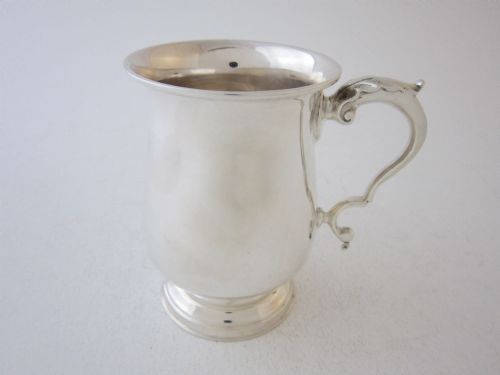
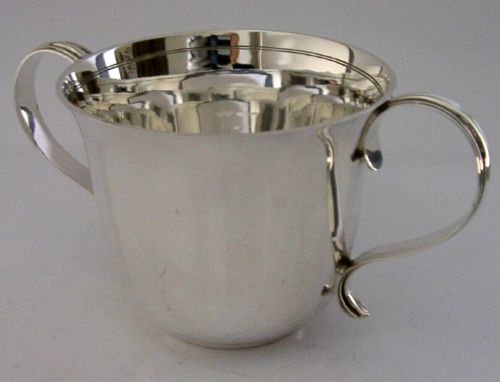
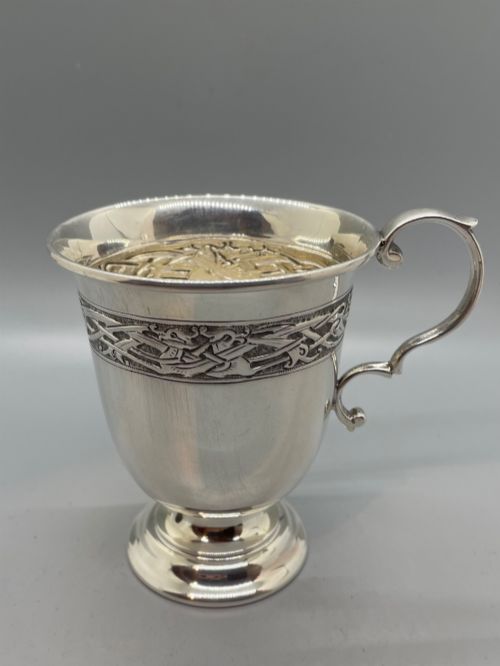
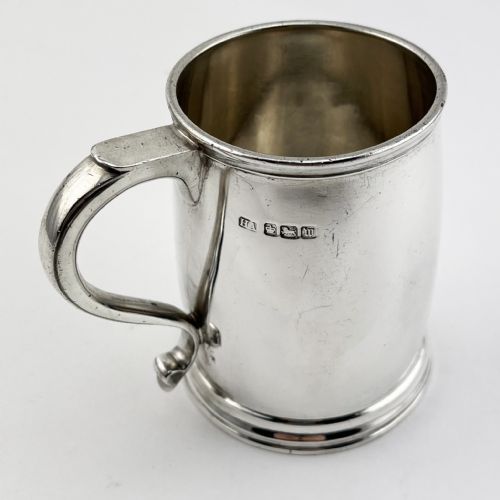
An antique baby cup appears primarily as a small sterling silver mug, tankard, porringer, or two-handled bowl designed for a child's milestone. These pieces emerge across the Victorian, Edwardian, and George V periods, alongside interwar and mid-century British examples.
Makers shaped these vessels in varied forms, ranging from simple baluster profiles with scroll handles to cylindrical tankards and boxed christening sets containing matching cutlery or bowls. Origin marks point to British assay offices such as Birmingham, Chester, and Sheffield, alongside occasional Australian provenance.
The decorative vocabulary spans floral engraving, embossed motifs, and Rococo Revival scrolls, reflecting the shifting aesthetic tastes of the nineteenth and twentieth centuries. A buyer encounters pieces housed in original leather, silk, or velvet lined presentation boxes, as well as standalone vessels.
Materials and construction
Silversmiths constructed these vessels predominantly from sterling silver and solid silver, occasionally applying silver gilt or gold plate to the interior surfaces. Metal was hammered, spun, or cast into sturdy forms capable of daily handling, then finished with applied handles and foot rims.
Decoration relied on hand engraving, floral embossing, and chased scrolling work, executed directly onto the metal walls. Makers often paired the silver mug with fitted leather boxes lined with silk or velvet to create formal presentation sets.
Antique Baby Cup Retail Price Guide 2026
Typical asking prices for baby cup among the pieces listed under this phrase on Sellingantiques today, from the lower quarter to the upper quarter. They describe what is for sale here now, not the wider market.
Tiny handles sized for an infant's fist survived centuries of polishing without losing their charm.
Distinguishing quality
Quality rests in the weight of the metal and the crispness of the hand-applied decoration, where heavier gauges and deep, sharp chasing indicate superior craftsmanship. Substantial pieces, such as heavy porringers and thick-walled mugs, demonstrate a higher standard of manufacture than lighter counterparts.
The clarity and placement of hallmarks contribute significantly to a piece's standing, alongside the presence of a maker's mark from a noted workshop or silversmith. Surviving original fitted boxes lined with silk or velvet add a further layer of completeness to the object.
Joseph Gloster·R E Stone·Tiffany and Co
The Antique Baby Cup Glossary
- Porringer
- A small, shallow vessel with one or two horizontal flat handles, used traditionally for broth or porridge. In silver form, it serves as a common christening gift.
- Baluster
- An architectural shape featuring a rounded base and a slim, tapering neck, frequently seen in the profile of traditional silver mugs.
- Hallmark
- An official stamp applied by an assay office to indicate the purity of the metal, the year of testing, and the maker's mark. British pieces carry distinct town marks like anchors or leopard heads.
- Gilt
- A thin layer of gold applied to the interior surface of a silver cup to protect the metal from acidic contents and enhance appearance.
Antique Baby Cup: Frequently Asked Questions
What was the purpose of an antique baby cup?
These vessels were traditionally given as christening gifts or birth presents to mark a child's arrival and entry into a family or community. They served both as ceremonial presentation pieces and as durable items intended for the child's future use.
Over generations, many functioned as keepsakes rather than utilitarian tableware, preserved in fitted presentation boxes with silk and velvet linings. Their survival often reflects their status as cherished family heirlooms.
How do I identify the date of a silver christening mug?
Dating relies primarily on the system of hallmarks stamped directly onto the silver by official assay offices in cities such as Birmingham, Chester, and Sheffield. A specific letter punch within the assay marks corresponds to the exact year of testing.
Stylistic cues such as Victorian floral engraving, Edwardian proportions, or Rococo Revival scroll handles offer secondary clues to the period of manufacture when hallmarks are worn or indistinct.
Were these cups actually used by children?
Many examples show evidence of sturdy construction in solid sterling silver, designed to withstand handling by a child during early meals. Two-handled porringers and thick-walled tankards were physically robust enough for practical service.
At the same time, boxed sets lined in silk and velvet often remained untouched as presentation pieces. The presence of denting or gentle wear patterns usually separates functional items from purely display objects.