


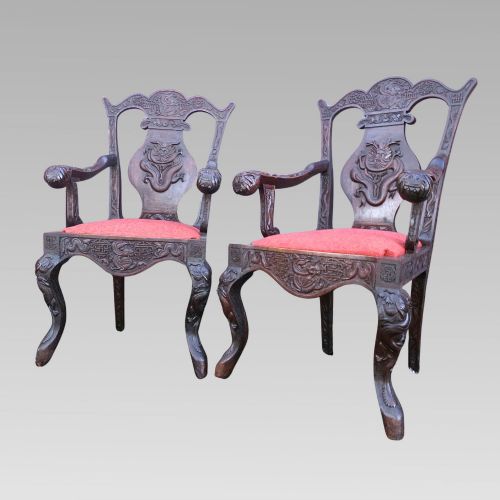


Antique Asian Chair
When you search for an antique asian chair, you enter a world of structural joinery, dense dense hardwoods, and refined regional seating forms.
Antique Asian Chair
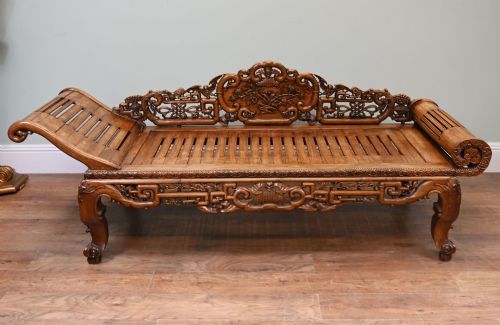
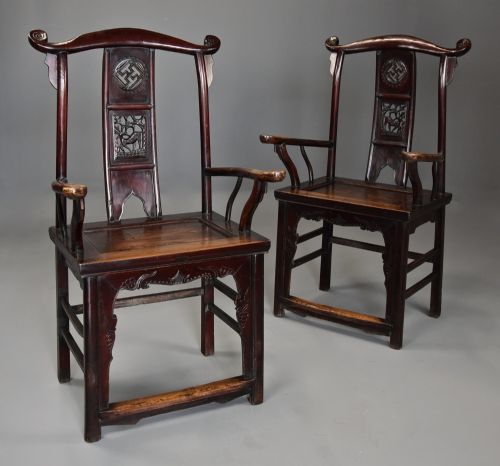
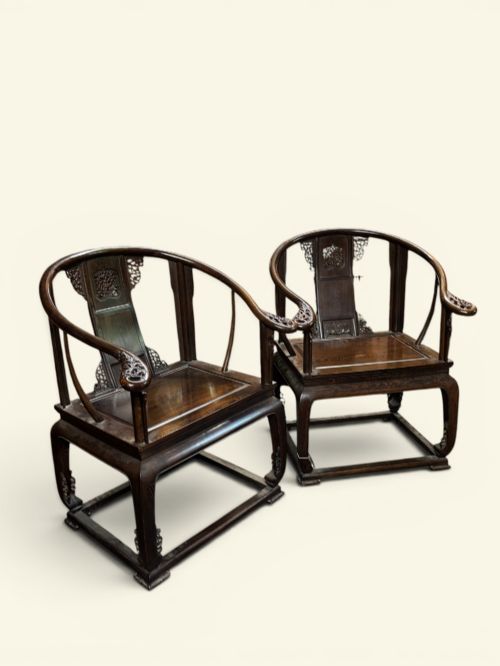
An antique asian chair encompasses diverse regional seating types originating primarily from China and Burma, spanning centuries of craftsmanship. Buyers frequently encounter iconic forms such as horseshoe-back armchairs, yoke-back scholars chairs, throne chairs, and low benches.
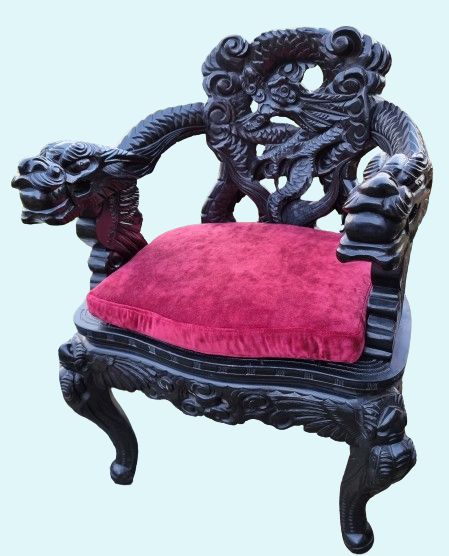
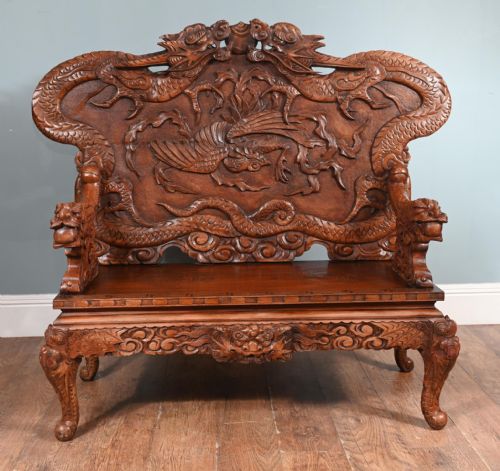
The selection ranges from robust elm and hardwood designs intended for daily use to intricate ceremonial pieces bearing dragon carvings. Regional variations also include Burmese temple chairs and Anglo-Indian adaptations.
Most examples date from the nineteenth century, reflecting Qing Dynasty aesthetics alongside later transitional styles from the early twentieth century. These pieces function historically as functional domestic furniture and prominent symbols of status.
Materials and Construction Techniques
Makers utilised dense timbers such as rosewood, teak, hongmu, and local elm to construct frames that relied on precise interlocking joinery rather than metal nails. This traditional joinery allowed wood to expand and contract naturally across seasonal humidity shifts.
Surface treatments included clear wax finishes that highlighted natural timber grain alongside layers of red or cinnabar lacquer. Certain pieces incorporate brass inlays, intricate wood carvings depicting dragons and foliage, or woven canework seats.
Evaluating Seating Quality
Superior quality rests in the integrity of the original joinery and the depth of the carved detailing across the crest rails and backsplats. Pieces retaining their original red lacquer or untouched patinated surfaces command greater attention than heavily restored equivalents.
Proportion and balance define the upper tier of the range, where curved components like horseshoe backs demonstrate fluid geometric mastery. Structural stability paired with authentic material wear distinguishes masterwork throne chairs from utilitarian workshop output.
The Antique Asian Chair Glossary
- Yoke-back chair
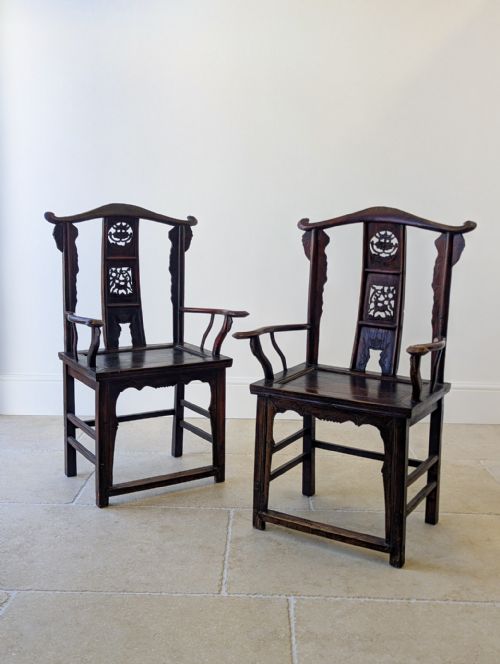
- A traditional wooden chair featuring a crest rail that curves outward at the ends resembling an ox yoke. This form supported the upright posture of scholars and officials.
- Horseshoe-back chair
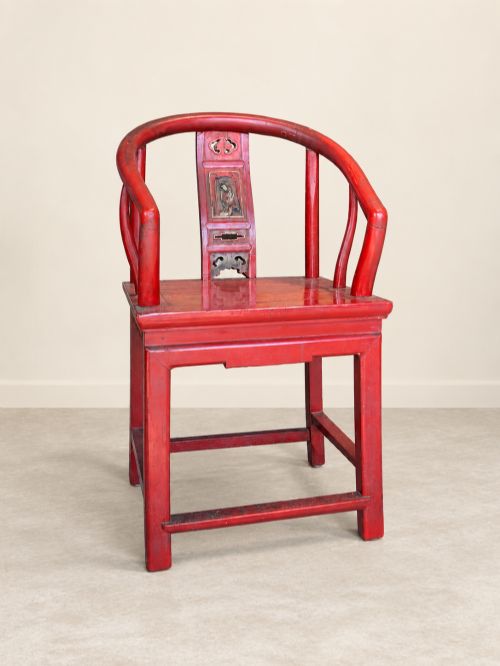
- A circular, continuous arm and back rail that sweeps downward in a single curved line. The design provides ergonomic support while requiring advanced timber bending techniques.
- Hongmu
- A translation meaning red wood, referring to various dense tropical hardwoods native to Asia. Artisans prized this heavy material for its rich colour and durability.
- Cinnabar lacquer
- A building technique involving multiple coats of red mineral lacquer carved into relief patterns. This labour-intensive finish adorns ceremonial benches and decorative seating.
- Scholar's chair
- A minimalist seating form associated with Chinese literati, prioritising clean lines and ergonomic comfort. These elm or hardwood chairs avoided excessive ornamentation.
Antique Asian Chair: Frequently Asked Questions
What is a horseshoe-back armchair?
This seating form displays a continuous circular rail that forms both the arms and the upper back in a sweeping, curved line. The design requires expert woodworking to shape the heavy timber segments.
Many examples date to the nineteenth century and incorporate intricate structural bracing beneath the seat for added stability.
Where were these chairs placed originally?
Wealthy households, temples, and official halls utilised these substantial hardwood seats to denote status and authority. Throne chairs and high-backed settles occupied central positions in reception rooms.
Smaller side chairs and lamp hanger seats were arranged in matching pairs along parlour walls or used near desks by scholars.
How do I care for lacquered wood?
Lacquered surfaces require stable indoor humidity levels and protection from direct sunlight to prevent cracking or fading. Dusting should occur regularly using a soft, dry cloth without chemical polishes.
Maintaining consistent environmental conditions preserves the original red lacquer and subtle patination developed over the centuries.