
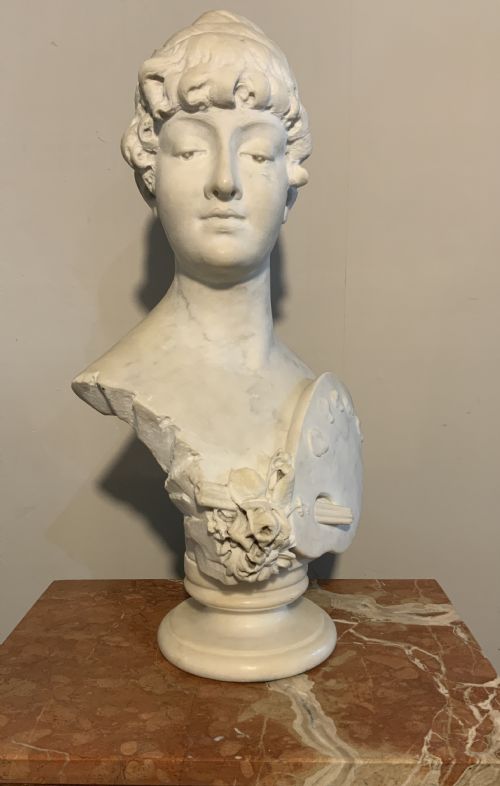
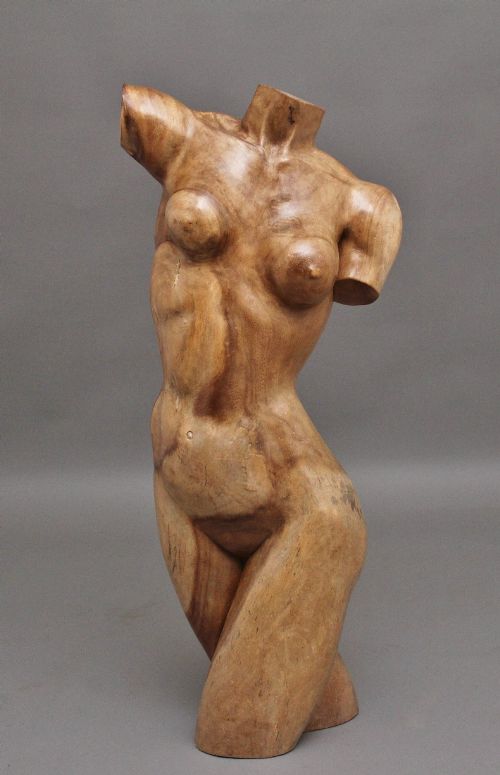
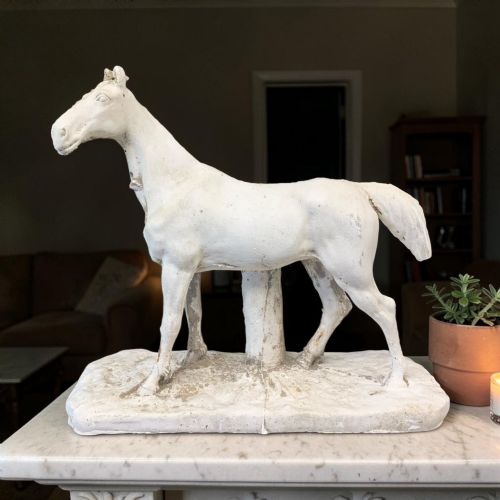


Antique Artist Sculpture
These antique artist sculpture pieces capture human figures, anatomical studies, and animal forms in bronze, marble, and terracotta for collectors seeking character.
Antique Artist Sculpture
When you search for antique artist sculpture, you encounter a varied selection of busts, anatomical models, and animal studies from the nineteenth and early twentieth centuries. These works range from academic studio aids and plaster casts to finished gallery bronzes and terracotta figures.
You are most likely to meet French and European pieces reflecting periods from the Edwardian era through to early twentieth-century modernism. Forms extend beyond standalone figures to include original painted sculptors stands and pedestals used in the studio.
The material palette is broad, encompassing patinated bronze, Carrara marble, carved wood, and painted plaster. Each object carries the distinct touch of academic training, studio practice, or portraiture from its respective era.
How they were made
Makers utilised traditional casting, carving, and modelling techniques to shape bronze, terracotta, plaster, and marble into lifelike forms. Bronze pieces involve the lost-wax or sand-casting method before receiving a patinated finish, while marble and wood require direct hand-carving.
Plaster and terracotta demand skilled modelling, often utilising armature frameworks inside the wet clay or plaster before drying and firing or casting. Studio models and anatomical figures additionally incorporate painted surfaces to delineate muscle structures and costume details.
Anatomical models ensure your living room guests are constantly reminded of where their deltoids actually attach.
What varies in quality
Material selection dictates the upper tier of the range, with solid Carrara marble and heavy cast bronze commanding greater presence than painted plaster or spelter. The fidelity of studio models to human or animal anatomy further separates mass-produced items from individual academic studies.
Jean Jules Salmson·Sylvain Kinsburger·Anders Zorn·Feridah Francis Forbes Taylor·A. Gory·L. Bureau
The Antique Artist Sculpture Glossary
- Carrara marble
- A type of white or blue-grey marble quarried in Italy, prized by sculptors for its fine grain and luminous quality.
- Patinated bronze
- A metal sculpture treated with chemical solutions to produce a coloured surface layer, protecting the bronze and enhancing visual depth.
- Terracotta
- A porous, fired clay body ranging in colour from orange-brown to buff, frequently utilised for preparatory models and finished sculptures.
- Plaster cast
- A three-dimensional copy of a sculpture formed in plaster of Paris, commonly employed as a study aid in artists studios.
Antique Artist Sculpture: Frequently Asked Questions
What is an artists model sculpture?
An artists model sculpture is a figure, bust, or anatomical study created for use in an academic studio to teach proportion, perspective, and form.
These pieces often include plaster casts of horses, human torsos, or anatomical figures designed to assist painters and sculptors in rendering realistic subjects.
How do I identify bronze and spelter?
Bronze is a heavy copper alloy that takes a deep, stable patina and rings with a clear tone when struck gently. Spelter is a softer, zinc-based metal that feels lighter and often shows grey metal beneath surface flaking.
Many figural statues from the early twentieth century utilise bronzed spelter, which mimics the appearance of true bronze at a different weight.
Where were these sculptures made?
The pieces originate primarily from European workshops and foundries, with a strong concentration of French and German academic sculpture from the nineteenth century onwards.
Foundries managed the transition from clay model to finished metal cast, while independent studios produced plaster and terracotta teaching aids.
How should I display a sculptors stand?
A sculptors stand serves as a sturdy wooden platform designed to hold heavy clay or stone works during the creative process in a studio. In a modern interior, these tall painted stands function well to display smaller busts, ceramics, or botanical forms at eye level.