





Antique Art Tiles
These antique art tiles bring hand-painted ceramic colour and glazed relief into domestic furniture and wall panels.
Antique Art Tiles
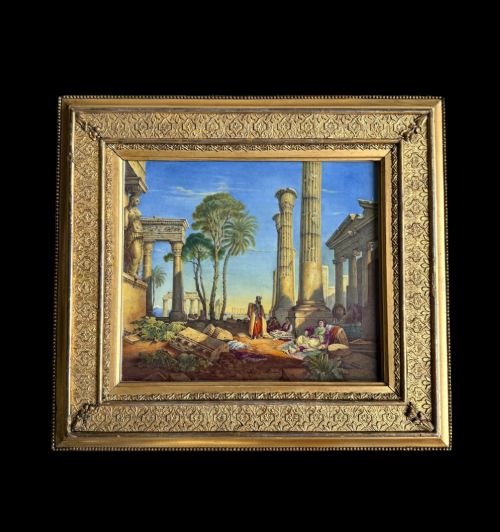
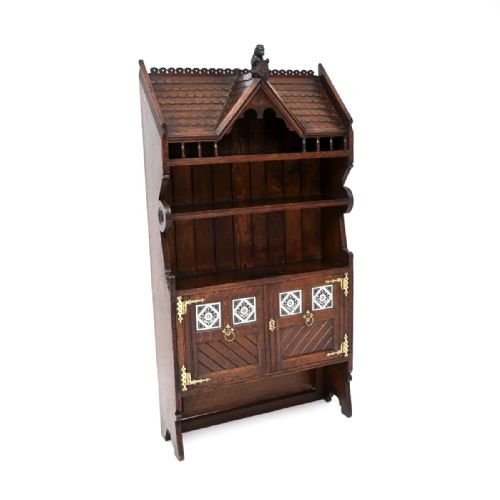
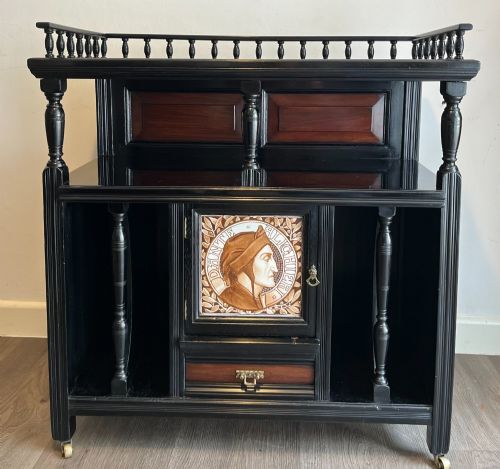
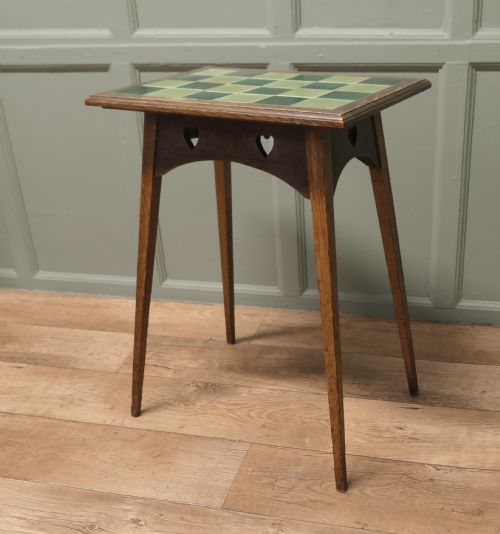
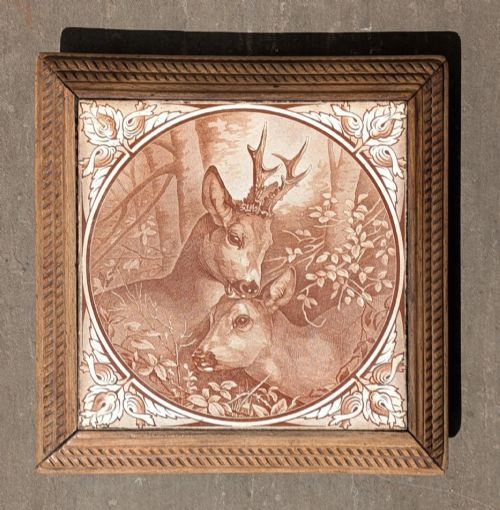
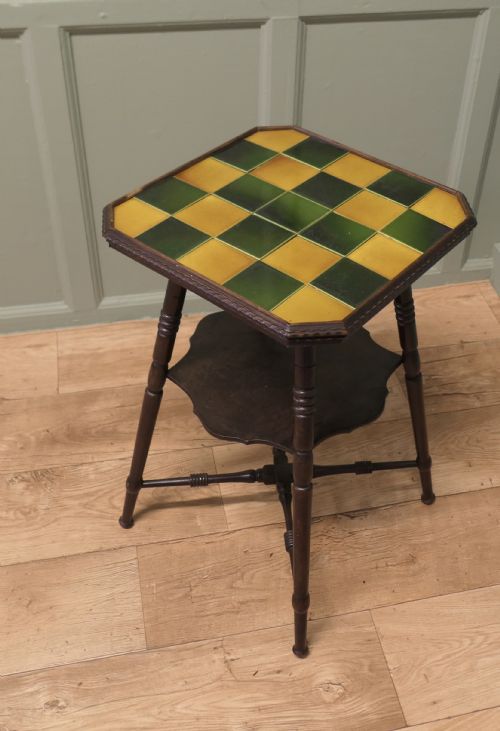
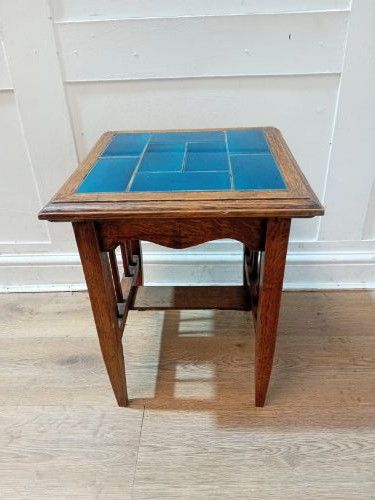
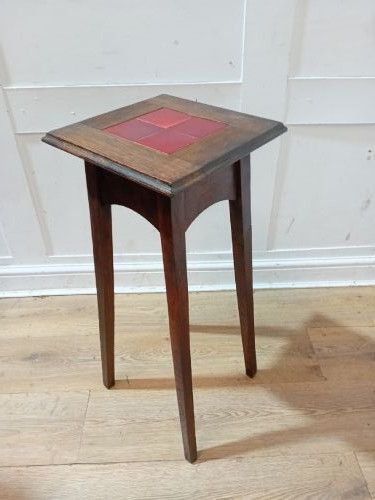
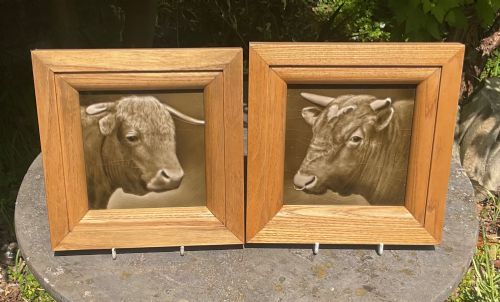
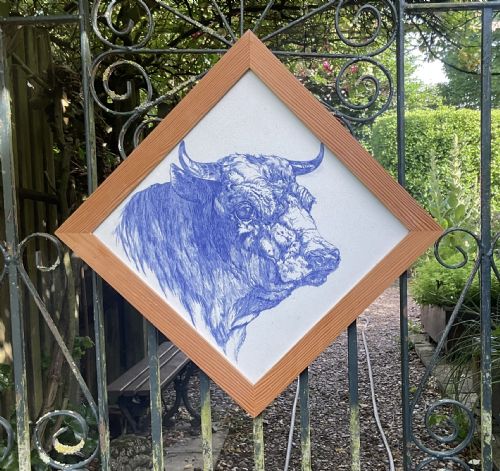
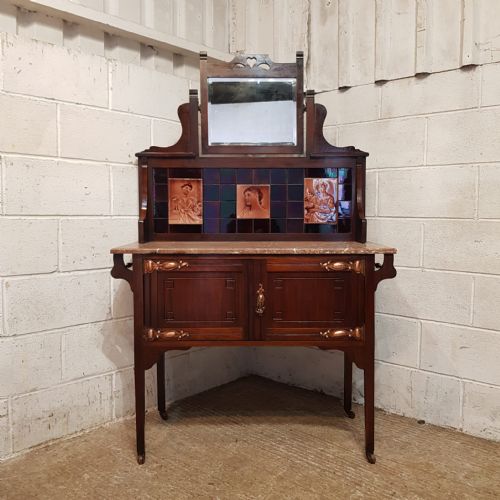
When you search for antique art tiles, you encounter glazed ceramic and porcelain pieces spanning the Victorian, Edwardian, and Arts and Crafts eras, alongside earlier Dutch Delft and Italian examples. These items appear either as individual framed wall plaques or integrated directly into the surfaces of oak and mahogany occasional tables, washstands, hall stands, and cabinets.
The selections on this page concentrate heavily on late nineteenth and early twentieth-century British production, particularly pieces associated with the Arts and Crafts and Aesthetic movements. You also meet French roof tiles and German porcelain plaques within the same domestic decorative category.
Makers ranged from large commercial potteries producing pictorial panels to independent designers creating bespoke furniture inserts. The ceramic surfaces utilise both polychrome painting and raised turquoise relief to depict figures, animals, and botanical motifs.
Materials and manufacture
The manufacturing process relies on a robust ceramic or porcelain body, shaped either as flat wall tiles or structural furniture inserts and fired at high temperatures. Glazes are then applied to create glossy, semi-matte, or polychrome finishes that withstand everyday use while holding intricate pigments.
Oak and mahogany frames or furniture structures frequently house these glazed panels, secured with wooden moulding or brass fixings. The integration of ceramic tile into functional items like washstands and side tables requires precise carpentry to accommodate the weight and dimensions of the fired clay.
Antique Art Tiles Retail Price Guide 2026
Typical asking prices for art tiles among the pieces listed under this phrase on Sellingantiques today, from the lower quarter to the upper quarter. They describe what is for sale here now, not the wider market.
Listings feature oak and mahogany furniture integrated with ceramic tiles, alongside standalone porcelain plaques from the Victorian and Edwardian periods.
Assessing craftsmanship
Quality reveals itself in the crispness of the moulding, the depth of the glaze, and the precision of the hand-painted brushwork on the ceramic surface. Superior pieces exhibit confident pictorial detailing, particularly in portraiture and figurative scenes, rather than flat, mechanically printed transfers.
The supporting woodwork determines overall merit in furniture pieces, where solid oak or mahogany construction and careful joinery match the artistic ambition of the inset tiles. Well-preserved original mounts and signed artist signatures elevate the piece within its period context.
John Moyr Smith·KPM·Shapland & Petter·Baillie Scott·Sherwin & Cotton·Mintons·Longwy
The Antique Art Tiles Glossary
- Plaque
- A flat decorative panel, often porcelain or ceramic, designed specifically to hang on a wall like a painting. These pieces frequently feature detailed portraits or classical scenes.
- Faience
- Tinned-glazed earthenware produced across Europe, known for its bright painted colours and opaque white surface. It forms the basis of many decorative wall pieces.
- Polychrome
- Decorated in multiple colours. This technique defines the rich palette seen on Dutch Delft and later Victorian pictorial tiles.
- Relief
- Ornamentation that projects outward from the flat background plane. Turquoise relief examples create a distinct three-dimensional surface texture.
Antique Art Tiles: Frequently Asked Questions
How were antique art tiles used in homes?
These glazed panels served both decorative and practical functions in domestic interiors. Many were framed individually as wall art, while others formed durable, heat-resistant surfaces for washstands, hall stands, and side tables.
In heavy-use areas like hallways and kitchens, they provided a wipe-clean decorative surface that resisted moisture and daily wear.
How do I care for antique tiled furniture?
Maintain the glazed ceramic surfaces by wiping them gently with a soft, damp cloth to remove dust. Avoid harsh chemical cleaners that can dull the historic glaze or damage surrounding grout and wood.
Treat the wooden frames and table structures with traditional beeswax to nourish the timber and protect the original finish from drying out.
What is the difference between tiles and plaques?
Tiles were generally manufactured as modular units for integration into walls, fireplaces, or furniture tops. They often feature repeating patterns or pictorial subjects designed to work as sets.
Plaques are standalone artistic works, usually porcelain or earthenware, created solely to be displayed independently in frames.