





Antique Art Deco Bench
An antique art deco bench brings bold geometric lines and rich polished timbers into a room, offering both practical seating and striking period character.
Antique Art Deco Bench
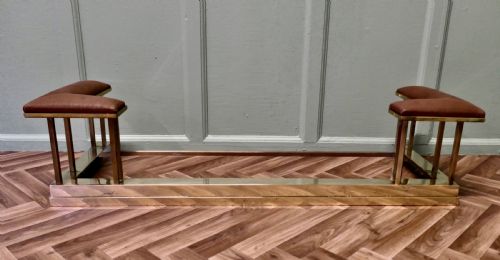
When you search for an antique art deco bench, you encounter a selection of seating forms spanning the nineteen-twenties and nineteen-thirties, alongside earlier Edwardian influences. These pieces range from substantial club fenders featuring heavy brass and leather to compact dressing table stools and piano seats.
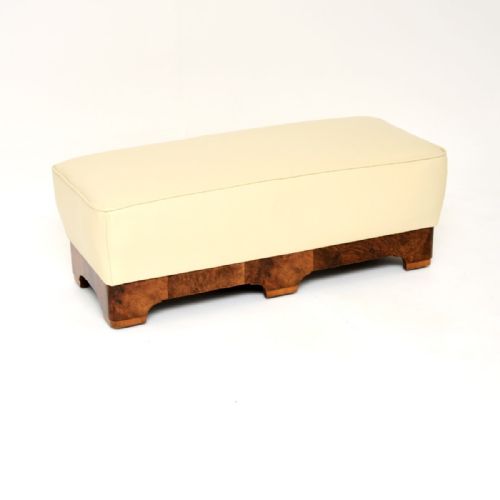
The most frequent examples on this page are low stools and fireside benches constructed during the nineteen-thirties in England. They combine utilitarian functions, such as music storage or fireside seating, with the distinctive stylistic hallmarks of the period.
Other variations include monks benches and telephone tables that adapt traditional furniture types into modern geometric designs. Walnut and burr walnut dominate the woodwork, frequently paired with tan or cream leather Upholstery.
Materials and construction
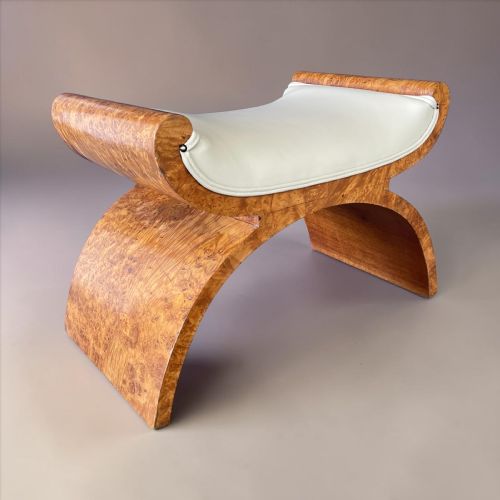
Cabinet makers utilised choice hardwoods such as walnut, burr walnut, and birds eye maple as veneers over structural timber foundations. These figured wood surfaces were polished to highlight the natural grain patterns characteristic of the era.
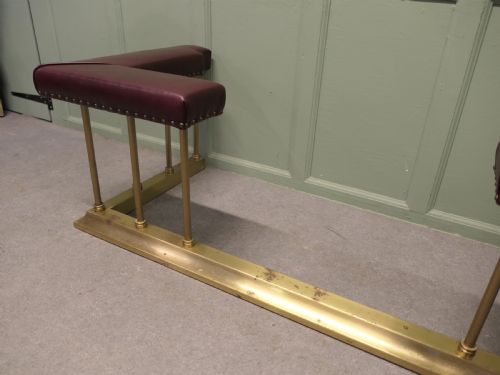
Metal components play a structural and decorative role, particularly in club fenders that combine solid brass frames and iron supports with padded leather seating. Wood veneer surfaces meet upholstered elements secured with traditional fixings.
Antique Art Deco Bench Retail Price Guide 2026
Typical asking prices for art deco bench among the pieces listed under this phrase on Sellingantiques today, from the lower quarter to the upper quarter. They describe what is for sale here now, not the wider market.
The listings span three distinct periods: nineteen-thirty, nineteen-twenty, and the Edwardian era, showing a concentration of nineteen-thirties walnut and leather furniture.
Assessing quality in period benches
Quality rests upon the selection of wood veneers and the precision of the joinery rather than mere age. Finely figured burr walnut and birds eye maple denote higher ambition in the workshop than plain timber surfaces.
The integration of functional elements, such as internal storage compartments in piano stools or heavy cast metal frameworks in club fenders, distinguishes standard production from more substantial commissions.
Harry and Lou Epstein
The Antique Art Deco Bench Glossary
- Club fender
- A low fireside seat with a metal frame and upholstered top surrounding a hearth. These heavy brass and iron structures were designed for warming feet near an open fire.
- Birds eye maple
- A decorative wood veneer displaying small circular figures resembling birds eyes. It provides a pale, highly figured surface favoured in modernist cabinet making.
- Burr walnut
- A prized timber harvested from growth excrescences on walnut trees, creating swirling grain patterns. It forms the primary decorative surface on many nineteen-thirties stools.
- Monks bench
- A multifunctional furniture piece that converts from a bench with a solid back into a table. This traditional form was reinterpreted during the art deco period with geometric panels.
Antique Art Deco Bench: Frequently Asked Questions
What is an art deco club fender?
A club fender is a low fireside bench built with a metal base and leather top designed to fit around a fireplace hearth. They allow people to sit close to the fire on sturdy brass or iron frames.
Examples from this era combine heavy metalwork with padded leather seating in tan or cream shades, originating from the nineteen-twenties and nineteen-thirties.
How do I use a piano stool today?
Duet piano stools and music seats work well as end-of-bed benches, hallway seating, or low occasional furniture in living rooms. Many include internal storage compartments suited for contemporary household items.
Their compact proportions and hinged lids make them practical additions where space is limited but period character is desired.
Which woods are common on these benches?
Walnut, burr walnut, and birds eye maple appear frequently across the seating and tables listed here. These timbers were selected for their striking grain patterns and finished with a polished sheen.
Oak and various wood veneers are also utilised, particularly on pieces associated with transitional styles from the Edwardian period into the nineteen-thirties.
How do I distinguish nineteen-twenties from thirties pieces?
Nineteen-twenties pieces often lean towards heavy brass club fenders and music stools, whilst nineteen-thirties examples frequently incorporate sleek wood veneers and modernist silhouettes. The materials reflect shifting tastes from classical metalwork to warm figured timbers.
Earlier Edwardian influences also appear in traditional fender designs that bridge the gap into the art deco era.