
Antique Armoire with Mirrors
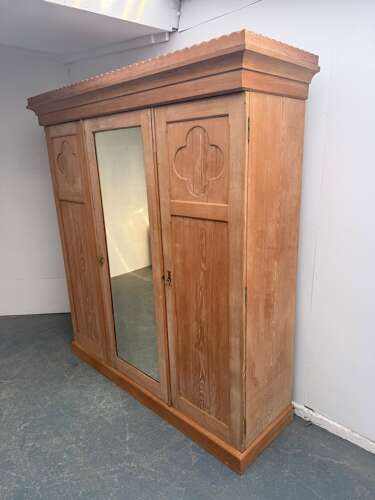
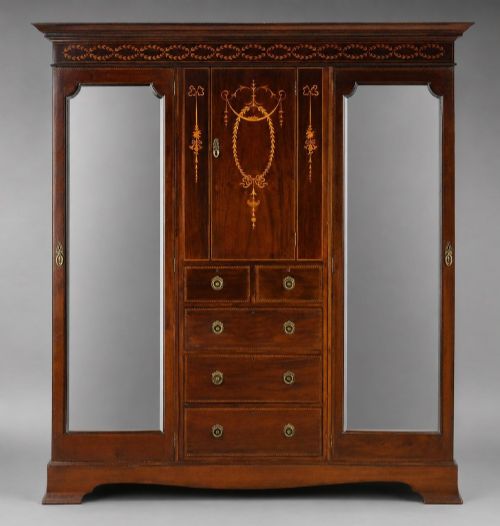
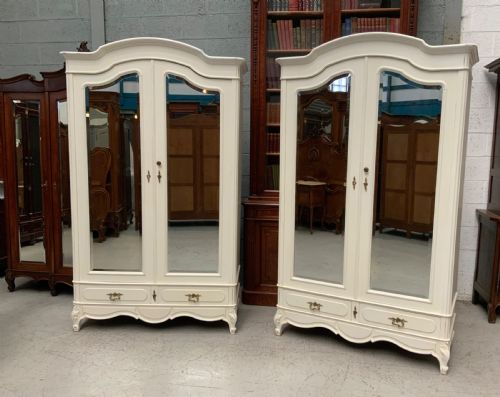
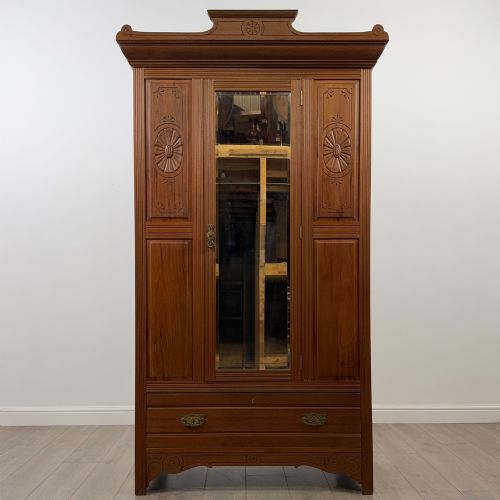
An antique armoire with mirrors is a large storage piece reflecting light and space into a room, most often found in mahogany, pine, and oak.
Antique Armoire with Mirrors
An antique armoire with mirrors serves as a primary bedroom storage unit, combining hanging space with mirrored doors that open up the feel of a room. Buyers searching this phrase encounter substantial furniture pieces designed to hold garments while introducing functional reflective glass into domestic spaces.
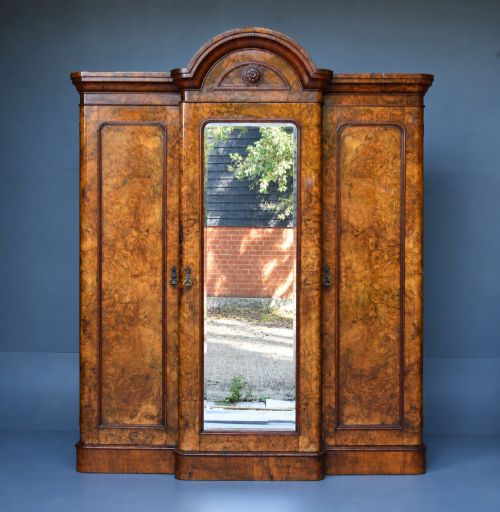
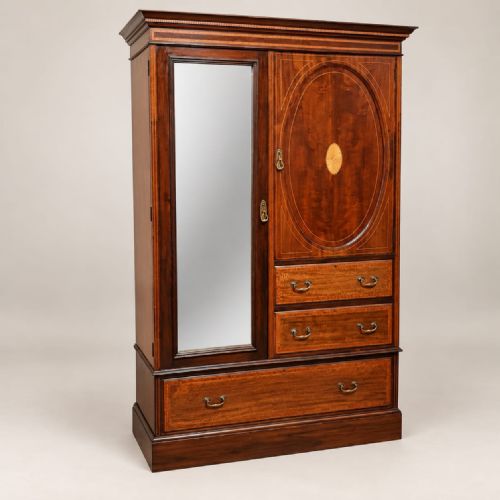
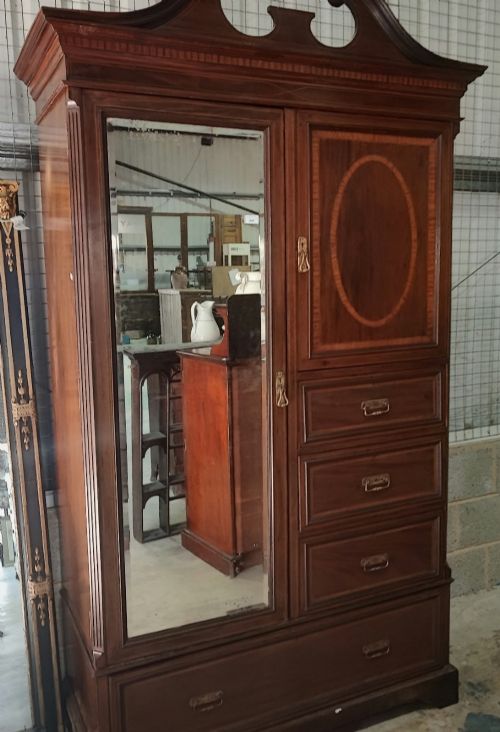
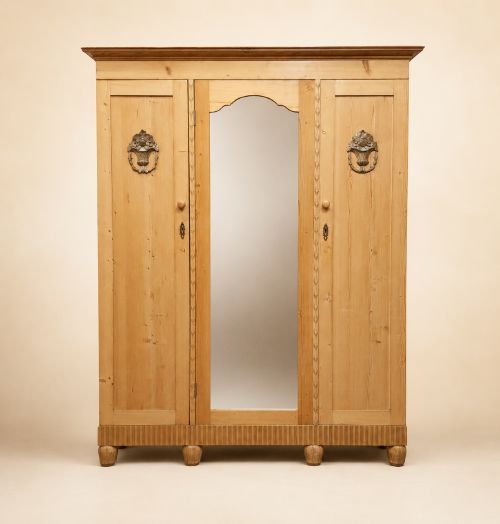
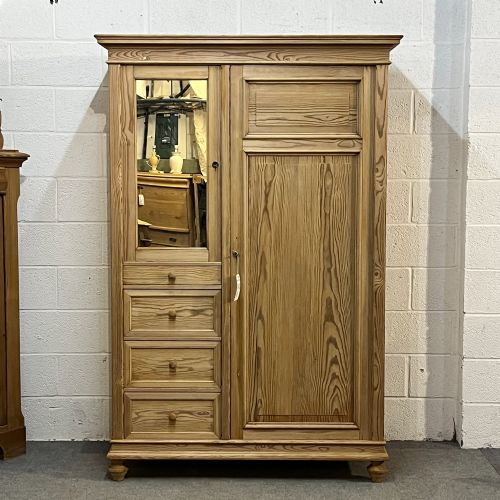
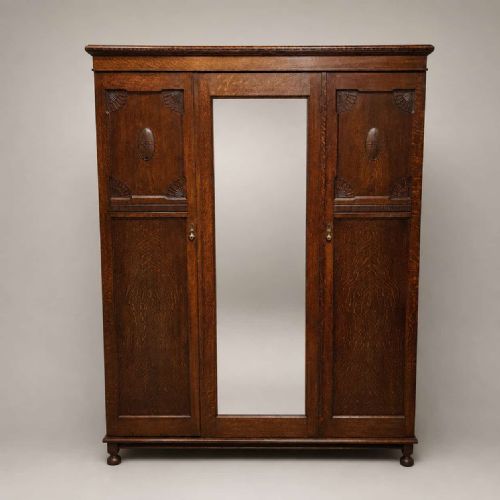
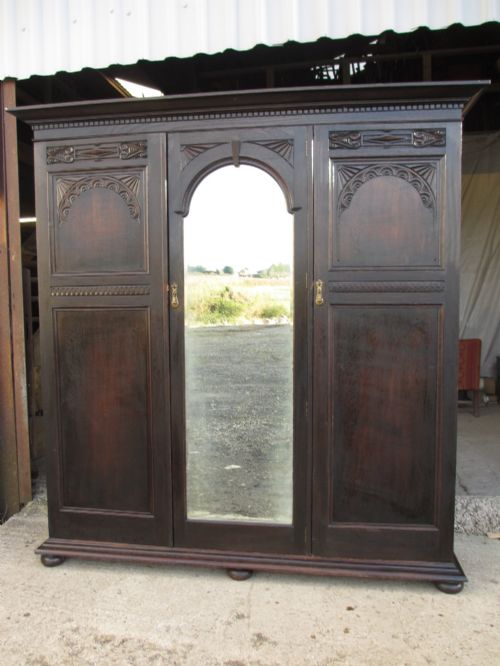
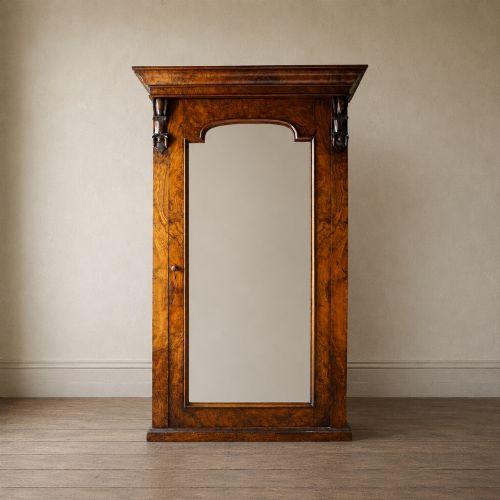
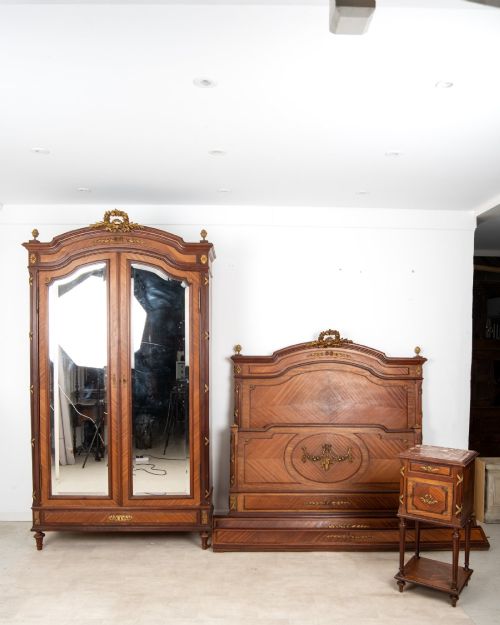
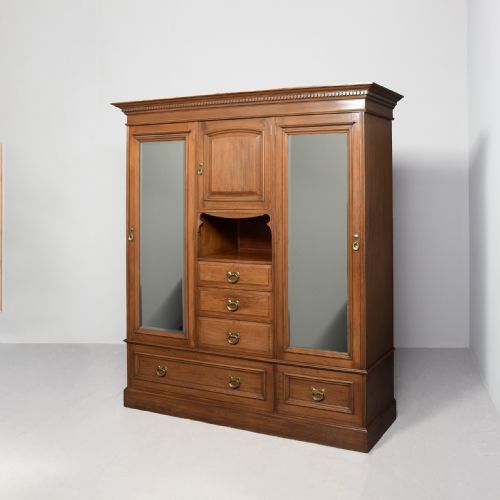
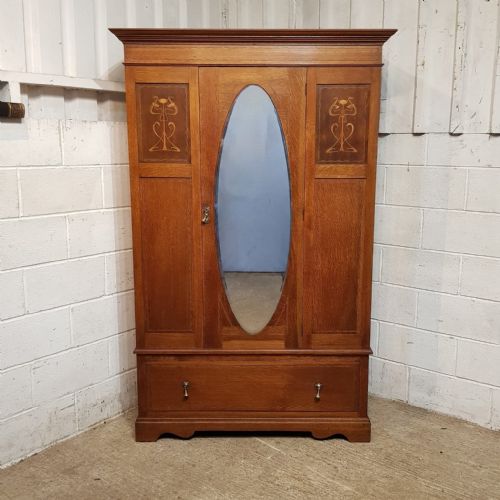
The pieces available span several distinct eras, appearing frequently in Victorian and Edwardian iterations alongside 1930s examples. These wardrobes take various configurations, from single-door compactum units to expansive triple wardrobes and bedroom suites.
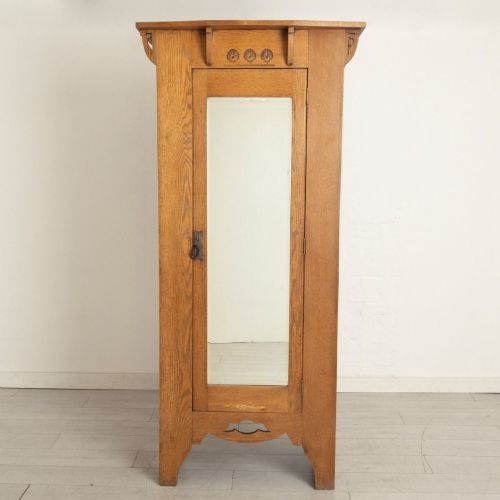
Origins range from British workshops to French provincial designs, incorporating stylistic revivals such as Louis XVI and Arts and Crafts movements. The selection reflects both formal mahogany cabinetmaking and practical everyday pine construction.
Materials and Construction Methods
Cabinetmakers utilised timber frames constructed primarily from mahogany, pine, and oak, often incorporating decorative secondary woods like satinwood, ash, and walnut. These woods were joined using traditional carpentry techniques to support the considerable weight of large timber doors and inset mirror glass.
Mirrored doors feature heavily, secured within panelled frames alongside brass hardware, gilt bronze ormolu mounts, and lead light glass panels. Surfaces receive traditional finishes including wax, polish, or paintwork, depending on whether the piece originates from formal British workshops or French provincial traditions.
Listings feature pieces spanning the nineteenth and twentieth centuries, constructed in mahogany, pine, oak, ash, and walnut.
Distinctions in Quality
Quality rests upon the proportion and selection of the timber, where dense grains of mahogany or figured walnut distinguish finer commissions from utilitarian pine carcasses. The integration of the mirror glass within the door structure also marks a difference, with bevelled edges and secure seating demonstrating superior craftsmanship.
Hardware and internal configuration further separate the standard examples from the exceptional. Fitted interiors featuring drawers, linen presses, and combination compartments paired with original brass detailing or ormolu mounts indicate a higher grade of manufacture.
Maple & Co.·Heals
The Antique Armoire with Mirrors Glossary
- Compactum
- A multi-functional wardrobe featuring a combination of hanging space, shelves, and internal drawers. This layout maximises storage efficiency within a single footprint.
- Ormolu
- Gilt bronze mounts applied to furniture for decorative effect. It appears frequently on revival pieces to accent the woodwork.
- Linen Press
- A tall piece of furniture traditionally used for storing folded linens and garments. Modern listings often group these with standard wardrobes.
- Lead Light
- Glazing held together by lead cording, sometimes forming decorative patterns within door panels. It adds textural variety to the woodwork.
- Sentry Box
- A narrow single wardrobe designed to fit compact spaces. The moniker derives from its tall, box-like proportions.
Antique Armoire with Mirrors: Frequently Asked Questions
How do I fit a large wardrobe?
Many large wardrobes and armoires are designed to dismantle into sections for transport and installation. Checking the construction allows you to move heavy pieces through standard doorways.
Ensuring correct assembly on level flooring prevents the tall mirrored doors from sagging or sticking during everyday use.
What is a compactum wardrobe?
A compactum is a specialised storage piece that combines hanging space with banks of internal drawers and linen shelves. This configuration provides diverse storage options within a single cabinet footprint.
These pieces suit smaller bedrooms where separate chests of drawers and wardrobes cannot comfortably fit together.
How do I care for antique mirrors?
Antique mirror glass requires gentle cleaning with a soft cloth and mild solution, avoiding harsh chemical sprays that can seep behind the silvering. Protecting the edges from moisture prevents foxing and black spots from developing over time.
Regular dusting of the surrounding wooden frame keeps the entire piece stable and preserves the original finish.
How do I date these wardrobes?
Dating relies on observing construction methods, timber choices, and stylistic cues such as Arts and Crafts simplicity or Victorian proportions. Maker labels and stamps offer definitive periods for specific pieces.
Hardware styles, including brass handles and key escutcheons, also provide reliable indicators of the manufacturing era.