


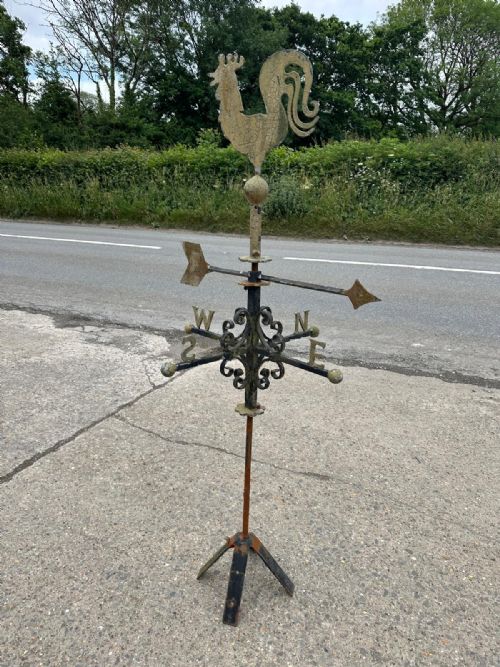
Antique Architectural Wind Vane
An antique architectural wind vane crowns a roofline with historic character, combining utility with traditional metalwork and folk art.
Antique Architectural Wind Vane
When you search for an antique architectural wind vane, you are looking at functional rooftop markers designed to show the direction of the wind. These pieces combine practical engineering with sculptural form, serving as focal points on historic buildings.
The versions you are most likely to meet on this page date from the Georgian period through the nineteenth century and into the early twentieth century. They take traditional forms including cockerels and huntsman silhouettes.
Makers shaped these objects using materials such as copper, sheet iron, wrought iron, and wood, often enhanced with old paint. They represent English folk art and rustic country styles from various historical eras.
How they were made
Craftsmen shaped copper and sheet metal into distinct silhouettes, utilising the malleability of the metals to create recognizable figures like cockerels. These metals weathered outdoors, developing patinas over time.
Blacksmiths forged wrought and sheet iron to build sturdy directional arrows and mounting rods that endured heavy winds. Paint was frequently applied to surfaces, remaining visible today on select historic examples.
Antique Architectural Wind Vane Retail Price Guide 2026
Typical asking prices for architectural wind vane among the pieces listed under this phrase on Sellingantiques today, from the lower quarter to the upper quarter. They describe what is for sale here now, not the wider market.
Materials recorded across the inventory include copper, wrought iron, sheet metal, wood, and stone.
What varies in quality
The sophistication of the silhouette defines the upper tier of these pieces, where master metalworkers captured anatomical detail and movement in copper or iron. Simpler, utilitarian markers sit at the other end of the scale.
The survival of original surface treatments, such as weathered old paint on iron and copper, separates exceptional examples from those stripped or refinished. Natural patination accumulated through decades of exposure also alters the visual depth.
The Antique Architectural Wind Vane Glossary
- Cockerel
- A representation of a rooster used traditionally as a rooftop marker. It remains the most common animal motif found in these listings.
- Folk art
- Utilitarian objects created by self-taught or traditional craftsmen rather than academic artists. This style defines many pieces from the Georgian and nineteenth-century periods.
- Sheet metal
- Thinly rolled metal easily cut into complex silhouettes. It allowed makers to form detailed figures like the huntsman and the cockerel.
- Wrought iron
- Iron beaten into shape by hand while hot, utilised for structural brackets and directional arms. It provides the heavy framework supporting the upper vane.
Antique Architectural Wind Vane: Frequently Asked Questions
What is an antique architectural wind vane?
An antique architectural wind vane is a historic rooftop instrument designed to indicate wind direction while adding decorative presence to a building.
These objects combine metalworking techniques with traditional motifs like cockerels and silhouettes.
How were these wind vanes used?
They were mounted on high points such as roofs, barns, and spires to catch open air currents and pivot freely.
Farmers and mariners relied on them daily to anticipate weather shifts, while builders used them for architectural ornamentation.
How do I date an architectural wind vane?
Dating relies on examining the fabrication methods, material composition, and surviving surface treatments like old paint.
Pieces span the Georgian era through the early twentieth century, showing shifts in folk art styles.
Can these vanes still be mounted outdoors?
Many of these pieces retain their structural integrity and can be installed outdoors on appropriate mounting brackets.
Collectors often choose to display delicate copper and painted iron examples indoors to preserve their patinas.