




Antique Arabic Art
Antique arabic art brings together centuries of Islamic craftsmanship, delicate manuscript pages, and evocative regional paintings for the discerning collector.
Antique Arabic Art
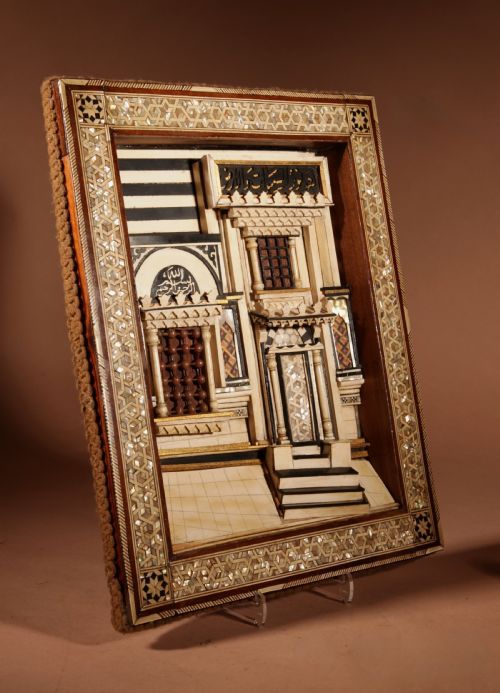
When you search for antique arabic art, you encounter a diverse gathering of objects ranging from early manuscript leaves to nineteenth-century paintings and architectural models. The pieces on this page span several centuries, capturing traditions from North Africa, the Middle East, and Persia.
The selection includes illuminated Quranic pages in Kufic script on vellum alongside Moorish revival architectural dioramas and Ottoman books depicting rulers. You will also find watercolours and oil paintings recording landscapes, seascapes, and portraiture from the late nineteenth and early twentieth centuries.
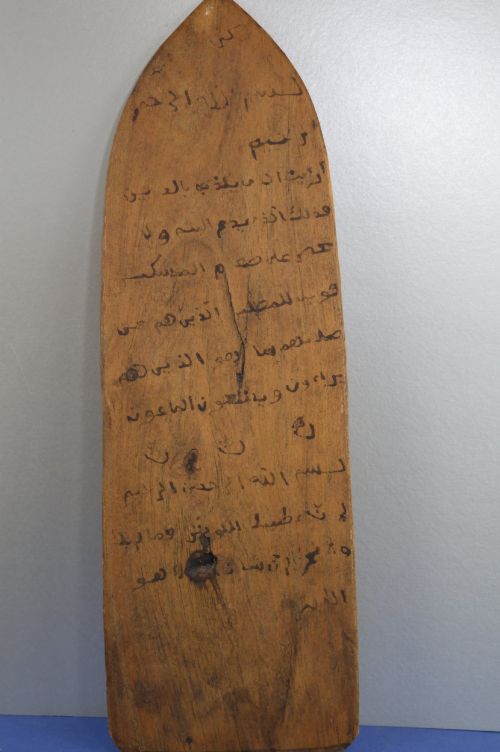
Religious artefacts and scholarly items like prayer boards sit alongside decorative copper panels from Damascus and everyday items such as open-faced pocket watches. This mix reflects both the religious devotion and the artistic output of various Islamic dynasties and periods.
Materials and Techniques
Makers utilised organic and mineral substances, applying ink, pigment, watercolour, and gold leaf to paper, vellum, and wood surfaces. Manuscript pages display precise calligraphy and illumination executed by hand.
Metal objects demonstrate skilled enamel work on copper panels, whilst structural works incorporate detailed relief carving in architectural dioramas. Paintings on panel and paper employ oils and gouache to capture light and detail.
Antique Arabic Art Retail Price Guide 2026
Typical asking prices for arabic art among the pieces listed under this phrase on Sellingantiques today, from the lower quarter to the upper quarter. They describe what is for sale here now, not the wider market.
Someone once decided an ordinary pocket watch deserved a new life alongside early twentieth-century Arabian landscape watercolours.
Assessing Quality and Execution
Quality rests in the precision of the script, the vibrancy of surviving pigments, and the preservation of delicate paper or vellum. Finer manuscript leaves demonstrate meticulous hand-lettering and gold leaf application that remain crisp after centuries.
In paintings and dioramas, the depth of perspective, handling of light, and condition of the original framing or mounting distinguish superior examples from simpler decorative pieces.
The Antique Arabic Art Glossary
- Kufic
- An early angular form of the Arabic alphabet used in early Islamic manuscripts and monumental inscriptions. It is frequently seen on very early Quranic pages.
- Illuminated manuscript
- A manuscript in which the text is supplemented by the addition of decoration, such as decorated initials, borders, and miniature illustrations using gold leaf or vibrant pigments.
- Vellum
- Fine parchment made from the skin of a calf, utilised historically for high-grade manuscript pages due to its durability and smooth writing surface.
- Diorama
- A three-dimensional full-size or miniature model, representing architectural scenes or landscapes. In this context, relief examples capture Moorish building facades.
Antique Arabic Art: Frequently Asked Questions
What is antique arabic art?
Antique arabic art encompasses a wide range of historical items originating from Islamic cultures, including illuminated manuscript pages, religious artefacts, paintings, and decorative metalwork.
These pieces reflect the artistic, literary, and religious traditions of regions spanning from North Africa to Persia across multiple centuries.
How do I care for manuscript pages?
Manuscript pages on paper or vellum require protection from direct sunlight and high humidity to prevent fading of inks, pigments, and gold leaf.
Displaying them behind UV-filtering glass and keeping them in stable indoor environments ensures these fragile items survive for future generations.
How can I tell the age of these pieces?
Dating relies on examining the script style, such as early Kufic lettering versus later hands, alongside the material composition of the paper, vellum, or wood.
Subject matter, historical references within books, and framing styles also provide clear clues to whether an item belongs to the medieval period or the nineteenth century.
Where were these objects made?
The items originate from various centres of Islamic culture and craftsmanship, including Persia, Syria, Mali, and the broader Ottoman empire.
Trade, scholarship, and regional artistic traditions all contributed to the distinct styles found within this category, from Damascus copper panels to West African scholarly boards.